











Understanding the P2P Investment Platform Model
Peer-to-peer lending has fundamentally altered how capital moves between individuals. Traditional financial intermediaries once monopolized the lending process, but digital platforms now enable direct connections between those with capital to deploy and those seeking funds. The investment platform infrastructure supporting these transactions processes over $150 billion in loan originations annually across global markets.
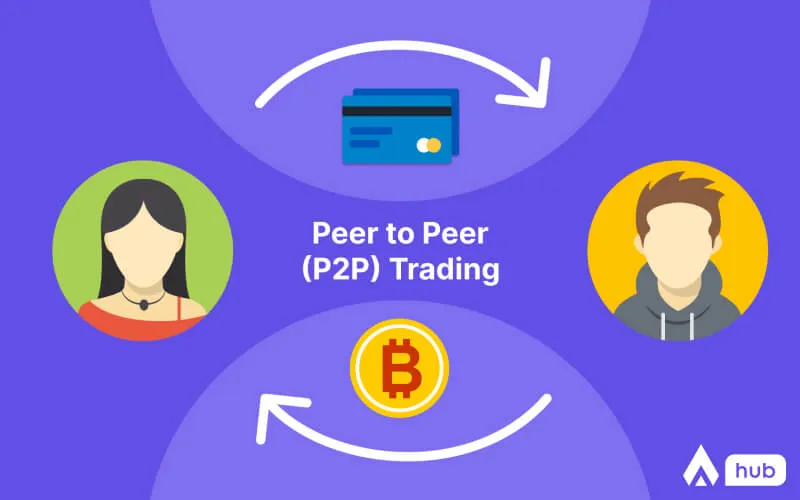
The mechanics are straightforward. Borrowers submit applications detailing their creditworthiness, income, and intended use of funds. The platform evaluates these applications using proprietary algorithms that assess default probability. Approved loan requests then appear on the platform marketplace where registered investors can fund them partially or entirely. Once funded, borrowers receive their capital and make scheduled repayments that flow back to investors as monthly income.
This disintermediation reduces overhead costs inherent in traditional banking. Physical branches, extensive staff networks, and legacy technology systems create significant expense loads for conventional lenders. P2P platforms operate with dramatically lower cost structures, passing efficiency gains to both sides of the transaction through lower borrowing rates and higher investment returns.

How a Maclear investment works and what protects you
- With Maclear you buy an assigned claim to a vetted business loan; the borrower signs the loan agreement with the platform, and you sign an assignment agreement.
- Interest is paid monthly, and the principal is repaid at the end of the loan term.
- Each borrower carries an internal AAA–D score; treat it as a signal, not as investment advice.
- Loans are backed by collateral held through a Collateral Agent, with the loan-to-value ratio shown for transparency; enforcement of that collateral is a legal process, not immediate.
- A provision fund may absorb temporary delays in interest, but it is not insurance and does not guarantee that principal is repaid.
- Your capital is at risk, including possible total loss, so a P2P allocation suits money you can leave invested.
How Returns Are Generated on P2P Platforms
Investment returns in peer-to-peer lending come from interest payments borrowers make throughout their loan terms. Platforms typically offer annualized returns ranging from 4% to 12%, depending on the risk profile of loans selected. Higher returns correlate directly with increased default risk—a fundamental principle investors must internalize before deploying capital.
The platform assigns each loan a risk grade based on credit scores, debt-to-income ratios, employment history, and other underwriting factors. Conservative investors gravitate toward A-grade loans with lower yields but stronger repayment histories. Risk-tolerant capital flows toward C, D, or E-grade borrowers who pay premium rates to compensate for elevated default probabilities.
Diversification mathematics strongly favor investors on these platforms. Spreading $10,000 across 400 loans of $25 each creates dramatically different risk exposure compared to funding four loans at $2,500 each. Research from Cambridge University's alternative finance center shows that investors holding 100+ loans experience default rates closely matching platform averages, while concentrated portfolios show wild variance in actual versus expected performance.
Many platforms now offer automated investing tools that build diversified portfolios according to investor-defined parameters. These features analyze available loans continuously and allocate capital across risk grades, loan purposes, and borrower characteristics. Automation removes emotional decision-making and ensures consistent application of investment criteria.
Regulatory Framework and Investor Protections
The regulatory landscape governing P2P platforms varies substantially across jurisdictions. In the United States, the Securities and Exchange Commission requires most platforms to register loan notes as securities. This classification mandates extensive disclosure requirements, financial reporting, and investor qualification standards. Platforms must file detailed prospectuses outlining risks, historical performance data, and operational procedures.
European markets operate under different frameworks. The UK's Financial Conduct Authority implemented comprehensive P2P regulations in 2014, requiring platforms to maintain segregated client funds, produce independent audits, and hold minimum capital reserves. These rules created operational burdens but increased investor confidence in platform stability and governance.
Asian markets present mixed regulatory approaches. China's massive P2P sector experienced explosive growth followed by widespread fraud and collapse. Government crackdowns eliminated thousands of platforms between 2015 and 2020. Stricter licensing requirements now govern the surviving operators. India and Indonesia have developed progressive regulatory frameworks that balance innovation encouragement with consumer protection.
Investor protections remain limited compared to traditional banking products. Deposit insurance programs that protect bank account holders up to specified limits generally do not cover P2P investments. When platforms fail, investor recovery rates vary widely based on loan performance, platform reserves, and legal proceedings. Due diligence on platform stability, ownership structure, and financial health becomes critical investor responsibility.
Risk Factors Investors Must Evaluate
Credit risk dominates the P2P investment landscape. Borrowers default on obligations for numerous reasons: job loss, medical emergencies, business failures, or simple over-leverage. Platform underwriting models attempt to predict default probability, but no algorithm achieves perfect accuracy. Economic downturns expose model weaknesses as borrowers who appeared creditworthy under favorable conditions struggle when circumstances deteriorate.
Platform risk represents another significant consideration. The investment platform itself may face operational challenges, regulatory sanctions, or financial distress. Several prominent platforms have ceased operations over the past decade, leaving investors scrambling to recover capital from outstanding loans. Platform bankruptcy does not necessarily mean total loss—loans remain legal obligations—but recovery processes become complex and costly.
Liquidity constraints distinguish P2P investments from publicly traded securities. Most loans carry fixed terms ranging from three to five years. Investors commit capital for these durations without guaranteed exit options. Some platforms operate secondary markets where investors can sell loan positions to other users, but these markets function poorly during stressed conditions when everyone wants liquidity simultaneously.
Interest rate risk affects P2P returns through competitive dynamics. When central banks raise rates, newly originated loans carry higher coupons. Existing loan portfolios earning lower rates become less attractive to secondary market buyers. This dynamic creates mark-to-market losses for investors seeking early exits, even if borrowers continue performing as expected.
Concentration risk emerges when investors fail to diversify adequately. Funding loans to borrowers in the same geographic region, industry sector, or loan purpose category creates correlated default exposure. Regional economic shocks, industry downturns, or regulatory changes affecting specific loan types can trigger cascading defaults across concentrated portfolios.

Comparing P2P Platforms to Other Investment Options
The best investing apps landscape includes numerous alternatives to P2P lending, each with distinct risk-return profiles. Stock market index funds offer liquidity, diversification, and long-term growth potential but experience significant short-term volatility. Bond portfolios provide stable income with lower default risk than P2P loans but currently yield minimal returns in many developed markets.
Real estate crowdfunding platforms share structural similarities with P2P lending. Both connect investors directly with capital users, both involve illiquid commitments, and both depend on platform operational quality. Real estate investments typically require larger minimum commitments and longer time horizons but offer tangible asset backing that P2P loans lack.
High-yield savings accounts and certificates of deposit eliminate credit risk through deposit insurance but deliver returns barely exceeding inflation. For investors willing to accept credit risk and illiquidity, P2P platforms offer meaningful yield premiums. Historical data from Lending Club shows cumulative net returns of 5-7% for diversified portfolios, substantially exceeding savings account rates.
Robo-advisors provide automated portfolio management across traditional asset classes. These services optimize tax efficiency, rebalance automatically, and require minimal investor involvement. However, they typically exclude alternative investments like P2P loans from portfolio allocations. Investors seeking exposure to consumer credit must access P2P platforms directly.
How Maclear compares with a bank savings account
| Feature | Maclear (P2P loan claims) | Bank savings / deposit account |
|---|---|---|
| Minimum to start | From €50 on the Primary Market, €30 on the Secondary Market | Varies by provider |
| Investor fees | No fees for investors | Varies by provider; account fees may apply |
| Income schedule | Monthly interest payments | Interest credited periodically on terms set by the bank |
| Principal | Repaid at the end of the loan term | Principal generally preserved within applicable protection limits |
| Target return | Target/potential up to 16.5% APR (average listed rate 14.5%), subject to borrower risk and possible capital loss | Rates set by the provider, typically modest and often near inflation |
| Term | 6 to 36 months | Instant-access or fixed-term options, depending on the product |
| Currency | Euro | Depends on the account |
| Credit/borrower scoring | Internal AAA–D scoring; a signal, not investment advice | Not applicable — you do not choose a borrower |
| Collateral | Held via a Collateral Agent with legal control; LTV shown for transparency | None backing the balance |
| Provision fund | May cover temporary delays in interest; not insurance, not a guarantee of principal | Not applicable |
Maclear figures accurate as of 2026. Not investment advice; capital is at risk, including possible total loss.
A P2P allocation is a portfolio addition (roughly 10%), not a replacement for lower-risk instruments.
Who Should Consider P2P Investment Platforms
The ideal P2P investor possesses specific characteristics and financial circumstances. Risk tolerance ranks paramount—only capital that can withstand total loss belongs in this asset class. While diversified portfolios rarely experience complete wipeouts, individual loans default regularly. Investors panicking over defaults make poor decisions and often exit positions at substantial losses.
Investment timeline matters significantly. The three-to-five-year loan terms demand patient capital. Investors needing liquidity within shorter horizons should avoid P2P commitments or limit exposure to small portfolio percentages. Emergency funds and near-term spending requirements belong in liquid accounts, not locked in consumer loans.
Financial sophistication benefits P2P investors considerably. Understanding credit metrics, interpreting default statistics, and maintaining disciplined diversification requires baseline financial knowledge. Platforms provide extensive data, but extracting actionable intelligence from that information challenges novice investors. Those lacking analytical skills should start with minimal commitments while developing expertise.
Portfolio context determines appropriate P2P allocation. Financial advisors generally recommend limiting alternative investments to 5-15% of total investment portfolios. Within that alternative bucket, P2P lending competes with real estate, commodities, and private equity for allocation space. Investors already holding substantial alternative investments should consider whether P2P lending truly adds diversification value.
Tax implications require careful consideration. P2P interest income receives ordinary income tax treatment at federal and often state levels. This tax inefficiency makes P2P lending more suitable for tax-advantaged accounts when regulations permit. Some platforms offer specialized IRA accounts allowing retirement investors to capture P2P returns while deferring taxation.
Evaluating Platform Quality and Reliability
Selecting among competing P2P platforms demands rigorous analysis. Track record longevity provides valuable signals—platforms operating successfully through multiple economic cycles demonstrate operational resilience and model robustness. Newer platforms may offer attractive terms to build market share but lack performance data investors need for informed decisions.
Loan origination volume indicates platform scale and staying power. Platforms funding hundreds of millions in loans annually achieve economies of scale that improve unit economics. Small platforms face higher per-loan costs that compress margins and threaten long-term viability. Dominant players like Prosper and Upstart in the United States process billions in annual originations.
Default rate transparency separates trustworthy platforms from those obscuring performance. Quality platforms publish detailed loss statistics segmented by loan grade, vintage year, and other relevant factors. Platforms burying default data in complex documentation or providing only aggregated statistics warrant skepticism. Investors need granular performance information to make informed allocations.
Buyback guarantees offered by some platforms provide partial downside protection. These commitments require platforms to repurchase loans exceeding specified delinquency thresholds. While superficially attractive, buyback provisions concentrate risk on platform balance sheets. If the platform itself fails financially, guarantees become worthless precisely when investors need them most.
Third-party servicing arrangements indicate operational maturity. Platforms outsourcing loan servicing to established specialists reduce operational risk and often achieve better collection rates. In-house servicing creates conflicts of interest and operational vulnerabilities that sophisticated investors recognize as warning signs.
The Technology Behind Modern Investment Platforms
Machine learning algorithms now power underwriting decisions on leading platforms. These models analyze thousands of data points per application, identifying default predictors human underwriters might miss. Alternative data sources—utility payment histories, rental payment records, educational background—supplement traditional credit metrics to assess creditworthiness more comprehensively.
Behavioral analytics track how loan applicants interact with platform interfaces. Patterns in form completion, information provided voluntarily versus reluctantly, and time spent on disclosures generate signals about applicant honesty and financial stress. These seemingly minor behavioral indicators improve default prediction accuracy by meaningful margins.
Automated fraud detection systems protect both investors and legitimate borrowers. Identity verification protocols cross-reference multiple databases confirming applicant authenticity. Income verification connects directly to payroll providers or analyzes bank transaction patterns. These technological controls reduce fraud losses that plagued early P2P platforms.
Mobile applications extend platform accessibility beyond desktop computers. The best investing apps enable portfolio monitoring, automated investing rule adjustments, and secondary market transactions from smartphones. Mobile functionality attracts younger investors accustomed to managing financial lives through handheld devices.
Blockchain experimentation occurs at some platform frontiers. Distributed ledger technology could theoretically improve transparency, reduce settlement times, and enable fractional loan ownership with greater efficiency. However, practical implementations remain limited. Regulatory uncertainty and technological complexity slow blockchain adoption in consumer lending markets.
Performance Metrics and Realistic Expectations
Investors should establish realistic return expectations based on historical data rather than marketing claims. Net annualized returns after defaults, fees, and early payoffs typically range from 4-7% for diversified portfolios. While platforms advertise gross returns reaching 10-12%, actual realized returns fall short once all costs and losses materialize.
Default timing affects returns substantially. Early defaults inflict maximum damage since investors recover minimal principal before the borrower stops paying. Late-cycle defaults allow investors to recover substantial principal through earlier payments, limiting losses. Platform loss curves show most defaults occurring within the first 18 months of loan life.
Prepayment rates accelerate when interest rates fall, creating reinvestment challenges. Borrowers refinance existing loans into lower-rate alternatives, forcing investors to redeploy capital into less attractive opportunities. Prepayment protection remains limited on most consumer loans, transferring interest rate risk to investors.
Vintage year analysis reveals how loan performance varies across origination periods. Loans originated during economic expansions when underwriting standards loosen often show elevated default rates when conditions tighten. Investors should review performance across multiple vintage years before committing capital, avoiding platforms showing deteriorating recent cohorts.
Recovery rates on defaulted loans typically range from 5-15% of outstanding principal. Collection efforts consume substantial resources relative to remaining loan balances. Borrowers default precisely because they lack resources to repay—collection success remains inherently limited. Investors should assume defaulted loans are total losses; any recoveries represent upside surprises rather than expected outcomes.
The Future Trajectory of P2P Investment Platforms
Institutional capital increasingly flows into P2P lending markets. Hedge funds, family offices, and even traditional banks now deploy capital through these platforms, attracted by yields unavailable in public bond markets. Institutional participation improves platform stability and funding reliability but may reduce returns available to retail investors as competition for loan allocations intensifies.
Vertical specialization creates niche platforms focused on specific borrower segments. Medical professionals, small business owners, and real estate investors access specialized platforms catering exclusively to their demographics. These focused platforms achieve superior underwriting accuracy through deep category expertise but offer investors less diversification opportunity.
Regulatory evolution continues shaping platform operations and investor access. Policymakers balance innovation encouragement against consumer protection imperatives. Stricter regulations may reduce platform operational risk but also increase compliance costs that compress investor returns. The regulatory trajectory remains uncertain across most jurisdictions.
Integration with traditional financial services expands P2P platform reach. Banks partner with platforms to offer customers investment options beyond conventional deposit products. Wealth management firms incorporate P2P allocations into diversified portfolios. These distribution partnerships bring institutional credibility but may dilute the disintermediation benefits that originally defined P2P lending.
The investment platform ecosystem continues maturing toward greater sophistication and specialization. Investors willing to understand the risks, commit patient capital, and diversify appropriately can access attractive yields unavailable through traditional alternatives. Those approaching P2P lending with unrealistic expectations or insufficient preparation will likely experience disappointing outcomes.