

121M+Total Funded
Low correlation with public equity markets
Diversify with P2P lending, private credit and non-correlated asset classes


Traditional portfolios often miss non-correlated returns, inflation hedges and direct access to private market opportunities that alternative investments can provide
Low correlation with public equity markets
Direct exposure to credit and real assets
Potential for higher risk-adjusted returns
Inflation hedging through tangible assets
Access to vetted private borrowers and projects

Investors who received at least one interest payment each month.

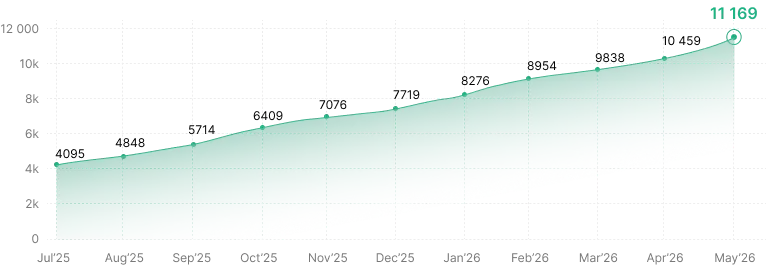
Rated 4.5 / 5 based on 779 reviews. Showing our 4 & 5 star reviews.
From peer-to-peer lending to commodities, each class carries distinct risks and liquidity profiles
Finance business loans or consumer credit through platforms like Maclear, earning fixed returns with borrower default risk
Invest in unlisted companies with high growth potential but multi-year lockup periods and total loss risk
Co-invest in commercial or residential projects, often illiquid and sensitive to local market cycles
Gold, silver, oil futures — volatile but historically uncorrelated with equities during inflationary periods
Access to complex strategies like long/short equity, arbitrage or macro bets — high fees, accredited investor limits
Fine art, wine, crypto — hard to value, no income stream, requires expertise and long holding periods
Diversification, non-correlated returns, direct access to private markets and potential inflation protection when used strategically
No fees for deposits, investments or withdrawals.
A growing community built around transparent investing.
Average amount invested by active users each month.
Average interest paid to active investors each month.
Browse vetted business loans, real estate-backed credit and SME financing opportunities currently open on Maclear

Supplies consumer electronics to major retailers and telecomes like Technomarket and Magnum-D

Processes, freezes and dries fruits and vegetables in a modern, fully equipped organic-focused production facility

Supply, installation and maintenance of agricultural and food equipment

Average annual return17.6%
Earned return€460
Promotions€0
Estimated returns based on target rate of 14.6% APY. Actual returns may vary. Past performance does not guarantee future results.
Alternative investments carry default risk, liquidity constraints and platform risk — no deposit insurance
Possible partial or total loss of principal if borrower fails to repay or project underperforms
Many alternatives have no secondary market, locking capital for months or years
P2P platforms, funds and sponsors can fail, freeze withdrawals or mismanage assets
Real estate, art, private equity valuations are subjective and lag real market conditions
Cross-border investments may trigger reporting, withholding and compliance obligations
Projected yields are estimates — actual performance can diverge significantly
Investing in foreign-denominated alternatives exposes you to exchange rate fluctuations
Over-allocating to one asset class or platform magnifies potential losses
Browse vetted business loans, SME credit and real asset-backed projects available on Maclear, with transparent borrower data and risk scoring
View marketplace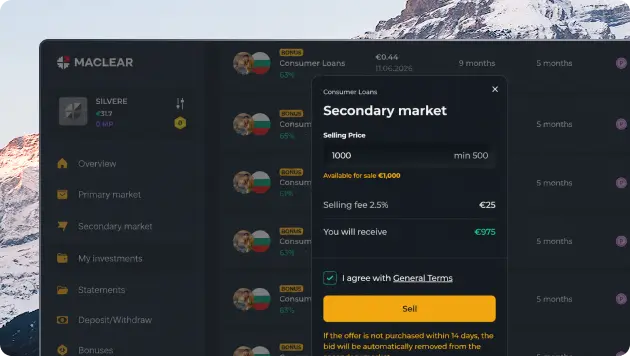
Swiss P2P/P2B crowdlending platform connecting investors with vetted business borrowers and projects under Swiss AML supervision via PolyReg SRO
Over €100 million in loans originated since launch
Investors from Switzerland, EEA and select jurisdictions
Open account, complete KYC, browse projects and allocate capital — fully online

Complete KYC/AML checks

Bank transfer from EU account

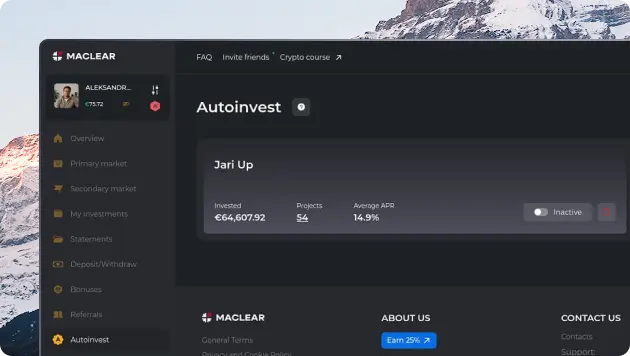
Manual or auto-invest available


Transparent risk scoring, diversified project access, automated tools and dedicated support for active investors

See risk grade and data

Set rules, diversify automatically

Exit early if needed

Direct assistance via email

Maclear AG is a Swiss crowdlending platform linking investors to verified business borrowers. Operating under Swiss law with AML/KYC oversight through PolyReg SRO, Maclear screens for sanctions and PEPs as a non-bank intermediary.


Maclear discloses borrower credit ratings, enforces identity verification and anti-money laundering protocols, checks sanctions databases, and oversees all transactions. EEA residents may access services under Maclear's conditions, regional laws, and tax requirements. Investments carry default, operational, and capital loss risks without deposit protection.
 Collateral and the
Provision Fund help reduce certain risks, but do not eliminate investment risk.
Collateral and the
Provision Fund help reduce certain risks, but do not eliminate investment risk.

Traditional stock-heavy portfolios often move in tandem during market downturns, leaving investors exposed to systemic risk. Alternative asset classes like P2P lending and real estate typically show low correlation with public equities, offering potential inflation protection and more stable risk-adjusted returns across economic cycles.
Peer-to-peer lending connects individual investors directly with borrowers—either consumers or businesses—through digital platforms. Investors earn fixed interest returns by funding loans while bearing the borrower default risk, typically with returns ranging from 6% to 12% depending on creditworthiness and loan term.
Multiple investors pool capital into specific commercial or residential property projects through a crowdfunding platform. Each investor holds a fractional stake in the project, receives periodic distributions from rental income or sale proceeds, and participates in real asset ownership without needing large upfront capital or direct property management.
Many alternative investments impose lockup periods ranging from months to years; selling early may trigger penalties or be impossible. Private equity and venture funds frequently require 7-10 year commitments, while real estate crowdfunding typically locks capital for the project duration, making exit flexibility limited compared to public stock markets.
Precious metals, oil, and agricultural commodities historically rise when currency purchasing power declines, preserving wealth during inflationary periods. Unlike bonds that lose value as interest rates climb, commodity prices often move inversely to equity valuations, providing portfolio balance during stagflation or economic uncertainty.