The German Investment App Landscape in 2025
Germany's investment app market has matured significantly over the past five years. As of Q1 2025, over 4.2 million German retail investors now manage portfolios through mobile-first platforms, up from 1.8 million in 2020. This 133% growth reflects both technological advancement and shifting investor demographics — 62% of new brokerage accounts opened in 2024 belonged to investors under age 40, according to data from the German Federal Financial Supervisory Authority (BaFin).
The proliferation of investment platforms has created a competitive environment where fees have compressed dramatically. Where traditional banks once charged €25-50 per trade, leading digital platforms now offer commission-free equity trading. This fee compression has democratized access to capital markets, though investors face new complexity: choosing between dozens of platforms with varying fee structures, asset coverage, and regulatory protections.
This analysis examines the leading investment apps available to German residents in 2025, focusing on cost structures, asset availability, regulatory compliance, and suitability for different investor profiles.
Regulatory Framework for Investment Platforms in Germany
German investors benefit from strict consumer protections under both national and European Union regulations. All platforms serving German residents must comply with MiFID II (Markets in Financial Instruments Directive), which mandates transparent cost disclosure and suitability assessments for complex products.
Deposit protection remains a critical consideration. German banks and brokers registered with the Entschädigungseinrichtung deutscher Banken (EdB) provide coverage up to €100,000 per customer. International platforms may offer different protection schemes — UK-based platforms typically provide coverage through the Financial Services Compensation Scheme (FSCS), which protects up to £85,000 (approximately €100,000).
Tax reporting represents another significant factor. German residents must report capital gains exceeding the annual tax-free allowance of €1,000 (singles) or €2,000 (married couples filing jointly) on their tax returns. Some platforms provide pre-filled tax statements compatible with German tax software, while others require manual calculation — a consideration that can save dozens of hours annually for active traders.
Cost Structures: Beyond Commission-Free Trading
The phrase "commission-free" has become ubiquitous in platform marketing, but total cost of ownership extends far beyond trade execution fees. German investors should evaluate five distinct cost categories when comparing platforms.
Trading commissions vary widely. Several platforms including Trade Republic and Scalable Capital offer €0 commission on stock and ETF purchases, though they collect payment for order flow from market makers. Traditional brokers like Comdirect charge €4.90 plus 0.25% of order volume per trade, making them uneconomical for investors making frequent small purchases.
Custody fees apply at some platforms. While digital-first brokers have eliminated these charges, traditional banks often levy annual custody fees of 0.10-0.25% of portfolio value, which compounds significantly over time. A €50,000 portfolio subject to 0.15% annual custody fees pays €75 yearly — €750 over a decade, excluding compounding effects on foregone returns.
Currency conversion spreads matter for investors purchasing non-euro assets. Platforms typically add 0.50-1.00% markup to currency conversions, though this cost rarely appears in advertised fee schedules. An investor purchasing $10,000 in US equities faces €45-90 in hidden conversion costs at typical exchange rate markups.
Inactivity fees have largely disappeared from modern platforms, but some traditional brokers still charge €20-30 quarterly for accounts executing fewer than a specified number of trades. These fees disproportionately impact passive buy-and-hold investors.
Fund expense ratios, while not charged directly by platforms, constitute the largest ongoing cost for most investors. The difference between a 0.07% TER (total expense ratio) on a Vanguard FTSE All-World ETF and a 1.50% TER on an actively managed fund costs €715 annually on a €50,000 investment — €7,150 over a decade before compounding effects.

Platform Categories and Ideal User Profiles
Investment platforms in Germany fall into four distinct categories, each optimized for different investor needs and experience levels.
Neo-Brokers: Low-Cost, Mobile-First Trading
Trade Republic, Scalable Capital, and Finanzen.net Zero exemplify the neo-broker category. These platforms prioritize mobile interfaces, minimal fees, and streamlined asset selection. Trade Republic reports 4 million European customers as of March 2025, with particularly strong adoption among German millennials.
Neo-brokers typically offer €0-1 per trade on stocks and ETFs, with no custody fees or minimum deposits. They generate revenue through payment for order flow, interest on uninvested cash, and premium subscription tiers. The trade-off comes in limited asset selection — most focus exclusively on equities, ETFs, and basic derivatives, excluding bonds, commodities, and complex structured products.
These platforms suit cost-conscious investors with straightforward portfolios. Someone building a three-fund portfolio of globally diversified index ETFs will find neo-brokers offer unbeatable economics. Active traders making dozens of monthly transactions realize substantial savings compared to traditional brokers.
The limitations become apparent for sophisticated investors. Options strategies, futures contracts, and direct bond purchases typically require traditional brokerage platforms. Research tools and fundamental data remain basic compared to established competitors.
Robo-Advisors: Automated Portfolio Management
Quirion, Scalable Capital's managed portfolio service, and Ginmon represent the robo-advisor category. These platforms construct and automatically rebalance diversified ETF portfolios based on investor risk tolerance and time horizon. Management fees range from 0.48% to 0.95% annually, charged on top of underlying ETF expense ratios.
The value proposition centers on convenience and behavioral guidance. Automatic rebalancing prevents portfolio drift, while algorithmic management removes emotional decision-making during market volatility. Analysis of robo-advisor performance during the March 2020 market correction showed these platforms maintained target allocations, while self-directed investors frequently sold at market bottoms.
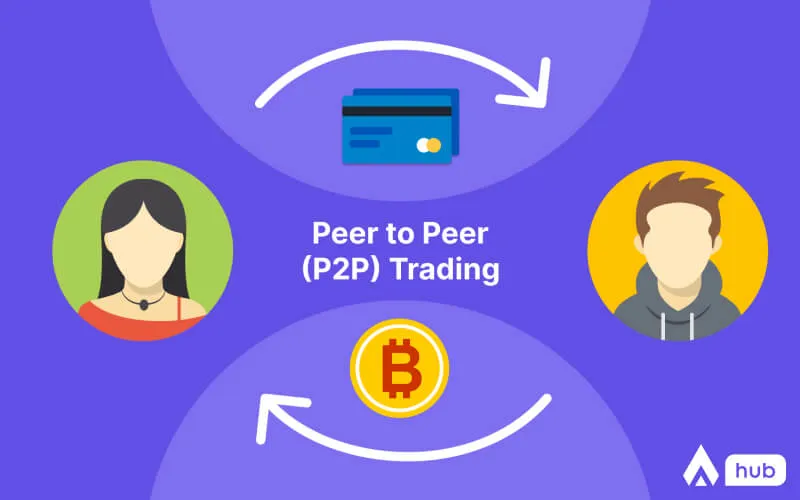
Robo-advisors suit investors who want market exposure without active management responsibility. The 0.50-0.75% management fee remains economical compared to traditional wealth managers charging 1.00-2.00%, though DIY investors following the same ETF strategies can eliminate this cost entirely. For those exploring alternative investment strategies, platforms like Maclear offer P2P trading opportunities.
Customization represents the primary limitation. Investors cannot usually exclude specific sectors, adjust tax-loss harvesting parameters, or incorporate individual stock positions. Those wanting personalized portfolios should look elsewhere.
Traditional Online Brokers: Comprehensive Asset Access
Comdirect, Consorsbank, and ING-DiBa offer the full-service brokerage experience through modern online interfaces. These platforms provide access to German, European, and international exchanges, comprehensive fixed-income markets, options and futures, currencies, and commodities.
Fee structures reflect this breadth. Typical costs include €4.90 base commission plus 0.25% of order value per trade, with minimum and maximum commission caps. While more expensive than neo-brokers for simple equity purchases, the cost disadvantage narrows for large orders due to commission caps.
These platforms suit experienced investors requiring specialized instruments. Bond ladder strategies, covered call writing, and direct foreign stock purchases all require traditional broker capabilities. Research tools, fundamental screening, and analyst reports typically exceed neo-broker offerings.
The barrier to entry remains low — most require no minimum deposit and offer free account maintenance for customers meeting basic activity thresholds.
International Platforms: Global Market Access
Interactive Brokers and DEGIRO provide German investors access to markets spanning 135+ countries, covering North American exchanges, Asian markets, and frontier economies unavailable through German brokers. DEGIRO serves over 2.5 million European customers as of 2025, making it one of the continent's largest retail brokers.
Fee structures vary by asset class and exchange. DEGIRO charges €0.50-1.00 for transactions on major European exchanges, while Interactive Brokers uses tiered pricing starting at $0.0035 per share with minimum commissions. Currency conversion spreads of 0.10-0.25% undercut traditional banks significantly.
These platforms suit internationally diversified investors and those seeking specific foreign securities unavailable through German brokers. Someone building direct exposure to Japanese small-caps or Brazilian equities requires this global access.
Complexity represents the primary challenge. Tax reporting requires more manual intervention, as these platforms provide less Germany-specific documentation than domestic alternatives. Customer service, while available in German at major platforms, centers primarily on English-language support.
Asset Class Availability Across Platforms
The investment universe varies dramatically between platform types. Neo-brokers typically offer 7,500-9,000 tradeable equities and 1,500-2,500 ETFs — sufficient for most passive strategies but limiting for investors seeking specific exposures.
Traditional German brokers provide access to 1+ million securities across all asset classes. This includes Mittelstand stocks trading on minor German exchanges, corporate and government bonds across maturity spectrums, and the full range of derivative instruments.
ETF availability deserves specific attention, as these instruments form the foundation of most modern passive portfolios. All major platforms offer core broad-market ETFs from iShares, Vanguard, and Xtrackers. Differences emerge in specialized products — thematic ETFs, smart-beta strategies, and sector-specific funds show inconsistent availability across neo-brokers.
Savings plan (Sparplan) availability matters for regular investors. Most platforms offer commission-free ETF savings plans on selected funds, allowing automated monthly investments of €25-10,000. Trade Republic provides 2,500+ savings plan-eligible securities, while Scalable Capital offers 2,000+, and traditional brokers typically provide 500-1,000 options.
Tax Optimization Features
German tax regulations create opportunities for optimization through careful platform selection. The most significant consideration involves Vorabpauschale (advance flat-rate taxation) on accumulating ETFs, calculated annually based on the German base interest rate.
Platforms registered as German tax agents automatically calculate and remit investment income taxes (Abgeltungsteuer) at the 25% rate plus solidarity surcharge. This simplifies year-end tax filing but means taxes are paid on unrealized gains for accumulating funds. Investors using international platforms without German tax agent status can defer this taxation until actual sale, providing a small timing advantage.
Loss harvesting represents another optimization opportunity. German tax law allows capital losses to offset capital gains in the same tax year, with excess losses carried forward indefinitely. Sophisticated investors using platforms with robust reporting can systematically harvest losses to minimize annual tax liability.
Platforms differ substantially in tax reporting quality. German brokers provide Jahressteuerbescheinigung documents that integrate directly with ELSTER (German electronic tax filing system). International platforms typically offer annual statements requiring manual transcription and calculation — a process prone to errors and time-consuming for investors with complex portfolios.
Security and Investor Protection Mechanisms
Account security has improved across all platform categories following several high-profile breaches in the fintech sector between 2020-2022. Two-factor authentication now represents the industry standard, with most platforms supporting authenticator apps rather than less-secure SMS-based verification.
Regulatory oversight varies by platform domicile. German-registered brokers fall under BaFin supervision, which conducts regular audits and enforces capital adequacy requirements. International platforms serving German customers must hold authorization from their home regulator and comply with MiFID II passporting requirements for cross-border service provision.
Compensation schemes provide last-resort protection against broker insolvency. The German deposit protection system covers cash balances up to €100,000, while securities held in custody accounts receive unlimited protection as they remain client property separate from broker assets. This segregation means broker bankruptcy should not impact security holdings, though access disruption during resolution proceedings remains possible.
Platform operational resilience matters during market stress. The March 2020 market crash and January 2021 meme stock volatility exposed infrastructure weaknesses at several neo-brokers, with multi-hour outages preventing customers from executing time-sensitive trades. Established brokers with redundant systems and tested disaster recovery procedures demonstrated superior reliability during these stress events.
The Investment Platform Decision Framework
Selecting the optimal platform requires aligning investor needs with platform capabilities across multiple dimensions. Fee-conscious passive investors accumulating diversified ETF portfolios through monthly savings plans should prioritize neo-brokers offering commission-free trades and extensive savings plan selections. Annual cost differences of €200-500 compound significantly over multi-decade investment horizons.
Active traders require different optimization. While neo-broker per-trade fees appear minimal, frequent trading of less liquid securities may result in wider bid-ask spreads that exceed traditional broker commissions. Analysis of all-in execution costs — including commission, spread, and market impact — provides clearer cost comparison than headline commission rates alone.
International investors seeking exposure beyond European markets should evaluate global platforms despite added tax reporting complexity. The ability to directly purchase US small-cap value stocks or emerging market securities unavailable through German brokers may justify operational overhead for investors with specific factor exposure goals. Those interested in income investing strategies should evaluate platforms that support dividend-focused portfolios.
Investors requiring personalized advice or complex financial planning should consider whether platform selection should align with broader banking relationships. Several German banks offer preferential brokerage terms for customers maintaining checking accounts or meeting deposit thresholds, potentially offsetting higher standalone brokerage costs.
Performance Considerations Beyond Costs
Total return encompasses more than fee minimization. Execution quality — the price improvement or deterioration relative to quoted market prices — varies between platforms based on order routing arrangements and market maker relationships.
Analysis of execution quality reports (required disclosure under MiFID II) reveals meaningful differences. Some neo-brokers achieve price improvement on 40-50% of market orders through payment for order flow arrangements, while others show consistent negative slippage. For a €10,000 market order, the difference between +0.05% price improvement and -0.05% slippage equals €10 — potentially exceeding nominal commission savings on that trade.
Settlement speed affects capital efficiency for active traders. German platforms typically settle trades on T+2 (trade date plus two business days), while some international platforms offer T+1 or same-day settlement for certain securities. Faster settlement frees capital for redeployment, increasing potential return for strategies involving rapid position turnover.
Platform reliability during volatile markets represents an often-overlooked performance factor. An investor unable to exit a position during a sudden market decline due to platform outage faces potentially unlimited opportunity cost. Historical uptime during high-volatility periods provides useful platform differentiation beyond normal operating conditions. Investors seeking long term investment strategies should prioritize platforms with proven reliability records.
The optimal investment platform in Germany depends entirely on individual investor requirements — there exists no universally superior choice. Cost-conscious passive investors find neo-brokers offer compelling economics, while sophisticated traders requiring specialized instruments benefit from traditional broker capabilities. International diversification needs may justify global platforms despite added complexity. The decision framework should prioritize total cost of ownership, asset availability matching strategy requirements, tax efficiency, and platform reliability during market stress.
