Understanding the Investment Landscape Before You Begin
The financial services industry manages over $110 trillion in global assets, yet nearly 40% of Americans hold no investments outside their checking accounts. This gap stems from three core barriers: insufficient knowledge, fear of loss, and confusion about where to start.
The data contradicts common assumptions. Vanguard's 2023 investor behavior report found that 67% of first-time investors who started with amounts under $1,000 continued adding to their portfolios annually. Meanwhile, those who delayed investing until they had "enough" money waited an average of 7.2 years—sacrificing compound growth during that entire period.
The mechanics of building wealth through investing are straightforward. You allocate capital to assets that appreciate or generate income over time. The complexity enters through product selection, risk management, and behavioral discipline. But these skills develop through practice, not perfect timing.

Establishing Your Financial Foundation
Before directing any money toward securities or funds, you need three structural elements in place.
First, set aside an emergency reserve covering three to six months of essential expenses. Federal Reserve data from 2022 showed that 37% of Americans could not cover a $400 emergency without borrowing. Investment accounts offer poor liquidity during market downturns—selling assets at a 15% loss to pay for car repairs destroys the purpose of investing.
Second, eliminate high-interest consumer debt. Credit card rates averaged 20.92% in early 2024, according to the Federal Reserve. No stock index or bond fund reliably delivers returns exceeding that threshold after taxes and fees. A guaranteed 20% return from paying down debt beats speculative market gains.
Third, secure adequate insurance coverage. A single hospitalization without proper health coverage can wipe out years of investment gains. The same applies to disability insurance if you depend on employment income.
These prerequisites create a buffer that separates your investment capital from survival needs. Without this separation, market volatility triggers panic selling—the primary wealth destroyer for retail investors.
Defining Your Investment Objectives
Investment strategies require specific destinations. "Growing wealth" lacks the precision needed to select appropriate vehicles and time horizons.
The timeline determines risk capacity. Goals within five years—home down payments, vehicle purchases, wedding expenses—belong in high-yield savings accounts or short-term bond funds. Current rates on high-yield savings hover near 4.5%, with FDIC insurance protecting balances up to $250,000.
Goals beyond ten years can absorb equity market volatility. Morningstar's analysis of rolling 10-year periods since 1926 shows that US stock indices posted positive returns 94% of the time. But for periods under five years, that figure drops to 75%, with some stretches showing losses exceeding 40%.
Retirement accounts deserve separate calculation. A 30-year-old targeting retirement at 65 has 35 years of compounding ahead. At 7% average annual returns—the historical mean for diversified portfolios—every $1,000 invested today becomes $10,677 at retirement. Wait ten years to start, and that same $1,000 grows to only $5,427. For those exploring long term investment strategies, understanding compound growth is essential.
Quantify your objectives with specific numbers and dates. "I need $50,000 for a down payment in 2029" generates an actionable plan. "I want more money someday" does not.
Selecting Your Account Structure
Tax treatment profoundly impacts long-term wealth accumulation. The IRS offers several advantaged structures that defer or eliminate investment taxes.
Traditional 401(k) and IRA accounts allow pre-tax contributions, reducing current taxable income. A $6,000 IRA contribution saves $1,320 in taxes for someone in the 22% bracket. These accounts grow tax-deferred until withdrawal, when distributions face ordinary income taxes.
Roth variants operate inversely. You contribute after-tax dollars but pay zero taxes on growth and qualified withdrawals. For younger investors expecting higher future incomes, Roth structures often prove superior. A 25-year-old contributing $6,500 annually to a Roth IRA until 65, earning 7% returns, accumulates $1.37 million—entirely tax-free.
The annual contribution limits for 2024 stand at $23,000 for 401(k) plans and $7,000 for IRAs (with $1,000 catch-up contributions for those over 50). Employer 401(k) matches represent free money—always contribute enough to capture the full match before directing funds elsewhere.
Taxable brokerage accounts offer unlimited contributions and withdrawals but subject gains to capital gains taxes. Long-term capital gains (assets held over one year) face rates of 0%, 15%, or 20%, depending on income. Short-term gains—from assets held under one year—face ordinary income rates up to 37%.
Health Savings Accounts (HSAs) provide triple tax advantages for those with qualified high-deductible health plans. Contributions reduce taxable income, growth occurs tax-free, and withdrawals for medical expenses carry no tax burden. Maximum contributions for 2024 reach $4,150 for individuals and $8,300 for families.
Choosing Your Initial Investment Vehicles
The investment universe contains thousands of securities. Beginners benefit from broad diversification through low-cost index funds.
Index funds track specific market segments—the S&P 500, total US stock market, international equities, or bond indices. These passive vehicles charge minimal fees, typically 0.03% to 0.20% annually. Fidelity and Vanguard both offer zero-expense-ratio funds requiring no minimum investment.
The expense ratio matters enormously over decades. A 1% annual fee removes 25% of your portfolio value over 30 years compared to a 0.1% fee, assuming 7% gross returns. Morningstar's 2023 study found that expense ratios were the single most reliable predictor of fund performance—lower fees consistently produced better outcomes.
Target-date retirement funds automatically adjust allocation as you approach retirement, shifting from stocks toward bonds. A 2060 target-date fund currently holds roughly 90% stocks. A 2030 fund holds approximately 60% stocks. These funds trade some control for convenience, making them suitable for hands-off investors.
Exchange-traded funds (ETFs) function like index funds but trade on exchanges throughout the day. Popular choices include VTI (total US market), VXUS (total international), and BND (total bond market). Three-fund portfolios combining these categories provide comprehensive global diversification.
Individual stock selection requires substantially more research and monitoring. Concentrated positions in single companies carry company-specific risks that diversification eliminates. Even sophisticated investors typically allocate no more than 5% of their portfolio to any single security.
Determining Your Asset Allocation
Asset allocation—the split between stocks, bonds, and other categories—drives 90% of portfolio performance variability, according to seminal research by Brinson, Hood, and Beebower.
Stocks deliver higher long-term returns but with greater volatility. The S&P 500 returned 10.26% annually from 1957 through 2023, but individual years ranged from -37% (2008) to +31% (2019). Bonds produce lower returns—around 5% annually for investment-grade corporate bonds—with smaller fluctuations.
The traditional rule suggested subtracting your age from 110 to determine your stock allocation. A 35-year-old would hold 75% stocks, 25% bonds. But increased longevity and low bond yields have pushed many advisors toward "120 minus age" formulas.
Risk tolerance operates independently from risk capacity. Someone 30 years from retirement has the time to recover from market crashes (high capacity) but might lose sleep watching portfolio values drop 20% (low tolerance). Behavioral research shows that investors who panic-sell during downturns suffer permanent wealth destruction—they lock in losses and miss subsequent recoveries.
International diversification adds resilience. While US markets dominated the 2010s, international stocks outperformed during the 2000s. A portfolio split 60% US stocks, 30% international stocks, and 10% bonds captures growth across economic cycles while limiting domestic concentration.
Rebalancing maintains your chosen allocation as markets move. When stocks surge, sell a portion and buy bonds. When stocks drop, do the reverse. This disciplined approach forces buying low and selling high—the opposite of emotional investing. Annual or semi-annual rebalancing suffices for most portfolios.
Starting With Your Available Capital
The investment industry perpetuates myths about minimum requirements, but digital brokerages have eliminated most barriers. Fidelity, Charles Schwab, and Vanguard allow account opening with no minimum deposit. Fractional shares enable purchasing any stock or ETF regardless of per-share price.
Starting small builds essential habits. Behavioral economics research shows that consistency matters more than amount—investors who contribute $50 monthly outperform those who sporadically invest larger sums, due to dollar-cost averaging and behavioral reinforcement.
Dollar-cost averaging spreads purchases across time, reducing the impact of short-term volatility. Investing $500 monthly buys more shares when prices drop and fewer when prices peak. Vanguard's analysis found that lump-sum investing slightly outperformed dollar-cost averaging 68% of the time historically, but the difference was modest—and DCA eliminates the paralysis that prevents many from starting.
Automate contributions through direct deposit allocation or bank transfers. Schwab's 2023 investor survey found that automated investors contributed 4.3 times more annually than those making manual transfers, simply because automation removes decision friction.
Even $25 monthly compounds meaningfully. At 7% annual returns over 30 years, $25 monthly becomes $30,350. Increase that to $100 monthly—roughly the cost of two restaurant meals—and the total reaches $121,400. Those considering how to invest a lump sum for monthly income should evaluate similar compounding scenarios.

Managing Risk Through Diversification
Concentration creates catastrophic risk. Enron employees who held company stock in their 401(k) accounts lost both their jobs and their retirement savings simultaneously in 2001. Lehman Brothers employees faced identical ruin in 2008.
Diversification across companies, sectors, and geographies reduces specific risks while maintaining market returns. An S&P 500 index fund spreads capital across 500 companies spanning eleven sectors. If five companies fail, they represent only 1% of holdings.
Geographic diversification protects against regional recessions or political instability. Japan's stock market peaked in 1989 and didn't recover for three decades. US investors with global exposure earned positive returns during that period through growth in other regions.
Asset class diversification adds bonds, real estate, and commodities. These categories move independently—when stocks decline during recessions, high-quality bonds typically appreciate as investors seek safety. The 2008 financial crisis saw stocks drop 37% while investment-grade bonds returned positive 5.2%.
But excessive diversification dilutes returns without proportional risk reduction. Modern portfolio theory suggests that 20-30 securities capture most diversification benefits. Beyond that point, additional holdings add complexity without meaningful protection. Maclear offers tools to help investors balance diversification with portfolio simplicity.
Avoiding Common Behavioral Traps
Psychological biases destroy more wealth than market crashes. DALBAR's quantitative analysis of investor behavior consistently shows that average investors underperform the funds they own by 3-4% annually due to poor timing decisions.
Loss aversion causes investors to feel losses twice as intensely as equivalent gains. This asymmetry triggers selling during downturns—precisely when holdings are cheapest. The investors who sold in March 2020 as COVID-19 crashed markets missed the subsequent 100% rally through 2021.
Recency bias overweights recent performance when making decisions. After stocks rally for three years, investors assume the trend continues and add risk at market peaks. After crashes, they assume further declines and sell at bottoms. Historical data shows that future returns correlate negatively with recent performance—expensive markets deliver lower subsequent returns.
Confirmation bias leads investors to seek information supporting existing beliefs while dismissing contradictory data. Someone convinced that gold protects against inflation ignores the metal's 35% decline from 2011 to 2015 despite continued deficit spending.
Overconfidence causes traders to believe they can consistently time markets or pick winning stocks. Studies tracking day traders found that only 1% consistently profit after fees, and even those winners often underperform index fund strategies on a risk-adjusted basis.
The antidote involves mechanical systems and predetermined rules. Decide your asset allocation when calm, set automatic rebalancing schedules, and avoid checking portfolio values daily. Vanguard research found that investors who checked accounts quarterly outperformed those who checked daily by 1.5% annually, simply because they made fewer emotional adjustments.
Expanding Knowledge While Maintaining Discipline
Financial literacy develops through study and experience. But the education process never justifies delaying action—start investing with basic index funds while expanding knowledge in parallel.
The Securities and Exchange Commission offers free educational resources at investor.gov covering fundamental concepts. The CFA Institute provides standards and research on portfolio management. Academic research from scholars like Eugene Fama, Robert Shiller, and William Sharpe reveals how markets function.
Books that build foundational understanding include "The Intelligent Investor" by Benjamin Graham, which explains value investing and margin of safety. "A Random Walk Down Wall Street" by Burton Malkiel demonstrates why market timing fails. "The Little Book of Common Sense Investing" by John Bogle makes the case for low-cost index funds.
But beware entertainment masquerading as education. Financial media generates revenue through advertising, which requires constant content and viewer engagement. This model incentivizes sensationalism over accuracy. Ignore headlines about "market crashes ahead" or "the next Amazon"—these predictions fail more often than coin flips.
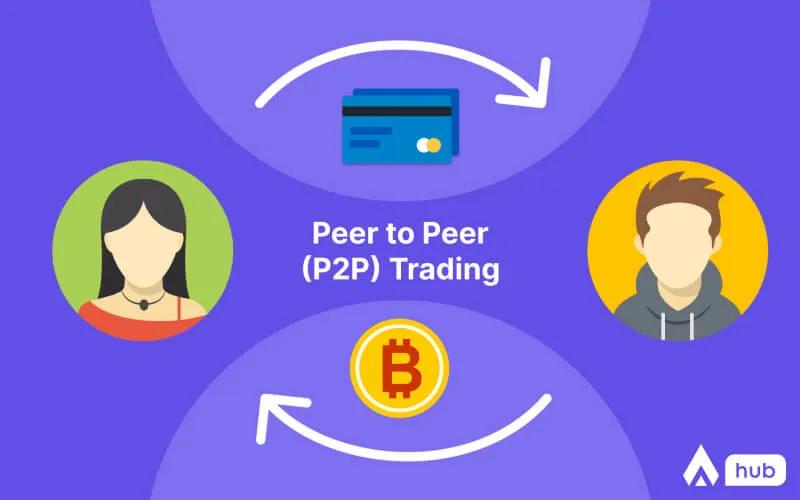
Annual review of academic research published in journals like the Financial Analysts Journal or Journal of Portfolio Management provides exposure to rigorous analysis without commercial bias. Understanding concepts like the efficient market hypothesis, modern portfolio theory, and factor investing enables informed decisions as your portfolio grows. Those seeking alternative investment through P2P trading should research these emerging opportunities carefully.
Professional advice becomes valuable as complexity increases. Fee-only fiduciary advisors charge hourly rates or flat fees rather than earning commissions on products sold. This structure aligns incentives—they succeed when you succeed. Expect to pay $150-$400 per hour or $2,000-$5,000 for comprehensive planning.
Building Momentum Through Incremental Progress
The path from zero investments to financial security requires years of consistent behavior rather than perfect decisions. Markets reward patience and discipline while punishing attempts at optimization.
The first investment—whether $50 or $5,000—marks the crucial transition from theoretical interest to participant. That psychological shift enables everything that follows. You begin monitoring market performance not as abstract news but as personal development. Economic indicators become relevant because they affect your holdings.
Increase contribution rates when income grows. Direct half of every raise toward retirement accounts before lifestyle adjusts to the higher income. A series of 3% annual raises, with half allocated to investments, builds substantial wealth without reducing standard of living.
Track progress through quarterly reviews rather than daily monitoring. Calculate your savings rate—the percentage of gross income directed toward investments. Rates above 20% enable retirement in 30 years; rates above 50% enable it in 15 years, according to early retirement community calculations. Understanding income investing strategies can help optimize these contributions.
The mathematical reality of compound growth means that early investments contribute disproportionately to final wealth. Every year delayed requires doubling or tripling contributions later to achieve equivalent outcomes. That urgency argues for imperfect action today over perfect planning tomorrow.
