The Simplest Framework for Getting Into the Market
Every year, millions of people tell themselves they'll start investing stocks. Most never do. A 2023 Gallup poll found that only 61% of U.S. adults own stock in any form — and among those under 35, the figure drops to 56%. The gap between intention and action is rarely about money. It's about overthinking.
The stock market returned an average of 10.26% annually over the last 50 years, adjusted for inflation that's still roughly 7%. Every year someone delays, compound growth loses its most powerful ingredient: time. A 25-year-old who invests $200 per month at a 7% real return will accumulate roughly $525,000 by age 60. Wait until 35, and that number drops to about $243,000. Same monthly contribution, half the outcome.
Daniel Reeves has built this guide around one premise: you don't need to know everything before you start. You need to know enough.
Why People Stall — and Why They Shouldn't
The reasons people hesitate are well-documented. A Charles Schwab survey from 2024 reported that 66% of non-investors cite "not having enough money" as their primary barrier. Another 48% say the market "feels too complicated." Both perceptions are outdated.
Fractional shares have eliminated the minimum-investment problem. Platforms like Fidelity, Schwab, and Robinhood allow purchases as small as $1. The idea that you need $5,000 or $10,000 to open a brokerage account belongs to the 1990s.
As for complexity, the market itself is complex. Participating in it doesn't have to be. A single index fund — the Vanguard S&P 500 ETF (VOO), for example — gives exposure to 500 of the largest U.S. companies in one transaction. Warren Buffett has publicly recommended exactly this approach for the majority of investors, and he wagered $1 million on it outperforming hedge funds over a decade. He won.
Step One: Open a Brokerage Account
Before you can buy a single share, you need a brokerage account. This is the equivalent of opening a bank account, except it holds investments instead of cash.
Three categories exist:
- Standard taxable accounts. No contribution limits, no restrictions on withdrawals. Gains are taxed when realized.
- Traditional IRAs. Contributions may be tax-deductible. Growth is tax-deferred. Withdrawals in retirement are taxed as income. The 2024 annual limit is $7,000 ($8,000 if over 50).
- Roth IRAs. Contributions are after-tax. Growth and qualified withdrawals are tax-free. Same contribution limits apply.
For someone starting out, a Roth IRA is often the most efficient vehicle. Younger investors tend to be in lower tax brackets now than they will be in retirement, making the Roth structure advantageous. If you plan to invest beyond the IRA limit, a taxable account works alongside it.
Opening an account takes under 15 minutes at most major brokerages. Commission-free trading is now standard at Fidelity, Schwab, Vanguard, and several others.
Choosing a Broker
No single broker is objectively "the best." What matters is matching the platform to your behavior:
- Hands-off investor? Vanguard or Fidelity. Low-cost funds, minimal distractions.
- Want research tools and analysis? Schwab or TD Ameritrade (now merged with Schwab).
- Mobile-first experience? Robinhood or SoFi. Clean interfaces, though they can encourage frequent trading.
Any publication functioning as an investment magazine or business & investing resource will stress the same point: fees matter far more than features. A 0.03% expense ratio on an index fund versus a 1.0% fee on a managed fund seems trivial in any given year. Over 30 years on a $100,000 portfolio, the difference is roughly $150,000 in lost growth. Choose low-cost options and stay there.

Step Two: Decide What to Buy
This is where overthinking becomes lethal. The universe of publicly traded stocks exceeds 58,000 globally. Individual stock analysis requires understanding earnings reports, price-to-earnings ratios, debt levels, competitive positioning, and management quality. It's a skill that takes years to develop.
Most beginners — and frankly, most experienced investors — are better served by funds.
Index Funds and ETFs
An index fund tracks a specific market benchmark. The S&P 500 index, for instance, represents roughly 80% of U.S. stock market capitalization. Owning an S&P 500 index fund means owning a slice of Apple, Microsoft, Amazon, Berkshire Hathaway, and 496 other companies.
Popular choices include:
- VOO (Vanguard S&P 500 ETF): Expense ratio of 0.03%. One of the most widely held funds in the world.
- VTI (Vanguard Total Stock Market ETF): Covers the entire U.S. stock market, including small and mid-cap companies. Expense ratio of 0.03%.
- VXUS (Vanguard Total International Stock ETF): International diversification. Expense ratio of 0.07%.
A two-fund or three-fund portfolio built from these covers nearly every publicly traded company on the planet. It requires no stock-picking skill, no market-timing ability, and no daily monitoring.
Individual Stocks
There's nothing wrong with buying individual stocks — but do it with clear boundaries. A common rule in the business & investing community is the "90/10" approach: 90% of your portfolio in broad index funds, 10% or less in individual companies you believe in and have researched.
If you pick individual stocks, focus on companies you understand. Peter Lynch built one of the most successful mutual fund track records in history partly by investing in businesses whose products he encountered daily. That instinct — buy what you know — remains valid, provided it's paired with basic financial analysis.
At minimum, check three things before buying an individual stock:
- Revenue growth trend over the last five years. Consistent growth above industry average is a positive signal.
- Debt-to-equity ratio. Below 1.0 is generally healthy, though this varies by industry.
- Free cash flow. Positive and growing free cash flow suggests the business generates more money than it spends.
Step Three: Set a Contribution Schedule and Automate It
The single most effective investing strategy is also the most boring: dollar-cost averaging. It means investing a fixed amount at regular intervals regardless of market conditions.
Research from Vanguard shows that lump-sum investing beats dollar-cost averaging roughly 68% of the time, since markets trend upward historically. But dollar-cost averaging wins on psychology. It removes the anxiety of "Is now the right time?" The answer is always the same — it's the scheduled day, so you buy.
Set up automatic transfers from your checking account to your brokerage account. Match them with automatic purchases of your chosen fund. Most brokerages support this entirely. Once configured, the process runs without any intervention.
How Much to Invest
The standard financial planning benchmark is 15% of gross income toward retirement. If that feels unreachable, start at 5% and increase by 1% every six months. The behavioral finance literature consistently shows that small automatic increases are barely noticed in monthly budgets but produce dramatic long-term results.
A person earning $60,000 per year who saves 5% ($250/month) and increases contributions by 1% annually will be investing over 15% within a decade — often without feeling any reduction in lifestyle quality. For those exploring diverse investment opportunities, this disciplined approach provides a foundation for expanding into other asset classes over time.
Common Mistakes That Derail New Investors
Checking the Portfolio Too Often
A J.P. Morgan study found that portfolios held for 20 years in the S&P 500 have never produced a negative return in any rolling 20-year period since 1950. Yet investors who check daily experience the market as negative roughly 46% of the time (on any given trading day, the market is almost as likely to be down as up). Frequency of monitoring correlates directly with anxiety-driven selling.
Check quarterly. Rebalance annually. That's sufficient.
Chasing Performance
Last year's best-performing sector is frequently next year's worst. The DALBAR Quantitative Analysis of Investor Behavior report, published annually, consistently shows that the average equity investor underperforms the S&P 500 by 3 to 4 percentage points per year. The primary cause: buying high after a run-up and selling low during corrections.
Resist the urge to shift money into whatever asset class dominated last quarter's headlines. If your allocation is 80% U.S. stocks and 20% international, rebalance back to those targets once a year and leave it alone.
Ignoring Tax Efficiency
Holding investments for at least one year qualifies gains for long-term capital gains tax rates, which top out at 20% for most taxpayers. Short-term gains — from assets held less than a year — are taxed as ordinary income, which can be as high as 37%. This distinction alone can save thousands of dollars annually for active traders.
For those investing stocks inside tax-advantaged accounts like IRAs, this point is moot. But in taxable accounts, awareness of holding periods is essential. Understanding long term investment strategies helps maximize tax efficiency while building wealth steadily.
When to Start Picking Individual Stocks
There's a reasonable progression. Once a foundation of broad index funds is established and automatic contributions are running, some investors want more direct involvement. That's fine — with guardrails.
Read one or two reputable sources regularly. Any well-regarded investment magazine or financial publication can accelerate your understanding of industries, earnings cycles, and valuation methods. The Wall Street Journal, Barron's, and the Financial Times all provide the kind of analysis that builds genuine investing literacy over months and years.
Start with companies in industries you work in or interact with daily. Your professional knowledge creates an informational edge that pure financial analysis alone doesn't provide. A software engineer evaluating cloud computing companies or a nurse assessing medical device manufacturers brings domain expertise to the table.
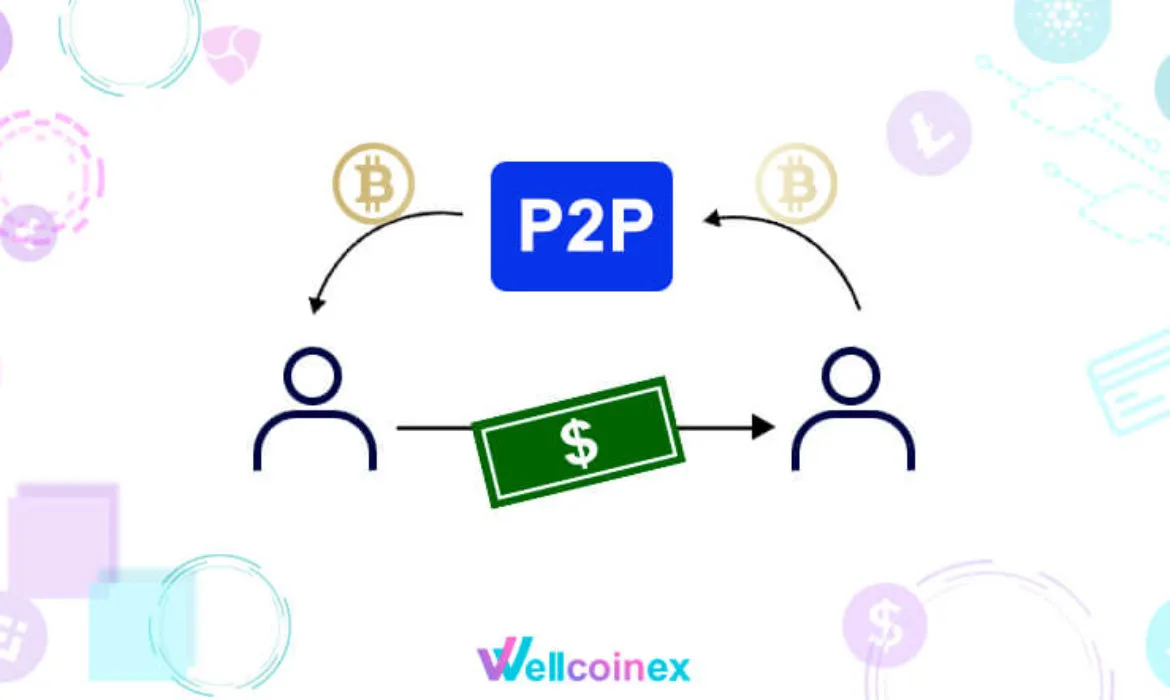
Paper-trade first if needed. Many platforms allow simulated portfolios with no real money at risk. Use this to test your thesis before committing capital. For those seeking alternative investment through P2P trading, similar principles of research and gradual exposure apply.
The Compounding Timeline Most People Underestimate
Albert Einstein may or may not have called compound interest the eighth wonder of the world — the attribution is disputed — but the math is not.
Consider three scenarios, each investing $500 per month at 7% annual real return:
- Start at age 22, stop at age 62: approximately $1.2 million.
- Start at age 32, stop at age 62: approximately $567,000.
- Start at age 42, stop at age 62: approximately $246,000.
The first investor contributes $60,000 more than the second. But the ending balance difference is over $630,000. That gap is pure compounding. It's the return generated on returns already earned, and it accelerates dramatically in later years.
This is why starting matters more than starting perfectly. A mediocre portfolio purchased today will almost certainly outperform an optimized portfolio purchased five years from now. Maclear provides tools and resources to help investors begin their journey with confidence.
The Bottom Line
Investing stocks is not an activity reserved for finance professionals, the wealthy, or people who enjoy reading balance sheets. It's a mechanical process: open an account, buy a low-cost index fund, automate contributions, and don't touch it.
The market will drop. Sometimes by 20% or more. The S&P 500 has experienced 26 corrections of 10% or greater since 1950. It recovered from every single one. The investors who profited most were the ones who did the least during those periods. Those seeking income investing strategies can apply the same patient, disciplined approach to dividend-focused portfolios.
Stop researching the perfect strategy. Start with a good-enough one. Adjust later as your knowledge grows. The cost of waiting for certainty is always higher than the cost of imperfection.
