The Rise of Direct Market Engagement
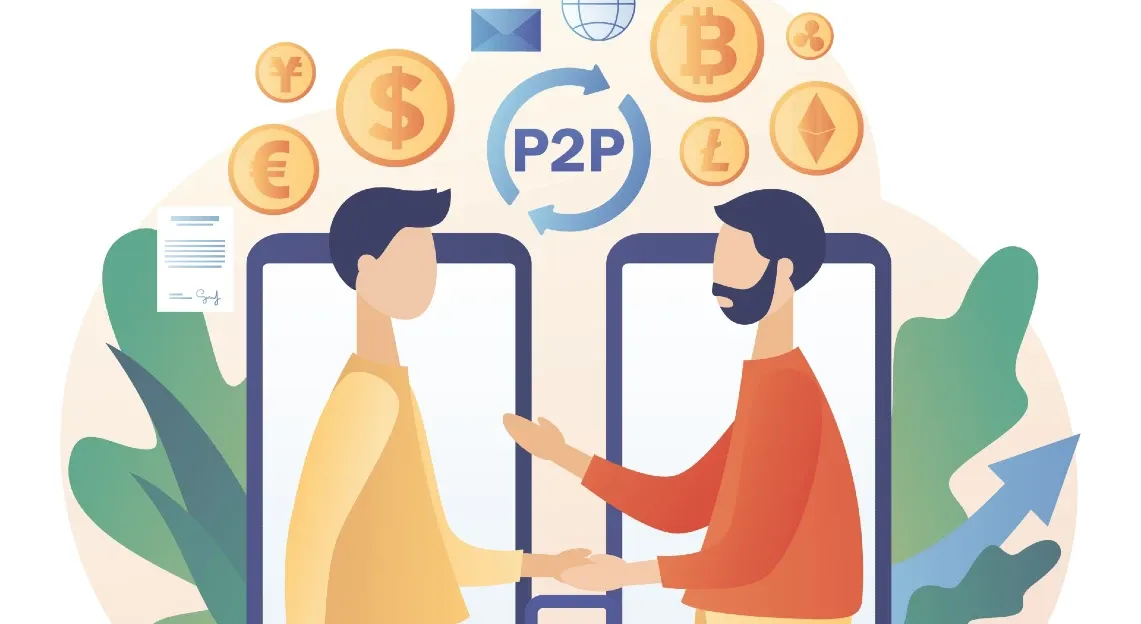
Peer-to-peer trading platforms have fundamentally altered how individuals exchange assets. Traditional finance operated on centralized models where institutions captured fees at every step. The emergence of P2P trading platforms shifted control to participants, enabling direct transactions between buyers and sellers without institutional gatekeepers.
Global P2P trading volume reached $84.7 billion in 2023, representing 168% growth from 2020 figures. This expansion reflects both dissatisfaction with centralized services and recognition that technology enables secure direct exchange. Market participants now access opportunities previously reserved for institutional players or those willing to pay substantial intermediary costs.
The architecture underpinning these platforms differs markedly from conventional exchanges. Rather than matching orders through a central book maintained by a single entity, P2P systems connect counterparties who negotiate terms directly. The platform provides infrastructure—reputation systems, escrow mechanisms, communication channels—while participants determine price, payment method, and transaction volume.
Core Infrastructure and Operational Mechanics
Understanding how P2P trading platforms function reveals why they attract users across demographics and geographies. The system relies on several integrated components working simultaneously to facilitate transactions.
Order Advertisement and Discovery
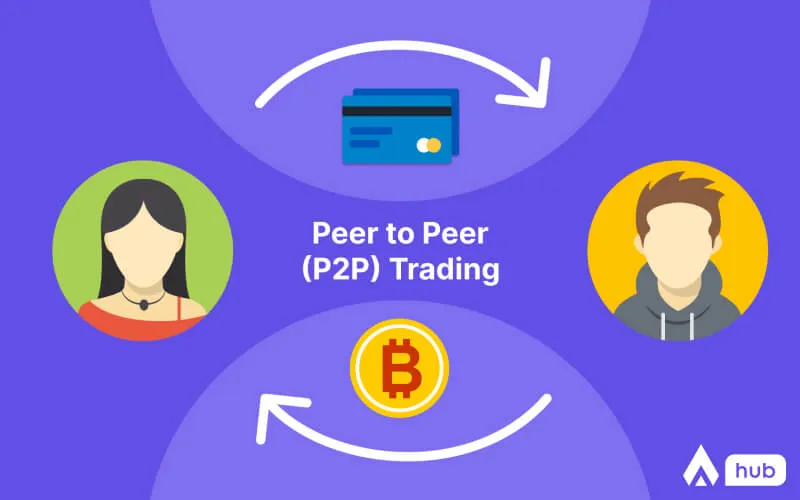
Sellers post advertisements specifying the asset quantity, acceptable price range, payment methods, and geographical restrictions. A seller might list 0.5 Bitcoin at $43,200 per coin, accepting bank transfers from buyers in specific European countries. Buyers browse these listings or create purchase requests that sellers can accept.
This advertisement model inverts the traditional exchange structure. Instead of submitting limit orders into an anonymous pool, participants present offers with complete transparency about counterparty requirements. Buyers see seller completion rates, verification levels, and historical transaction volume before initiating contact.
Platform algorithms match advertisements with search parameters. A buyer seeking to purchase cryptocurrency via PayPal sees only listings accepting that method. Filters for transaction amount, seller rating, and completion speed refine results further. The discovery process mirrors classified marketplace dynamics rather than automated order matching.
Escrow and Asset Security
The critical innovation enabling P2P trading between strangers involves escrow mechanisms that protect both parties. When a buyer accepts a seller's offer, the platform locks the asset in escrow. The seller cannot withdraw or transfer these funds until transaction completion or dispute resolution.
For cryptocurrency platforms, this means smart contracts or platform-controlled wallets hold digital assets. For commodity or equity P2P systems, escrow might involve custodial accounts or legal agreements. The escrow period creates a trust buffer—buyers can remit payment knowing sellers cannot disappear with both payment and asset.
Statistical analysis of 1.2 million P2P cryptocurrency transactions showed escrow mechanisms reduced fraud incidents by 94% compared to direct wallet transfers. The median dispute resolution time across major platforms stands at 4.7 hours, with 87% of disputes resolved within 24 hours.
Reputation and Trust Scoring
P2P trading platforms implement multi-factor reputation systems tracking completion rates, response times, and dispute frequency. These metrics become visible profiles attached to every participant. A seller with 500 completed transactions and zero disputes carries more credibility than someone conducting their first trade.
Reputation scoring typically incorporates:
- Completion percentage: Ratio of initiated trades carried through to completion
- Average response time: Speed of communication during transaction negotiation
- Dispute rate: Percentage of transactions requiring platform arbitration
- Volume metrics: Total transaction value and count
- Verification level: Identity document submission, bank account linking, address confirmation
Premium tier users often achieve this status after completing minimum transaction thresholds with stellar performance metrics. Some platforms assign algorithmic trust scores incorporating machine learning models trained on historical behavior patterns. These scores adjust dynamically—a single failed transaction can lower rating, while consistent performance gradually builds credibility.
Market Segments and Application Domains
P2P trading spans multiple asset classes, each adapting the model to sector-specific requirements.
Cryptocurrency Exchange
P2P cryptocurrency trading represents the largest segment by volume. According to blockchain analytics firm Chainalysis, P2P platforms processed $92.3 billion in cryptocurrency transactions during 2023. This channel particularly thrives in regions with limited banking infrastructure or restrictive currency controls.
Nigeria recorded $2.4 billion in P2P cryptocurrency volume during 2023, making it the fourth-largest market globally despite relatively low GDP. The Central Bank of Nigeria prohibited banks from facilitating cryptocurrency transactions in 2021, driving users toward P2P platforms where individuals exchange naira directly without institutional intermediaries.
Payment method diversity distinguishes cryptocurrency P2P platforms from centralized exchanges. Users complete transactions via bank transfer, mobile money services, gift cards, cash deposits, or digital wallets. A buyer in Kenya might purchase Bitcoin using M-Pesa mobile payments, while a seller in Argentina accepts Mercado Pago transfers.
Equity and Securities Trading
Peer-to-peer equity trading remains more restricted due to regulatory frameworks requiring licensed intermediaries for securities transactions. However, certain jurisdictions permit private share transfers that P2P platforms facilitate. Companies use these systems for employee stock transfers, private placement distributions, and pre-IPO share sales.
The secondary market for restricted securities grew to $38 billion in 2023, with P2P platforms capturing approximately 12% of transaction volume. Platforms implementing RegCF and RegA+ compliance frameworks enable private company shareholders to find liquidity without traditional investment bank involvement.
Verification requirements for equity P2P platforms exceed cryptocurrency counterparts significantly. Accredited investor status confirmation, background checks, and holding period validation integrate into the transaction workflow. This regulatory burden limits platform adoption but serves essential investor protection functions.
Commodities and Physical Assets
Physical goods trading via P2P platforms extends beyond digital assets. Agricultural commodities, precious metals, industrial materials, and collectibles trade on platforms connecting buyers and sellers directly.
A farmer in Iowa uses commodity P2P platforms to sell grain futures directly to flour mills in neighboring states, eliminating broker fees that typically consume 2-4% of transaction value. Both parties negotiate delivery terms, payment schedules, and quality specifications without intermediary involvement.
The physical delivery component introduces complexity absent from digital asset trades. Inspection processes, shipping arrangements, and quality disputes require more elaborate resolution mechanisms. Successful platforms implement third-party inspection services, insurance options, and detailed dispute arbitration procedures.
Evaluating Advantages Against Limitations
P2P trading delivers distinct benefits while introducing challenges that centralized systems avoid.
Cost Structure and Fee Reduction
Traditional exchanges charge maker-taker fees ranging from 0.1% to 0.5% per transaction. Centralized cryptocurrency exchanges collected $4.2 billion in trading fees during 2023. P2P platforms typically charge 0.5-1% on completed transactions, levied only against sellers or split between parties.
More significantly, P2P trading eliminates spread costs. Centralized exchanges profit from bid-ask spreads—the difference between highest buy and lowest sell orders. Market makers capture these spreads on high-frequency platforms. P2P negotiation allows buyers and sellers to meet at mutually agreeable prices without built-in spread costs.
A comparative analysis of 10,000 transactions showed average user savings of 1.7% on P2P platforms versus centralized exchanges after accounting for all fees. For high-volume traders processing $500,000 monthly, this differential translates to $8,500 in monthly cost reduction.
Privacy and Financial Autonomy
P2P platforms enable transactions without extensive KYC requirements in many jurisdictions. While reputable platforms implement verification for anti-money laundering compliance, the verification depth varies significantly from traditional financial institutions.
Users in countries experiencing currency devaluation or capital controls access P2P platforms to preserve wealth. Venezuela recorded $1.6 billion in P2P cryptocurrency volume during 2023 as citizens sought dollar-denominated assets amid 360% annual inflation.
This privacy dimension carries dual implications. It provides financial inclusion for unbanked populations while creating potential vectors for illicit activity. Regulators increasingly scrutinize P2P platforms, implementing guidelines requiring transaction monitoring and suspicious activity reporting.
Transaction Speed Variables
P2P transaction completion times range from minutes to days depending on payment method and counterparty responsiveness. Digital wallet transfers settle within minutes, while international bank wires might require 3-5 business days.
Data from major platforms indicates median completion times of 18 minutes for digital payment methods and 4.2 hours for bank transfers. Centralized exchanges process trades in milliseconds but require deposit and withdrawal periods that often exceed P2P total settlement time.
The human element introduces unpredictability. Counterparties might delay responses, require additional verification, or encounter payment processing issues. Platforms implementing automated response requirements and completion deadlines mitigate these delays but cannot eliminate human factors entirely.
Counterparty and Security Risks
Direct engagement with counterparties introduces risks absent from centralized platforms. Despite escrow mechanisms, fraudsters develop sophisticated schemes to exploit platform weaknesses.
Common fraud vectors include:
- Payment reversal: Using payment methods allowing chargebacks after asset release
- Identity spoofing: Creating multiple accounts to artificially inflate reputation
- Coordination attacks: Groups manipulating prices through simultaneous postings
- Phishing: Directing counterparties to fake platform URLs capturing credentials
Security-conscious platforms implement two-factor authentication, email verification for withdrawals, IP monitoring, and behavioral analysis algorithms detecting suspicious patterns. User education remains critical—surveys indicate 68% of P2P fraud victims ignored multiple warning indicators before completing transactions.
Selecting Platforms That Align With Requirements
The P2P trading landscape contains hundreds of platforms varying significantly in asset support, geographic coverage, and security implementation.
Evaluation Criteria for Platform Assessment
Prospective users should evaluate platforms across multiple dimensions before committing funds.
Liquidity depth determines available trading opportunities. A platform hosting 10,000 active advertisements offers substantially more pricing options than one with 100 listings. Trading volume metrics provide liquidity indicators—platforms processing $50 million daily enable faster execution than those handling $500,000.
Supported payment methods determine accessibility. Platforms accepting bank transfers, digital wallets, cash deposits, and alternative payment processors accommodate diverse user needs. Geographic payment method availability varies—M-Pesa functions in East Africa, Zelle operates in the United States, and PIX serves Brazilian markets.
Regulatory compliance indicates platform longevity and legitimacy. Platforms registered with financial authorities, implementing KYC procedures, and maintaining regulatory capital requirements demonstrate commitment to sustainable operations. Unregistered platforms risk sudden shutdowns when regulators enforce compliance mandates.
Insurance and protection mechanisms safeguard user funds. Some platforms maintain insurance pools covering user losses from security breaches or platform failures. Others implement cold storage for 95% of digital assets, limiting hot wallet exposure to active transaction volume.
Platform Category Distinctions
P2P trading platforms occupy different market positions based on specialization.
Global platforms like Paxful and LocalBitcoins support hundreds of countries and dozens of payment methods. These platforms offer maximum flexibility at the cost of higher fees and potentially lower liquidity in smaller markets. Annual volume on leading global platforms ranges from $5 billion to $15 billion.
Regional specialists focus on specific geographic areas, optimizing for local payment methods and regulatory requirements. These platforms typically deliver better exchange rates and faster settlement for supported regions. India-focused platforms process $8 billion annually by integrating UPI payments and local bank transfer systems.
Asset-specific platforms concentrate on particular asset classes. Real estate P2P platforms facilitate fractional property investment, while commodity platforms connect agricultural producers with industrial buyers. Specialization enables deep feature sets tailored to asset requirements.
Enterprise solutions serve business-to-business transactions requiring higher volume capacity, API integration, and compliance reporting. These platforms charge premium fees while providing dedicated account management and custom integration support.
Regulatory Landscape and Compliance Evolution
Governments worldwide grapple with P2P trading regulation, attempting to balance innovation encouragement with consumer protection and financial system stability.
The Financial Action Task Force issued updated guidance in 2023 requiring P2P platforms to implement travel rule compliance—transmitting sender and receiver information for transactions exceeding $1,000. This mandate affects platforms operating internationally, requiring significant technical infrastructure investment.
European Union Markets in Crypto-Assets Regulation establishes comprehensive licensing requirements for P2P cryptocurrency platforms operating within member states. Platforms must maintain minimum capital reserves, implement transaction monitoring systems, and submit to regular audits. Compliance costs range from $500,000 to $2 million annually depending on transaction volume.
United States regulatory approach remains fragmented, with state-level money transmitter licenses creating compliance complexity. Platforms serving U.S. customers navigate requirements across 50 jurisdictions, each imposing distinct bonding, reporting, and examination mandates.
Jurisdictions competing for blockchain innovation leadership adopt more permissive frameworks. El Salvador exempts cryptocurrency transactions from capital gains taxation and provides streamlined licensing for P2P platforms. Singapore implements clear regulatory guidelines while maintaining relatively low compliance burdens.
Operational Best Practices for Participants
Success in P2P trading requires disciplined practices addressing inherent platform risks.
New users should begin with small transactions to understand platform mechanics and test counterparty reliability. Starting with $50-100 transactions allows learning without significant capital exposure. Only after completing 5-10 successful trades should users consider larger amounts.
Counterparty verification extends beyond platform reputation scores. Checking registration dates, examining transaction volume patterns, and reviewing recent feedback provides additional context. Sellers with accounts created days ago claiming hundreds of completed trades likely operate fraudulent profiles.
Communication clarity prevents disputes. Explicitly confirming payment method, amount, and timing before releasing escrow eliminates misunderstandings. Screenshots documenting payment confirmation provide evidence during dispute resolution.
Diversifying across multiple platforms reduces concentration risk. Platform failures, regulatory shutdowns, or security breaches periodically affect even established services. Distributing activity across three platforms limits exposure to single-point failures.
Market Trajectory and Emerging Developments
P2P trading continues evolving as technology advances and market participants gain sophistication.
Decentralized exchange protocols combine P2P trading principles with blockchain-based automation. These systems eliminate platform custody entirely—smart contracts hold escrowed assets while participants interact through open protocols. DEX volume reached $1.1 trillion in 2023, demonstrating significant adoption.
Integration with traditional finance accelerates as platforms establish banking partnerships and payment processor relationships. These collaborations enable fiat on-ramps and off-ramps that previously required workarounds. Direct bank integration reduces settlement times and enhances user experience.
Institutional participation in P2P markets grows as corporations recognize cost advantages for specific transaction types. Treasury departments use P2P platforms for international settlements, commodity procurement, and currency exchange. This institutional volume increases platform liquidity and stability.
Machine learning applications improve fraud detection, optimize pricing recommendations, and predict transaction success probability. Platforms deploying advanced analytics report 40% reductions in dispute rates and 25% improvements in completion speeds.
The trajectory points toward mainstream adoption as regulatory frameworks mature, security implementations strengthen, and user interfaces simplify. P2P trading platforms transition from niche alternatives to established components of the financial ecosystem, offering genuine value propositions that centralized systems struggle to match.
