Understanding Trading as a Smart Investment Vehicle
Peer-to-peer trading has evolved from a niche financial activity into a significant component of modern investment portfolios. In 2025, the P2P market represents more than $678 billion globally, with annual growth rates averaging 24.7% across developed economies. This expansion reflects fundamental shifts in how individuals access investment opportunities previously reserved for institutional players.
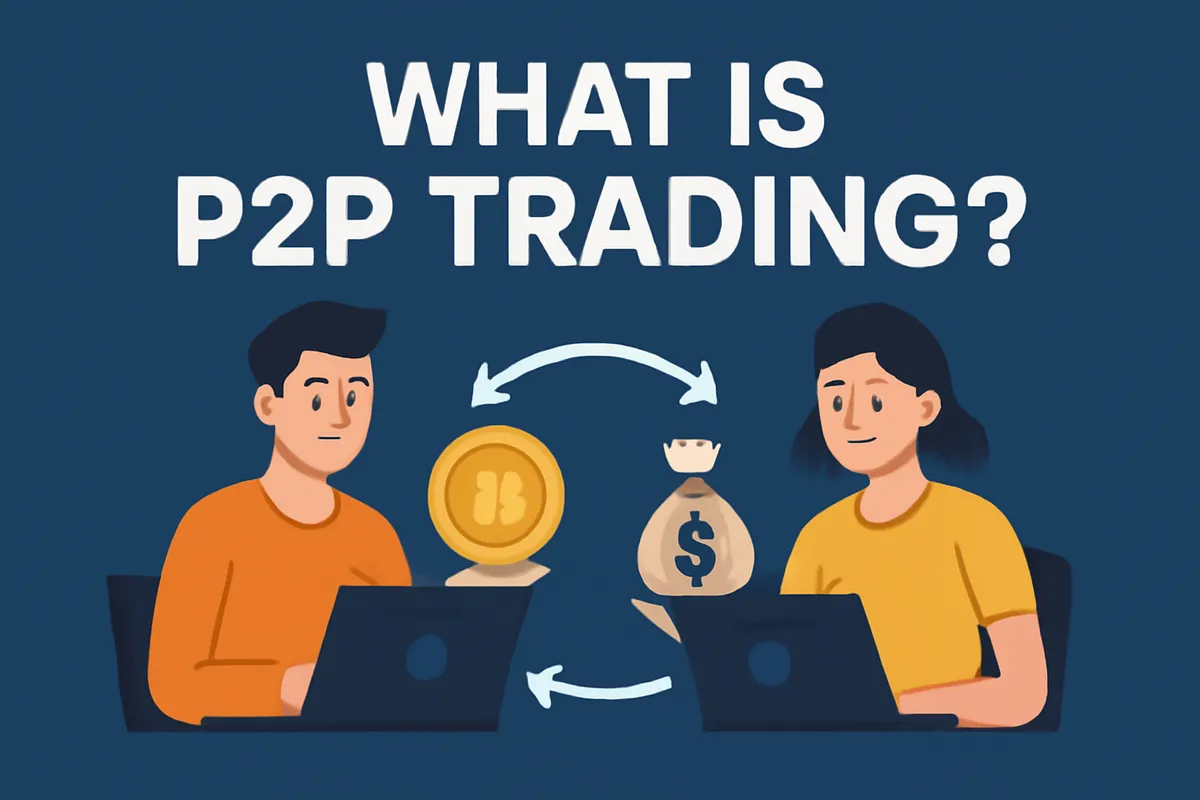
P2P trading eliminates traditional intermediaries by connecting investors directly with borrowers or asset holders through digital platforms. The model delivers efficiency gains through reduced operational overhead and faster transaction settlement. For investors seeking returns beyond conventional fixed-income products, P2P markets offer yields ranging from 4.2% to 12.8% annually, depending on risk tier and asset class.
The democratization of capital markets through P2P infrastructure has created new pathways for portfolio diversification. Retail investors now allocate between 3% and 15% of their investable assets to P2P products, according to data from European Banking Authority surveys. This allocation trend indicates growing institutional acceptance and regulatory maturation across major financial centers.

Core Principles of Smart Investment in Markets
Smart investment begins with recognizing that P2P trading operates under different risk mechanics than traditional securities. Default rates in consumer lending P2P platforms averaged 3.8% in 2024, compared to 1.1% for investment-grade corporate bonds. This differential demands rigorous due diligence and active portfolio management.
Successful P2P investors apply three foundational principles: capital preservation, risk-adjusted return optimization, and liquidity planning. Capital preservation requires understanding that P2P loans and assets lack secondary market depth available in public equities. Once committed, capital typically remains locked for loan duration periods ranging from six months to five years.
Risk-adjusted returns demand comparative analysis against benchmark alternatives. A P2P loan yielding 8% with a 4% default probability delivers an expected real return of approximately 4%, which must exceed inflation and opportunity costs from alternative investments. Investors who fail to account for default-adjusted returns systematically overestimate P2P performance.
Liquidity planning addresses the fundamental mismatch between P2P investment horizons and unexpected capital needs. The best investment plan incorporates P2P positions as part of a laddered maturity structure, ensuring that capital returns on a rolling basis rather than concentrating all redemptions at single points in time.
Platform Selection and Due Diligence Requirements
Platform selection constitutes the most critical decision in P2P investing. In 2025, more than 2,400 P2P platforms operate globally, but quality varies dramatically. Top-tier platforms maintain loan loss reserves between 2% and 5% of outstanding principal, implement three-factor credit verification systems, and publish monthly performance data with audited verification.
Regulatory licensing serves as the primary filter for platform evaluation. Jurisdictions including the United Kingdom, Singapore, Germany, and Australia enforce mandatory capital requirements, operational audits, and investor protection standards. Platforms operating under Financial Conduct Authority supervision in the UK demonstrate default rates 40% lower than unregulated competitors, according to Cambridge Centre for Alternative Finance research.
Technology infrastructure separates professional platforms from opportunistic operators. Advanced platforms deploy machine learning credit models that process more than 10,000 data points per borrower application, resulting in default prediction accuracy exceeding 78%. These systems continuously refine risk scoring based on repayment performance, macroeconomic indicators, and behavioral patterns.
Fee structures directly impact net returns and vary substantially across platforms. Transparent operators charge flat annual servicing fees between 0.5% and 1.5% of deployed capital, while others apply opaque origination fees, early withdrawal penalties, and performance-based charges that can erode 20% to 35% of gross returns over typical holding periods. Maclear provides transparent fee structures and regulatory compliance for investors.

Portfolio Construction and Diversification Strategies
The best ways to invest money in P2P markets involve systematic portfolio construction rather than concentrated bets. Statistical analysis demonstrates that portfolios containing fewer than 100 individual P2P positions exhibit volatility levels 3.2 times higher than diversified portfolios exceeding 200 positions. This diversification threshold reduces idiosyncratic risk from individual borrower defaults.
Geographic diversification provides protection against regional economic downturns. Investors spreading capital across three or more national markets reduce portfolio volatility by 22% compared to single-market concentration, based on five-year rolling return data. Cross-border P2P investing requires understanding local legal frameworks, currency exposure, and repatriation regulations that may restrict capital movement.
Asset class diversification within P2P markets enhances risk-adjusted returns. Beyond consumer lending, P2P platforms now facilitate real estate debt, invoice financing, renewable energy project funding, and small business expansion capital. Correlation coefficients between these asset classes range from 0.15 to 0.42, indicating meaningful diversification benefits when combined in portfolios.
Maturity diversification prevents concentration of repayment risk at single time points. Investors should structure portfolios with staggered maturity dates, allocating roughly equal capital to quarterly cohorts. This approach generates consistent cash flow for reinvestment or liquidity needs while reducing exposure to credit cycle timing.
Risk Management Frameworks for Investing
Effective risk management in P2P trading requires quantitative assessment methodologies adapted from institutional credit analysis. The expected loss framework calculates potential capital impairment by multiplying probability of default, loss given default, and exposure at default. For consumer loans with 5% default probability and 70% loss severity, expected loss equals 3.5% annually.
Concentration limits prevent outsized losses from single exposures. Conservative investors cap individual position sizes at 0.5% to 1% of total P2P capital, ensuring that single defaults impact overall portfolio returns by no more than 0.3% to 0.7%. Aggressive approaches allow 2% to 3% position sizes but require correspondingly higher diversification across 150 to 300 individual investments.
Credit quality stratification balances return generation with capital preservation. Optimal portfolios allocate 40% to 50% of capital to lower-risk borrowers rated A or B grade, 30% to 40% to moderate-risk C and D grades, and no more than 10% to 20% to speculative E and F categories. This barbell approach captures higher yields while maintaining defensive stability.
Stress testing evaluates portfolio resilience under adverse scenarios. Investors should model performance assuming default rates double from historical averages and recovery rates decline by 25%. Portfolios that maintain positive returns under these stressed conditions demonstrate adequate risk buffers. Historical data shows that economic recessions increase P2P default rates by factors of 1.8 to 2.4 times normal levels.
Tax Optimization and Legal Considerations
Tax treatment of P2P returns varies significantly across jurisdictions and directly impacts net performance. In most developed markets, P2P interest income receives ordinary income tax treatment at marginal rates ranging from 22% to 45%. Capital losses from defaults may offset ordinary income up to annual limits of $3,000 in the United States or unlimited amounts in jurisdictions like the United Kingdom.
Tax-advantaged account structures can enhance after-tax returns substantially. Investors utilizing self-directed individual retirement accounts or ISA wrappers for P2P investments eliminate annual income taxation, converting what would be 30% to 40% tax drags into compounding growth acceleration. Over 15-year horizons, tax-deferred compounding increases terminal wealth by 35% to 60% compared to taxable accounts.
Legal recourse mechanisms vary between platforms and jurisdictions. Superior platforms provide clear documentation of investor rights, collection procedures for defaulted loans, and dispute resolution frameworks. Investors should verify whether loan agreements grant direct creditor rights or merely create contractual claims against platform intermediaries, which offer weaker protection in bankruptcy scenarios.
Regulatory evolution presents ongoing legal considerations. In 2024 and 2025, major financial authorities including the Securities and Exchange Commission and European Securities and Markets Authority implemented new disclosure requirements, capital adequacy standards, and investor suitability assessments for P2P platforms. These regulatory enhancements generally improve market integrity but may restrict access for smaller retail investors.
Performance Measurement and Portfolio Monitoring
Accurate performance measurement in P2P investing requires methods beyond simple interest rate quotation. The internal rate of return metric accounts for timing of cash flows, reinvestment returns, and realized losses from defaults. IRR calculations typically show returns 1.5 to 3 percentage points below advertised platform rates when default experience and fee impacts are properly incorporated.
Money-weighted returns provide more accurate assessment than time-weighted metrics for P2P portfolios where investors control cash flow timing. The money-weighted approach captures the impact of contribution and withdrawal decisions, revealing whether investors successfully timed entries during periods of attractive pricing or mistakenly concentrated investments near market peaks.
Monthly portfolio monitoring should track five key metrics: weighted average interest rate, default rate as percentage of outstanding principal, recovery rate on defaulted positions, average position maturity, and platform fee impact. Deterioration in any metric by more than 20% from historical averages signals need for portfolio rebalancing or capital reallocation.
Benchmark comparison establishes whether P2P returns justify their risks. Appropriate benchmarks include investment-grade corporate bond indices adjusted for duration, high-yield bond indices for speculative P2P positions, or blended benchmarks reflecting portfolio credit quality mix. P2P positions should deliver excess returns of at least 150 to 200 basis points above comparable fixed-income alternatives to compensate for illiquidity and operational complexity.
Integration with Broader Investment Portfolios
The best investment plan incorporates P2P positions as tactical allocations within diversified portfolios rather than core holdings. Financial advisors typically recommend P2P allocations between 5% and 15% of total investable assets for investors with moderate to aggressive risk tolerance and investment horizons exceeding five years.
Correlation analysis guides optimal portfolio integration. P2P lending returns exhibit correlation coefficients of 0.25 to 0.35 with equity markets and 0.45 to 0.60 with corporate credit markets. These moderate correlations provide modest diversification benefits while acknowledging that P2P assets remain procyclical, experiencing elevated defaults during economic contractions.
Portfolio rebalancing considerations differ for P2P positions due to illiquidity constraints. Unlike publicly traded securities that can be adjusted continuously, P2P positions require patient capital deployment and natural maturity-driven rebalancing. Investors should plan annual portfolio reviews with gradual reallocation through reinvestment decisions rather than forced liquidations.
Liquidity reserves become essential when portfolios include significant P2P allocations. Conservative planning maintains cash or money market reserves equal to 15% to 25% of P2P position values, providing buffer capacity for unexpected expenses without forced sales of illiquid P2P holdings at unfavorable terms.
Emerging Trends Shaping Investment in 2025
Institutional participation in P2P markets accelerated dramatically in 2024 and 2025, with pension funds, insurance companies, and asset managers now representing 38% of total P2P capital deployed. This institutional influx improves market liquidity and platform stability but compresses returns for retail investors as competition for attractive loans intensifies.
Blockchain integration and tokenization initiatives promise enhanced liquidity for P2P assets. Several platforms now offer fractional ownership tokens representing loan portfolios, with secondary trading on digital asset exchanges. Early data shows these tokenized P2P products trade at 4% to 8% discounts to net asset value, creating potential entry opportunities for patient buyers.
Artificial intelligence credit assessment continues advancing, with fourth-generation models incorporating alternative data sources including utility payment history, rental records, educational credentials, and employment stability metrics. These enhanced models reduce information asymmetry between borrowers and lenders, potentially lowering default rates by 15% to 25% compared to traditional credit-score-only approaches. Understanding peer to peer lending fundamentals helps investors evaluate these technological advances.
Regulatory harmonization across European Union member states through the European Crowdfunding Service Providers framework creates standardized operating requirements and enables cross-border platform passporting. This regulatory convergence reduces compliance costs and expands addressable markets for leading platforms while raising barriers for smaller operators. Investors exploring crowdfunding investments benefit from these enhanced protections.
Smart investment in P2P trading combines analytical rigor with disciplined execution. The opportunity set continues expanding as platforms mature and regulatory frameworks strengthen. Investors who apply systematic selection criteria, construct diversified portfolios, and maintain realistic return expectations can capture attractive risk-adjusted returns while participating in the ongoing transformation of consumer and small business finance.
