The Intersection of Traditional Value Investing and Modern Markets
Value investing has survived nearly a century of market cycles, from Benjamin Graham's 1934 publication of "Security Analysis" through every subsequent boom and bust. The discipline teaches investors to buy assets trading below their intrinsic worth and hold until the market recognizes their true value. Today, peer-to-peer trading platforms introduce new dimensions to this time-tested approach.
P2P markets allow direct transactions between individuals without institutional intermediaries. Bitcoin trading on platforms like LocalBitcoins or Paxful, NFT exchanges, and decentralized finance protocols all operate on P2P principles. The World Bank estimates that global P2P lending markets alone surpassed $67 billion in transaction volume during 2023. This growth creates opportunities for value-focused traders who understand how to assess worth in decentralized environments.
Traditional value investors analyze financial statements, calculate price-to-earnings ratios, and study competitive moats. P2P traders need analogous frameworks adapted to assets that may lack quarterly reports or centralized price discovery mechanisms. The core principle remains identical: identify assets where current price diverges significantly from fundamental value.
Establishing Intrinsic Value in Decentralized Markets
The first challenge in P2P value investing centers on determining what an asset should be worth. Stock investors examine revenue, profit margins, and book value. P2P market participants must construct valuation models from different data points.
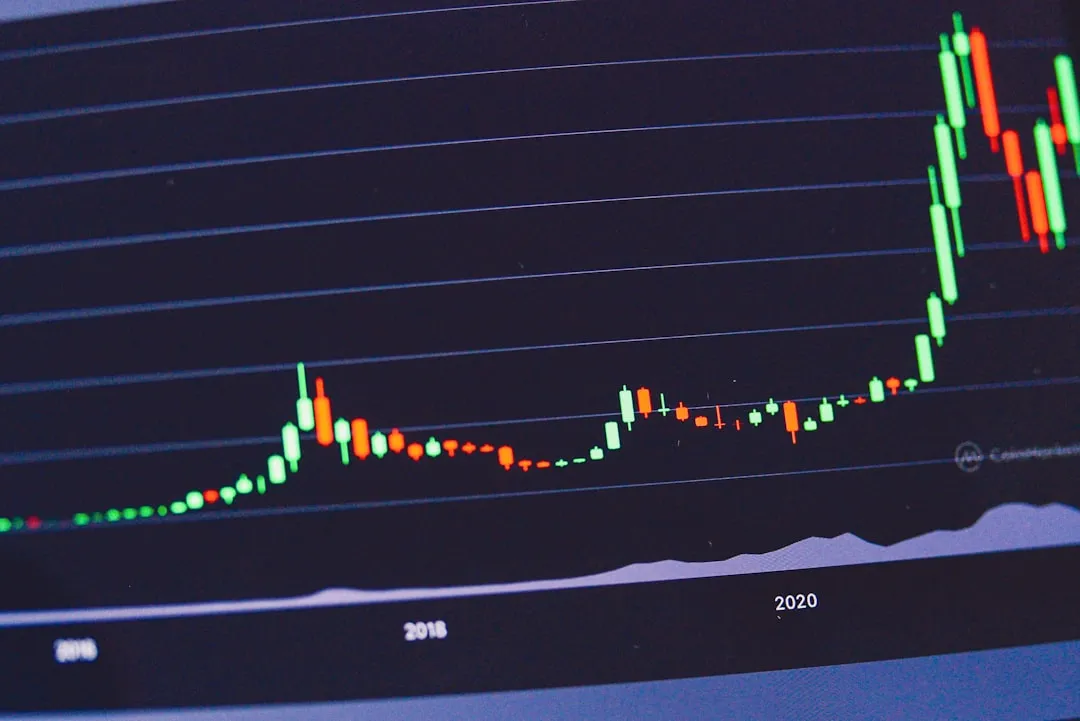
For cryptocurrency P2P trading, on-chain metrics provide quantifiable evidence. Active addresses, transaction volumes, and network hash rates serve as proxies for utility and adoption. When Bitcoin's price trades 40% below its realized price (the average price at which each coin last moved), historical patterns suggest undervaluation. Data from Glassnode shows this metric correctly signaled buying opportunities in January 2015, December 2018, and March 2020.
NFT markets require different analytical tools. CryptoSlam reported that the NFT market generated $23.7 billion in trading volume during 2021, dropping to $8.6 billion in 2023. This 64% decline created pricing inefficiencies where quality projects trade at fractions of their peak valuations despite maintaining active communities and ongoing development. Value investors examine floor prices relative to holder distribution, creator track records, and utility mechanisms beyond speculative trading.
P2P lending platforms present more familiar valuation territory. You can assess borrower creditworthiness through alternative data—payment histories, transaction patterns, and peer ratings. Platforms like Mintos and Bondora publish default rates, recovery statistics, and portfolio performance data. When platform-specific yields exceed comparable risk-adjusted returns in traditional credit markets by 200-300 basis points, skilled value investors identify mispriced risk. Peer to peer lending continues to evolve as an asset class with distinct valuation characteristics.
Price Discovery Mechanisms in Environments
Centralized exchanges establish price through order books and automated matching. P2P platforms fragment liquidity across thousands of individual offers. This fragmentation creates arbitrage opportunities and temporary mispricings that value investors can exploit.
Research from the Cambridge Centre for Alternative Finance found that Bitcoin prices on P2P platforms averaged 4.2% higher than centralized exchange prices during 2023. This premium reflects convenience, privacy, and access for users in markets with limited banking infrastructure. Within P2P platforms, individual offers vary by payment method, transaction size, and trader reputation scores. Spreads between highest and lowest offers routinely exceed 8%.
Smart value investors monitor these spreads systematically. When a reputable seller lists Bitcoin at 6% below the platform average due to immediate liquidity needs, you have identified potential value. The discount must exceed transaction costs, time value, and counterparty risk, but profitable opportunities emerge daily across major P2P platforms.
Decentralized exchanges (DEXs) add algorithmic complexity to price discovery. Automated market makers use mathematical formulas to set prices based on asset ratios in liquidity pools. When these pools become imbalanced, prices deviate from external markets. Flash loans and sandwich attacks can temporarily suppress prices 2-5% below fair value. Monitoring tools like Dune Analytics reveal these moments in real-time across protocols processing $4.8 billion in daily volume.
Risk Assessment Frameworks for Value Investing
Traditional value investing employs margin of safety—the gap between price and value that protects against estimation errors. Graham advocated buying at 66% or less of intrinsic value. P2P markets demand wider margins because uncertainty runs higher.
Counterparty risk sits at the top of the P2P risk hierarchy. Unlike regulated brokers with insurance funds, P2P transactions depend entirely on individual credibility. Reputation systems partially address this concern. Paxful users with 1,000+ completed trades and 99%+ positive ratings demonstrate reliability, but these metrics don't eliminate fraud risk. Value investors should demand 20-30% discounts when trading with accounts holding fewer than 100 transactions.
Smart contract risk affects DeFi protocols where value opportunities exist. Rekt Database documented $3.2 billion in funds lost to smart contract exploits during 2023. Even audited protocols carry implementation risk, composability risk, and oracle manipulation vulnerabilities. Your margin of safety must account for these technical risks—potentially requiring 50%+ discounts to intrinsic value for protocols younger than 18 months.
Liquidity risk presents differently in P2P markets. Selling large positions may require days or weeks as you match with willing buyers. Order book depth analysis helps quantify this risk. When you can exit 80% of a position within 2% of mark price, liquidity risk is manageable. When selling 30% would move prices 10%, you need deeper discounts to compensate for exit friction.
Regulatory risk looms larger in P2P markets than traditional finance. China's 2021 cryptocurrency ban evaporated billions in value overnight. The European Union's Markets in Crypto-Assets regulation introduces compliance costs that may shut smaller platforms. Value investors track regulatory developments across jurisdictions and avoid concentrating holdings in single regulatory regimes.
Identifying Value Signals Across Asset Classes
Different P2P asset categories reveal value through distinct indicators. Pattern recognition across multiple signals improves identification accuracy.
In P2P lending, loan performance data offers quantifiable value metrics. When a platform's borrower pool shows default rates below 3% while offering yields of 12%, you may have found value—if those defaults stay low during economic downturns. LendingClub data from 2008-2010 proved that stressed testing matters: platforms with pre-2008 default rates under 2% saw rates climb to 7-9% during recession. Historical stress performance separates truly undervalued platforms from those temporarily mispricing risk.
Cryptocurrency P2P markets show value through price deviations combined with fundamental strength. When Ethereum traded at $880 in June 2022 while processing 1.1 million daily transactions and maintaining $28 billion in DeFi total value locked, the network demonstrated utility despite price collapse. Comparing price to daily active addresses, transaction fees, and developer activity creates composite value scores. Assets in the bottom quartile by price-to-activity metrics but top quartile by network health represent value candidates.
NFT value investing requires qualitative judgment alongside quantitative metrics. Projects with active Discord communities exceeding 10,000 members, regular content updates, and roadmap execution trade at significant discounts during bear markets. Bored Ape Yacht Club floor prices dropped from 152 ETH to 31 ETH between April 2022 and June 2023, but holder holder count remained above 5,000 and commercial licensing continued. For value investors with 2-3 year time horizons, such discounts on proven projects offered asymmetric return potential. Understanding long term investment horizons is crucial when evaluating these opportunities.

Sustainable Investing Principles in Markets
Sustainable investing criteria increasingly influence capital allocation decisions. The Global Sustainable Investment Alliance reported $35.3 trillion in professionally managed assets incorporated environmental, social, and governance factors during 2022—a 15% increase from 2020. P2P markets introduce both challenges and opportunities for value investors committed to sustainable principles.
Environmental considerations matter significantly in cryptocurrency mining. Bitcoin's proof-of-work consensus mechanism consumed an estimated 150 TWh annually as of 2023, comparable to Argentina's total electricity consumption. Value investors evaluating Bitcoin through sustainable lenses must weigh this energy use against adoption metrics and utility. Ethereum's September 2022 merge to proof-of-stake reduced its energy consumption by 99.5%, making it materially more sustainable. When ETH traded at 0.065 BTC in June 2022—near multi-year lows—sustainable investors found value in an asset improving its environmental profile.
P2P lending platforms advance financial inclusion in ways traditional banks cannot. Kiva facilitates zero-interest loans to underserved populations, processing $1.8 billion since inception with 96.9% repayment rates. For-profit platforms like Tala provide microfinance in Kenya, Mexico, and the Philippines, bringing banking services to populations traditional institutions ignore. Value investors measuring social impact alongside financial returns find opportunities where market prices undervalue social utility.
Governance presents complex dynamics in decentralized protocols. True decentralization distributes decision-making power across token holders rather than concentrating authority in founding teams. Analyzing token distribution, voting participation rates, and governance proposal outcomes reveals whether projects practice meaningful decentralization. When governance tokens for protocols with strong participation and balanced distribution trade at significant discounts to competitors with founder-controlled structures, value investors identify sustainable governance premia.
Execution Strategies for Value Positions
Identifying undervalued assets represents half the challenge. Execution determines whether theoretical value translates to realized gains.
Position sizing should reflect uncertainty levels. High-conviction P2P value opportunities backed by strong data might warrant 5-8% portfolio allocations. Speculative positions with compelling narratives but limited data history deserve 1-2% allocations. The Kelly Criterion provides mathematical frameworks for optimal position sizing, though most investors should use fractional Kelly (25-50% of the calculated optimal bet) to account for estimation errors.
Entry timing matters less for true value investors than price paid relative to worth. Dollar-cost averaging into positions over 4-8 weeks smooths entry prices and reduces timing risk. When a cryptocurrency trades at 0.5x on-chain value metrics, buying 25% of your intended position immediately and adding incrementally on further weakness builds positions without requiring perfect timing. Exploring investment opportunities systematically helps identify optimal entry points.
Exit discipline separates successful value investors from permanent capital losers. Establish price targets based on fair value estimates plus reasonable premiums. When positions reach 90-100% of calculated intrinsic value, trim 25-50% of holdings. Markets regularly overshoot fair value during reversals, but locking in gains as you approach fair value protects against reversal risk. Consider holding core positions at fair value if fundamental trajectories point to growing intrinsic value.
Portfolio construction should balance P2P opportunities across asset classes and platforms. Concentration in single platforms or asset types amplifies platform risk and regulatory risk. Ten positions across P2P lending, cryptocurrency, and tokenized assets provide diversification while maintaining meaningful position sizes. Rebalancing quarterly keeps allocations aligned with conviction levels as prices move.
The Future Landscape of Value Investing
Market structure changes will create new value investing opportunities while obsoleting old approaches. Institutional adoption of cryptocurrency grew substantially during 2021-2023, with BlackRock's Bitcoin ETF accumulating $10 billion in assets within two months of its January 2024 launch. This institutionalization improves price efficiency but concentrates capital in major assets, potentially leaving smaller P2P markets underserved and mispriced.
Regulatory clarity should reduce uncertainty premiums in developed markets. Clear frameworks let value investors price assets without significant regulatory discount factors. Simultaneously, regulatory arbitrage may emerge as some jurisdictions embrace P2P innovation while others restrict it, creating geographic value opportunities. Maclear provides tools for navigating these evolving market structures.
Technological improvements in decentralized identity, reputation systems, and dispute resolution will reduce counterparty risk premiums in P2P markets. As these friction costs decline, value investing margins of safety can narrow to levels closer to traditional markets while maintaining appropriate risk-adjusted returns. Evaluating crowdfunding investments requires similar analytical rigor as traditional value investing.
The core principles remain constant: understand intrinsic worth, buy at significant discounts, and wait for markets to recognize value. P2P markets simply require adapted analytical frameworks, wider margins of safety, and patience as decentralized price discovery completes its work. For investors willing to develop these capabilities, the combination of value discipline and P2P market inefficiency creates compelling opportunities.
