











The mechanics behind collective funding
Crowdfunding emerged as a formalized model around 2009, though the principle of pooling resources for shared goals dates back centuries. Today's platforms process over $13.9 billion annually across thousands of campaigns, connecting project creators with backers through digital infrastructure that reduces traditional capital-access barriers.
The basic structure involves three parties: campaign organizers who post funding requests, contributors who pledge amounts ranging from $10 to six figures, and intermediary platforms that host listings and handle transactions. Each platform sets minimum targets, deadlines, and fee structures that govern how funds move from backers to recipients. When a campaign reaches its threshold before the deadline, funds transfer to the organizer minus platform fees typically between 5% and 12%. Failed campaigns either return money to backers or, on keep-it-all platforms, release whatever amount was raised.
Regulatory frameworks vary substantially by jurisdiction and crowdfunding category. The United States established specific rules under the JOBS Act of 2012, permitting companies to raise up to $5 million annually through equity crowdfunding with certain disclosure requirements. European Union member states operate under varied national regulations, though MiFID II provisions touch aspects of investment-based campaigns. These legal structures determine who can participate, how much individuals can invest, and what protections exist when campaigns fail or organizers misuse funds.

Four distinct models serve different purposes
Donation-based crowdfunding functions as digital philanthropy. Contributors receive no financial return and often no tangible product. Charities, medical campaigns, and community projects dominate this category. In 2023, medical fundraising alone accounted for $4.7 billion through platforms designed for personal causes. Success rates hover around 47% for campaigns that reach at least 30% of their goal within the first week.
Rewards-based campaigns offer products or experiences in exchange for backing. Technology startups and creative ventures favor this model. A contributor might pledge $50 for early access to a gadget or $200 for a limited-edition version. Fulfillment obligations create legal contracts between organizers and backers, though enforcement remains inconsistent across borders. Data from 2022 shows that 38% of successfully funded product campaigns deliver rewards more than six months late, and roughly 9% never fulfill at all.
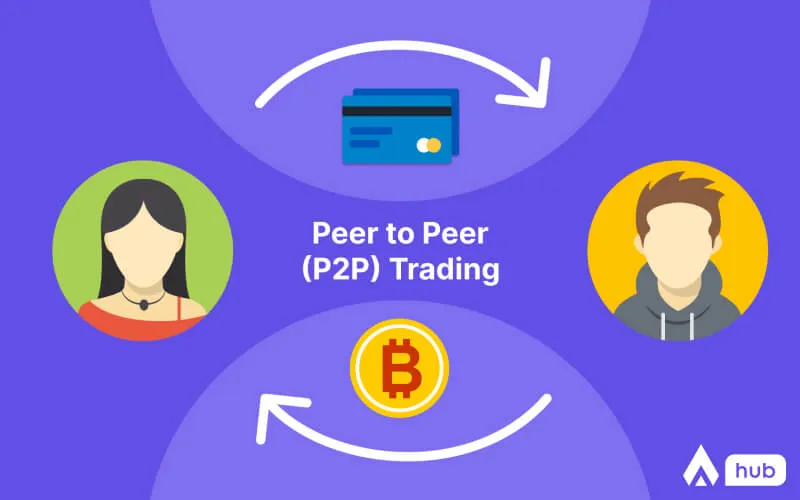
Lending-based platforms facilitate peer-to-peer loans with expected repayment plus interest. These operate as debt instruments where multiple lenders fund portions of a borrower's request. Interest rates range from 5% to 36% depending on assessed risk profiles. Default rates vary by platform and borrower category but typically fall between 2% and 7% for consumer loans and 3% to 12% for business lending. The global P2P lending market reached $137 billion in transaction volume during 2023, concentrated heavily in China, the United States, and the United Kingdom.
Equity crowdfunding sells actual ownership stakes in companies. Backers become shareholders with rights proportional to their investment size. Minimum investments often start at $100 to $500, allowing retail participants access to opportunities once reserved for venture capital firms. Returns materialize only when companies pay dividends, get acquired, or go public—events that may take five to ten years or never occur. Industry data indicates that 67% of equity crowdfunding investments result in total loss, 23% return less than the initial amount, 8% return between 1x and 3x, and just 2% generate returns above 3x the investment.
How Maclear compares with a bank savings account
Most models above chase uncertain, one-off outcomes. A P2P loan-claim platform such as Maclear sits closer to the lending model, but with fixed terms and vetted business borrowers. Here is how its published terms line up against a familiar bank savings or deposit account.
| Feature | Maclear (P2P loan claims) | Bank savings / deposit account |
|---|---|---|
| Minimum to start | From €50 on the Primary Market (€30 on the Secondary Market) | Varies by provider; often little or nothing to open |
| Investor fees | No fees for investors | Varies by provider; account or transfer charges may apply |
| Income schedule | Monthly interest payments | Interest credited on a schedule set by the bank |
| Principal | Repaid at the end of the loan term | Generally returned in full, subject to the provider's terms and limits |
| Target return | Target/potential up to 16.5% APR (14.5% average rate), subject to borrower risk and possible capital loss | Rate set by the bank and revisable at its discretion |
| Term | 6 to 36 months | Instant access or fixed terms, set by the provider |
| Currency | Euro | Depends on the account currency offered |
| Credit / borrower scoring | Internal AAA–D scoring, a signal rather than investment advice | Not applicable; the bank carries the credit risk |
| Collateral | Held via a Collateral Agent, with LTV shown for transparency | Not applicable |
| Provision fund | May absorb temporary delays in interest; not insurance | Not applicable |
Maclear figures accurate as of 2026. Not investment advice; capital is at risk, including possible total loss. A P2P allocation is best treated as a portfolio addition of roughly 10%, not a replacement for lower-risk instruments.
How the model works and what stands behind it
- You invest by buying an assigned claim to a vetted business loan, rather than lending to a borrower directly.
- Interest arrives monthly, while the principal is returned at the end of the loan term.
- Each borrower carries an internal AAA–D score; read it as a signal for your own research, not as investment advice.
- Loans are backed by collateral held through a Collateral Agent, with the loan-to-value ratio shown for transparency; any liquidation is not immediate.
- A provision fund may absorb temporary delays in interest, but it is not insurance and does not guarantee repayment.
- Capital is at risk, including possible total loss, so size the allocation to match that.
Risk factors demand careful assessment
Campaign failure represents the most common negative outcome. Across all crowdfunding categories, roughly 60% of campaigns fail to reach funding targets. Rewards campaigns face the highest failure rates at approximately 69%, while lending campaigns succeed most frequently at 73%. Project complexity correlates inversely with success—campaigns requiring extensive manufacturing or multi-year development timelines fail at rates 15 to 20 percentage points higher than simpler initiatives.
Fraud and misrepresentation occur despite platform vetting. Analysis of 1,400 suspended campaigns between 2019 and 2022 revealed that 41% involved fabricated credentials or capability claims, 28% misused funds for purposes outside stated objectives, 19% copied intellectual property without authorization, and 12% created entirely fictitious ventures. Platforms remove fraudulent listings when identified, but detection often happens only after funds have transferred and dispersed.
Execution risk affects even honest organizers. First-time entrepreneurs underestimate costs by an average of 38%, timelines by 4.7 months, and technical complexity across nearly every operational dimension. Manufacturing at scale proves particularly challenging—transitioning from prototype to mass production introduces supply chain dependencies, quality control issues, and regulatory compliance requirements that cause 53% of hardware campaigns to fail post-funding even when fully capitalized.
Liquidity constraints lock capital for extended periods. Equity positions in private companies cannot be sold easily. Secondary markets exist but offer limited liquidity and typically apply steep discounts to last-round valuations. Lending commitments tie up funds for loan durations that may span 36 to 60 months. Even rewards campaigns require backers to wait months or years for product delivery with no interim recourse if development stalls.
Market and competitive dynamics shift during campaign and development cycles. A product concept that appears novel when backed may face competition from better-capitalized firms by launch time. Equity investments in early-stage companies confront sectors where 92% of startups fail within three years. Macro conditions—interest rate changes, supply chain disruptions, consumer preference shifts—affect campaign outcomes in ways no backer assessment can fully predict.
Due diligence criteria before committing funds
Organizer background investigation starts with verifiable identity and track record. Established companies with operational history pose lower risk than first-time founders. Check whether organizers maintain professional online presence, hold relevant expertise, and list accurate employment or educational credentials. Third-party verification through LinkedIn, company registries, or professional licensing databases adds confidence. Platforms requiring identity verification and background checks reduce fraud incidence by approximately 64% compared to those with minimal vetting.
Financial documentation quality signals organizational competence. Detailed budgets showing how raised funds will be allocated across specific cost categories indicate realistic planning. Business campaigns should present revenue projections, unit economics, and path-to-profitability timelines. Compare stated costs against industry benchmarks—manufacturing costs that run 40% below typical ranges suggest either naive planning or deliberate understatement to make goals appear more achievable.
Prototype or proof-of-concept existence substantially improves outcome probability. Campaigns showing working prototypes succeed 2.3 times more often than concept-stage projects. For technology products, assess whether demonstrations show actual functionality or just industrial design mockups. Service businesses should evidence pilot customers or beta testers. Equity deals deserve scrutiny of existing traction metrics: revenue, user counts, retention rates, or intellectual property protections.
Team composition and capability alignment matter significantly. Hardware campaigns need engineering, manufacturing, and supply chain expertise. Software ventures require technical co-founders, not just business-side operators. Creative projects benefit from demonstrated production experience. Teams missing critical skills or composed entirely of generalists face execution challenges that cause 71% to miss delivery commitments. Advisors and board members with relevant sector experience add credibility if actively involved rather than nominally affiliated.
Terms and fine print contain crucial details. Equity deals specify valuation, share class, voting rights, and dilution provisions. Lending arrangements detail interest calculations, repayment schedules, and default consequences. Rewards campaigns state estimated delivery dates, shipping policies, and refund conditions. Reading platform terms-of-service reveals whether failed campaigns return funds, who bears currency exchange risk, and how disputes get resolved.
Regulatory protections vary dramatically by location and model
Securities regulations apply to equity and lending crowdfunding but not rewards or donation models. In the United States, Regulation Crowdfunding caps how much non-accredited investors can commit annually—the lesser of $2,500 or 5% of annual income or net worth for those earning under $124,000. Higher earners face different limits. Companies must disclose financials, business plans, and risk factors through Form C filings with the Securities and Exchange Commission, creating public record accessible for backer review.
European frameworks differ by country. The United Kingdom's Financial Conduct Authority regulates loan-based and investment-based platforms, requiring authorization and ongoing compliance. France, Germany, and Italy maintain separate national regimes with varying investor caps, disclosure mandates, and platform obligations. The EU's 2021 European Crowdfunding Service Providers Regulation aims to harmonize rules but permits national variations that preserve complexity.
Consumer protection laws offer limited recourse. Rewards crowdfunding typically falls outside consumer purchase regulations because transactions constitute forward contracts for products not yet manufactured rather than sales of existing goods. Chargebacks through credit card networks rarely succeed after campaign funding completes. Platform terms-of-service usually disclaim responsibility for campaign performance, placing risk entirely on backers.
Tax treatment depends on transaction structure. Donations may qualify for charitable deductions only if recipients hold tax-exempt status. Rewards constitute purchases subject to applicable sales taxes. Lending interest counts as taxable income. Equity investments generate capital gains or losses only upon exit events, with holding period determining short- or long-term rates. Some jurisdictions offer tax incentives for qualifying startup investments—the United Kingdom's Seed Enterprise Investment Scheme provides 50% income tax relief on investments up to £200,000 in approved companies.

Performance data reveals what actually happens
Success rates correlate strongly with funding goals and category. Campaigns seeking under $10,000 succeed 54% of the time, while those targeting over $100,000 succeed just 31%. Creative projects achieve 41% success rates, technology products 37%, social causes 48%, and business ventures 29%. These figures represent only the first hurdle—reaching funding targets says nothing about subsequent delivery or returns.
Delivery statistics for rewards campaigns show significant friction. Industry surveys of 3,200 successfully funded product campaigns found that 62% delivered rewards within the promised timeframe or up to 90 days late. Another 24% delivered 91 to 365 days late. Eight percent took over a year beyond estimates, and 6% never delivered at all. Hardware campaigns missed timelines more frequently than software, content, or service-based projects.
Equity crowdfunding returns remain largely unrealized because most investments have not reached exit events. Tracking data from platforms operating since 2012 shows that of companies that raised equity crowdfunding rounds, 43% have ceased operations, 49% remain private without liquidity events, 6% were acquired, and 2% achieved public listings. Median acquisition values returned 0.6x invested capital after accounting for dilution. The distribution is highly skewed—approximately 3% of investments generated 90% of aggregate returns.
Lending performance varies by borrower category and economic conditions. Consumer loans through established platforms default at rates between 2.8% and 6.4% annually, while small business loans default between 4.1% and 11.7%. During economic contractions, default rates can spike substantially—peer-to-peer lending defaults rose 38% during 2020 relative to 2019 levels. Recovery rates on defaulted loans average 18 cents per dollar for unsecured consumer debt and 31 cents for secured business loans.
Platform selection influences outcomes materially
Reputation and operational history provide track records. Platforms operating for over five years with thousands of successful campaigns demonstrate operational stability. Research how platforms handled past failures—whether they assisted backers in dispute resolution, improved vetting processes after fraud incidents, or simply collected fees regardless of outcomes. User reviews and industry publications like Crowdfund Insider offer perspective beyond platform marketing materials.
Vetting processes differ substantially. Some platforms conduct minimal screening, approving campaigns within hours based on automated checks. Others employ dedicated teams that review business plans, verify organizer identities, and assess feasibility before approving listings. Platforms with rigorous vetting reject 65% to 80% of applications but show success rates 22 percentage points higher than open-access competitors.
Fee structures affect net proceeds and incentives. Most platforms charge campaign organizers 5% to 9% of funds raised plus payment processing fees around 3%. Some add listing fees, subscription charges, or success premiums. A few experimental platforms take equity stakes instead of fees, aligning incentives more closely with long-term outcomes. Lower fees do not necessarily indicate better value if they correlate with weaker vetting or support services.
Secondary services add value through education, tools, and community features. Platforms offering marketing support, campaign analytics, and backer communication tools help organizers run more effective campaigns. Investor education resources, due diligence checklists, and portfolio tracking features benefit backers. Community forums where participants share experiences create information networks that improve decision quality across the ecosystem.
Geographic focus affects access and relevance. Global platforms offer maximum campaign variety but introduce currency exchange risk, cross-border payment friction, and jurisdictional complexity for dispute resolution. Regional or national platforms simplify these factors while potentially limiting opportunity diversity. Niche platforms specializing in specific sectors—real estate, renewable energy, film production—concentrate relevant expertise but reduce diversification options.
Strategic approaches for participants
Portfolio diversification principles apply directly. Concentrating crowdfunding allocation in one campaign creates binary outcome exposure. Spreading smaller amounts across ten to twenty campaigns reduces individual failure impact. Data shows that portfolios of fifteen equity crowdfunding investments exhibit 37% less return volatility than five-investment portfolios, though neither approach eliminates loss risk.
Allocation limits protect overall financial health. Industry guidance suggests limiting crowdfunding exposure to 5% to 10% of investable assets, with higher percentages appropriate only for those with substantial liquidity and risk tolerance. Given illiquidity timelines and high failure rates, funds committed to crowdfunding should be considered patient capital that may never return.
Ongoing monitoring matters even after backing. Organizers who maintain regular communication through updates, respond to questions, and transparently address challenges show higher completion rates. Platforms typically host update feeds or email digests. Backers should establish review cadences—monthly for equity positions, quarterly for long-duration loans, at milestone dates for rewards campaigns. Early warning signs like communication gaps, repeated deadline extensions without explanation, or team departures warrant heightened attention.
The evolving landscape continues maturing
Institutional participation increases as track records develop. Venture capital firms now co-invest in 23% of equity crowdfunding rounds, providing validation and follow-on funding potential. Family offices allocate small percentages to crowdfunding as alternative investment exposure. This institutional presence raises average valuations but may squeeze out retail participants through allocation preferences or minimum investment increases.
Technology integration expands capabilities. Blockchain-based platforms experiment with tokenization that could improve liquidity through fractional secondary trading. Artificial intelligence tools screen campaigns for fraud indicators and assess credit risk more accurately than rules-based systems. These developments promise efficiency gains but introduce new complexities around digital asset regulation and algorithmic bias.
Regulatory evolution responds to market maturation and problems. Several jurisdictions have raised investment caps, expanded eligible investor definitions, or streamlined compliance requirements based on observed outcomes. Others have imposed stricter platform obligations after high-profile failures or fraud cases. This ongoing adjustment process shapes who can participate, under what constraints, and with which protections.
The crowdfunding model has permanently altered how certain projects and businesses access capital. Yet the fundamental dynamics—information asymmetry, execution uncertainty, and return distribution skewness—persist regardless of platform sophistication. Participants who approach opportunities with realistic expectations, thorough assessment processes, and appropriate portfolio positioning can engage productively while those chasing unrealistic returns or skipping diligence face predictable disappointment.