











The Modern Family's Financial Reality
Family financial planning stands at a crossroads in 2024. Traditional savings accounts offer returns that barely outpace inflation, while families face rising education costs, healthcare expenses, and retirement concerns. Data from the Federal Reserve shows that the median American family holds approximately $5,300 in savings accounts, yet 40% report they could not cover a $400 emergency without borrowing or selling assets.
This financial fragility demands a reassessment of how families build and preserve wealth. Households that engage in structured financial planning accumulate 2.5 times more wealth over a decade compared to those who don't, according to research from the Financial Planning Association. The question shifts from whether families should plan to how they should deploy capital across multiple vehicles to achieve specific goals.

Understanding Core Family Financial Objectives
Every family operates with a unique set of financial priorities shaped by life stage, income level, and risk tolerance. Research identifies five primary objectives that drive household financial decisions.
Immediate Liquidity Needs represent the foundation. Families require accessible funds for monthly expenses and unexpected costs. Financial advisors typically recommend three to six months of expenses in liquid form, though this varies based on income stability and household composition.
Education Funding commands significant resources. The College Board reports average annual costs of $28,840 for in-state public universities and $59,870 for private institutions in 2023. Families with children under ten must plan for expenses that will arrive in eight to eighteen years, creating a medium-term investment horizon.
Home Ownership and Real Estate goals affect 85% of families surveyed by the National Association of Realtors. Down payment accumulation requires disciplined savings over three to seven years for most first-time buyers, while existing homeowners often target renovations or vacation property purchases.
Retirement Security extends beyond individual 401(k) contributions. Dual-income households must coordinate multiple retirement accounts while managing the gap between peak earning years and retirement age. Fidelity estimates couples need $315,000 solely for healthcare costs in retirement.
Wealth Transfer and Legacy Planning emerges as children reach adulthood. Parents consider funding adult children's home purchases, supporting grandchildren's education, or establishing trusts. The wealth transfer from Baby Boomers to younger generations will exceed $68 trillion over the next twenty years.
Traditional Approaches and Their Limitations
Conventional family financial planning relies on a predictable hierarchy of instruments. Checking and savings accounts provide liquidity but deliver negligible returns — the national average savings rate hovers around 0.40%. Money market accounts offer marginally better yields at 0.60% to 0.75%.
Certificates of deposit lock funds for fixed terms ranging from three months to five years. Current rates peak at 5.00% for twelve-month terms, creating a genuine opportunity cost when families need flexibility for unpredictable expenses like medical bills or home repairs.
Employer-sponsored retirement plans capture pre-tax income but impose strict withdrawal penalties before age 59½. While the tax advantages prove substantial, families with multiple goals cannot rely exclusively on retirement accounts when facing tuition bills due in five years.
529 college savings plans offer tax-advantaged education funding but limit usage to qualified educational expenses. Families who overestimate future education costs or whose children receive scholarships face penalties on non-educational withdrawals.
Brokerage accounts and index funds provide growth potential but introduce volatility unsuitable for near-term goals. The S&P 500 delivered an average annual return of 10.5% from 1957 through 2023, yet experienced drawdowns exceeding 30% during recessionary periods. Families targeting a home purchase in two years cannot risk a market correction decimating their down payment fund.
This landscape reveals a structural gap: families need vehicles that deliver returns exceeding inflation while maintaining reasonable access and risk profiles aligned with medium-term objectives. The gap between 0.40% savings yields and 10.5% equity returns spans a wide range where alternative investments operate.
P2P Investment Integration for Family Goals
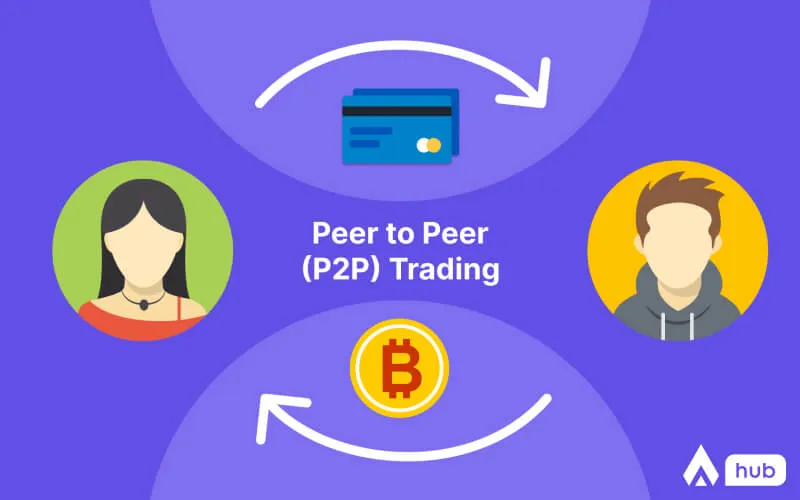
Peer-to-peer lending platforms create direct connections between individual investors and borrowers seeking personal loans, business financing, or refinancing opportunities. Instead of banks serving as intermediaries and capturing the interest rate spread, investors receive the majority of interest payments after platform fees and defaults.
Historical returns on established platforms range from 4.5% to 8.5% annually, depending on risk selection and economic conditions. These figures position P2P investments between savings products and equity markets — precisely where many family objectives require capital deployment.
Maclear compared with a bank savings account
| Feature | Maclear (P2P loan claims) | Bank savings / deposit |
|---|---|---|
| Minimum to start | From €50 on the Primary Market (€30 on the Secondary Market) | Varies by provider |
| Investor fees | No fees for investors | Varies by provider; account or maintenance fees may apply |
| Income schedule | Monthly interest payments | Interest typically credited periodically on the provider's terms |
| Principal | Repaid at the end of the loan term | Principal generally preserved within applicable protection limits |
| Target return | Average rate 14.5%; target up to 16.5% APR, subject to borrower risk and possible capital loss | Rate set by the provider, usually modest |
| Term | 6 to 36 months | Instant-access or fixed terms set by the provider |
| Currency | Euro | Depends on the account |
| Credit / borrower scoring | Internal AAA–D scoring; a signal, not investment advice | Not applicable |
| Collateral | Held via a Collateral Agent, with LTV shown for transparency | Not applicable |
| Provision fund | May absorb temporary delays in interest; not insurance | Not applicable |
Maclear figures accurate as of 2026. Not investment advice; capital is at risk, including possible total loss.
A P2P allocation is a portfolio addition (roughly 10%), not a replacement for low-risk instruments.
Risk-Return Spectrum Alignment allows families to match investment vehicles with specific goals. Conservative P2P loan portfolios targeting borrowers with excellent credit may yield 4.5% to 5.5%, suitable for goals three to five years distant where capital preservation matters. Moderate portfolios balancing credit grades can target 6.0% to 7.0% for mid-range objectives. Aggressive allocations accepting lower credit grades and higher default risk may pursue 7.5% to 8.5% for longer-term goals where families can withstand volatility.
Diversification Mechanics distinguish P2P investing from single-loan risk. Most platforms enable investors to spread capital across 100 to 500 individual loans with minimums as low as $25 per note. A family investing $10,000 can construct a portfolio of 200 loans, ensuring that individual defaults impair only 0.5% of capital. Platform data shows diversified portfolios experience default rates between 2% and 6% annually, but total returns account for these losses within published figures.
Time Horizon Matching addresses family planning's structured timeline. Unlike retirement accounts with decades-long horizons or savings accounts meant for immediate access, P2P loans typically carry terms of three to five years. This duration aligns with education funding goals, renovation projects, or down payment accumulation where families know the capital requirement date.
Consider a family with a seven-year-old child planning for college. Traditional advice suggests aggressive equity allocation given the eleven-year horizon. However, as the child reaches fourteen, market volatility becomes problematic. P2P investments can function as a middle ground during years five through eleven, offering reasonable returns without equity market correlation.
Portfolio Construction Strategies for Families
Implementing P2P investments within family financial planning requires systematic allocation based on goal prioritization and risk capacity. Financial advisors recommend the bucket approach, segregating capital by time horizon and risk tolerance.
Emergency Fund Bucket remains in traditional savings or money market accounts. This baseline covers three to six months of expenses and should never enter P2P or equity markets. Liquidity supersedes returns for this foundational layer.
Near-Term Goals Bucket addresses objectives within three years — examples include car purchases, home down payments, or known tuition payments. Conservative P2P allocations at 20% to 30% of this bucket can enhance returns while maintaining most capital in CDs or short-term bond funds. The key consideration: platforms typically require one to three months to liquidate P2P holdings through secondary markets, so timing matters.
Medium-Term Goals Bucket covers years three through eight. This segment tolerates more P2P exposure given the time to absorb short-term defaults. Allocations between 40% and 60% to P2P investments balance return enhancement with diversification into balanced mutual funds or bond funds. A family saving for college expenses arriving in six years might allocate 50% to P2P, 30% to bond funds, and 20% to equity index funds.
Long-Term Growth Bucket targets goals beyond eight years and should emphasize equity markets given their superior long-term performance. P2P investments might represent 10% to 20% as a diversification element, but equities should dominate for retirement and distant legacy objectives.
Tax Considerations and Account Structure
P2P investment returns receive treatment as ordinary income rather than qualified dividends or long-term capital gains. Interest payments face taxation at marginal income rates, which range from 10% to 37% federally. State income taxes add additional burden in most jurisdictions.
This tax profile demands strategic account placement. Families already maximizing tax-advantaged retirement accounts can investigate whether their 401(k) or IRA allows self-directed investments including P2P platforms. Some custodians permit this structure, enabling P2P returns to grow tax-deferred or tax-free in Roth accounts.
For taxable account investments, families should calculate after-tax returns. A family in the 24% federal bracket earning 6.0% gross returns nets 4.56% after taxes — still competitive with taxable bond funds but not as advantageous as tax-free municipal bonds for high earners.
Losses from defaulted loans can offset P2P investment income but face limitations on offsetting other income types. Tax-loss harvesting opportunities exist but require careful documentation of individual loan charge-offs.
Risk Management and Default Protection
P2P investing introduces credit risk absent from FDIC-insured savings accounts or Treasury securities. Families must understand default probability and mitigation strategies before allocating household capital.
How the investment works and what protects you
- Each investment is an assigned claim to a vetted business loan: the borrower signs a loan agreement with the platform, and you sign an assignment agreement.
- Interest reaches you monthly, and the principal is returned at the end of the loan term.
- The AAA–D borrower score is a signal to weigh yourself, not investment advice.
- Collateral is held through a Collateral Agent, with the loan-to-value ratio shown for transparency; liquidation is not immediate.
- A provision fund may absorb some temporary delays in interest, but it is not insurance and does not guarantee repayment.
- Capital is at risk, including possible total loss.
Platform data from 2019-2023 shows annual default rates varying by credit grade. Top-tier borrowers (A-rated) defaulted at 2.1% annually, while lower credit grades reached 8.4%. Economic conditions significantly impact these figures — default rates spiked 40% during the 2020 economic disruption before normalizing.
Diversification Depth provides primary protection. Research demonstrates that portfolios with fewer than 50 loans experience high volatility in annual returns, ranging from -2% to +12%. Portfolios exceeding 100 loans show much tighter bands, with 80% of outcomes falling between 4% and 8% annually. Families should treat 100 loans as the minimum diversification threshold.
Platform Selection determines investor protection levels. Established platforms maintain loan loss reserves, buyback guarantees on delinquent loans, or servicing arrangements ensuring payment collection. Newer or unregulated platforms may offer higher stated returns but lack borrower vetting infrastructure or investor protections.
Geographic and Sector Diversification adds another risk layer. Some platforms concentrate in specific regions or loan types. Families should prefer platforms with nationwide borrower bases and mixed loan purposes — personal loans, business lending, and real estate financing create different risk profiles with low correlation.

Integration with Existing Financial Plans
P2P investing functions as a complement, not replacement, for traditional family financial planning elements. Successful integration requires coordination with existing strategies and regular rebalancing.
Families should maintain employer retirement plan contributions to capture matching funds — this represents a guaranteed 50% to 100% immediate return that no investment vehicle can replicate. P2P allocations occur after maximizing matched contributions.
529 plans retain advantages for education funding despite limitations. The tax-free growth for qualified education expenses outweighs P2P returns for families confident children will attend college. P2P investments address education funding for families uncertain about college attendance or those already maximizing 529 contribution limits.
Health savings accounts offer triple tax advantages for families with high-deductible health plans. These should receive funding priority before P2P investments for families eligible to participate.
Rebalancing schedules matter more with P2P than passive index funds. Loans mature over three to five years, returning principal that requires redeployment. Families should establish quarterly reviews to reinvest returned principal, particularly as goal dates approach and risk tolerance shifts.
Performance Monitoring and Adjustment Triggers
Family financial planning requires measurable progress tracking. P2P platforms provide detailed performance reporting, but families must establish benchmarks and adjustment triggers before investing.
Annual Return Targets should account for defaults and fees. A family selecting conservative loans targeting 5.5% gross returns should expect net returns of 4.0% to 4.5% after 3% defaults and 1% platform fees. If actual returns fall below 3.5% for two consecutive years, reallocation becomes necessary.
Default Rate Monitoring signals platform or economic changes. Default rates exceeding historical averages by 50% or more indicate heightened risk. A platform averaging 3% defaults that experiences 4.5% or higher for two quarters deserves investigation and potential position reduction.
Goal Progress Tracking matters more than absolute returns. A family targeting $50,000 for a down payment in five years needs $42,160 today growing at 5% annually. After two years, the balance should reach $46,474. If actual performance lags this schedule by 10% or more, the family must increase contributions or adjust the goal timeline.
Life Event Triggers demand immediate review. Job loss, medical emergencies, divorce, or death require reassessing risk capacity and time horizons. P2P investments offer secondary market sales, but families should understand liquidity takes time and may require accepting small discounts.
The Long-Term Family Wealth Perspective
Families that consistently save 15% of income and earn 6% real returns accumulate sufficient wealth for retirement, education funding, and legacy objectives over 30-year periods. P2P investments contribute to this outcome by filling the return gap between savings accounts and equity markets for medium-term goals.
The compound effect proves substantial. A family investing $10,000 annually for ten years at 6% accumulates $139,716. The same contributions at 0.5% savings rates yield only $105,113 — a $34,603 difference. This gap funds an additional year of in-state college tuition or accelerates mortgage payoff.
Financial planning success depends on sustained execution more than perfect investment selection. Families using P2P investments as one component within a diversified strategy, maintaining adequate liquidity, and adjusting allocations as goals approach position themselves for multi-generational financial security. The tool matters less than the discipline to deploy it consistently within a comprehensive framework addressing every family member's needs across decades.