











Impact investing: combining measurable outcomes with financial returns
Impact investing directs capital towards businesses, projects, or organisations that aim to create measurable social or environmental benefits while also generating a financial return.
The approach differs from philanthropy because investors expect their capital to be repaid or to increase in value. It also differs from conventional responsible investing, which may simply exclude industries considered harmful. Impact investing requires an active intention to support a positive outcome and a process for measuring whether that outcome occurs.
An investment should not be described as impactful solely because it operates in a popular sector such as renewable energy, healthcare, education, or sustainable agriculture. Investors need evidence that the financed activity creates a specific benefit and that this benefit would be smaller, slower, or less likely without the investment.
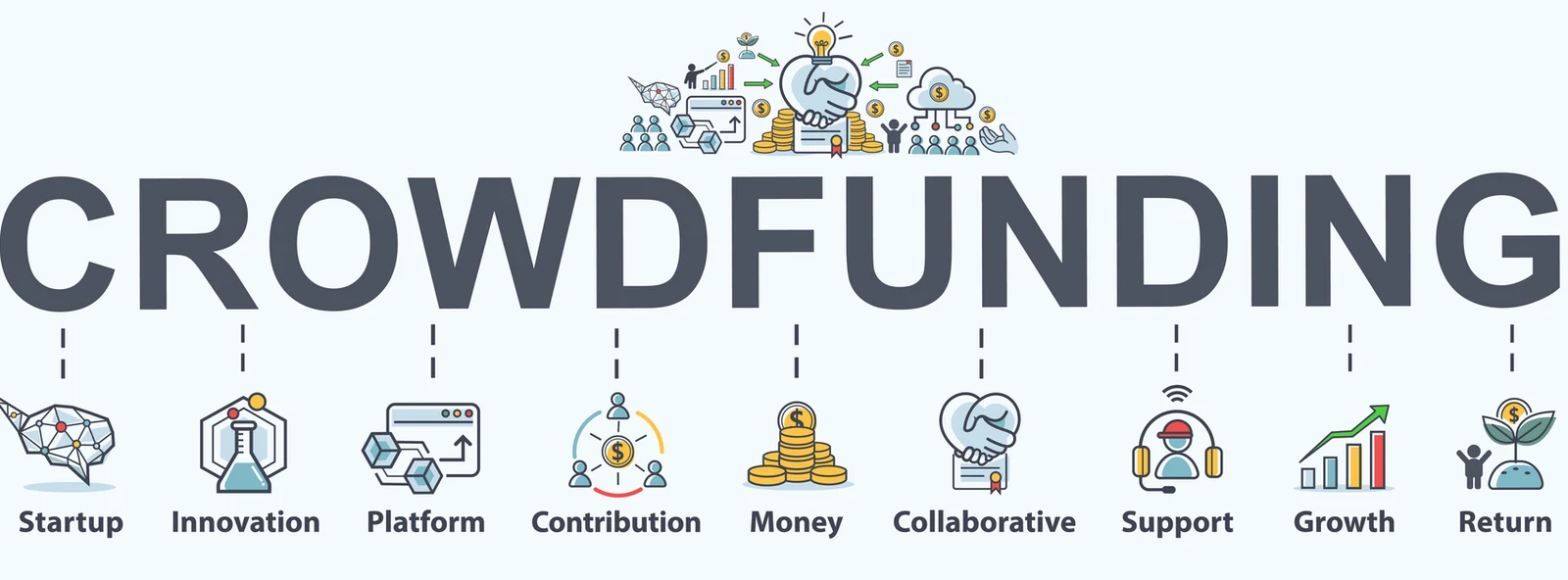
The three foundations of impact investing
A credible impact investment normally includes three elements.
Intentionality
The intended social or environmental result should be defined before the capital is committed. The investor and the recipient should understand what the money is expected to achieve.
Examples may include:
— increasing access to affordable healthcare;
— reducing energy consumption or emissions;
— financing small businesses in underserved regions;
— expanding affordable housing;
— improving access to education or vocational training;
— supporting more efficient use of water, materials, or agricultural land.
A broad statement such as “supporting sustainability” is not sufficiently precise. The objective should identify the affected group, activity, or environmental outcome.
Measurement
The organisation should collect information that shows whether the expected result was achieved.
The appropriate metrics depend on the project. A renewable energy company might report energy produced and estimated emissions avoided. An education provider might track enrolment, completion, and employment outcomes. A healthcare project might measure the number of patients served, treatment affordability, or access in previously underserved areas.
Good reporting distinguishes between activity and outcome. Building a clinic is an activity. Improving access to treatment is an outcome. The number of loans issued is an activity. Sustainable growth in the financed businesses is a potential outcome.
Financial return
Impact investments still carry an expectation of financial performance. Depending on the structure, the return may come from interest, dividends, profit participation, rent, or an increase in the investment’s market value.
Some investors accept below-market returns to prioritise social outcomes. Others require returns comparable with conventional investments of similar risk. Neither model is automatically better, but the objective should be clear before investing.
Impact investing versus ESG and ethical screening
Impact investing, ESG integration, and ethical screening are related but different approaches.
Ethical screening removes companies or industries that conflict with the investor’s values. An investor may exclude tobacco, weapons, gambling, or high-pollution activities.
ESG integration considers environmental, social, and governance factors as part of financial analysis. These factors may affect operating costs, legal exposure, access to capital, reputation, or long-term competitiveness.
Impact investing goes further by seeking a defined positive outcome. The investment is selected partly because of the intended benefit, and the investor expects that benefit to be measured.
A company can have strong internal ESG policies without producing a meaningful external impact. A project can also create a positive outcome while still presenting governance, financial, or operational weaknesses. Impact analysis should therefore complement, not replace, traditional due diligence.
Financial structures used for impact investing
Impact investments can be structured through several asset classes.
Equity
Equity investors provide capital in exchange for ownership. They participate in the company’s potential growth but also accept the risk that the business may fail or that the shares cannot be sold when needed.
Equity can suit early-stage or rapidly growing organisations that need flexible capital. However, financial returns and measurable impact may take several years to emerge.
Private debt and crowdlending
Debt investors lend money to an organisation under agreed repayment terms. Returns are normally limited to contractual interest, while the borrower retains ownership of the business.
Debt may finance equipment, inventory, working capital, energy improvements, expansion, or the completion of a defined project. It can provide a clearer repayment schedule than equity, but investors face credit and liquidity risk.
P2P crowdlending can make business debt accessible to smaller investors. However, a business loan is not automatically an impact investment. The financed activity, intended outcome, and reporting must support the impact claim.
Bonds
Green, social, and sustainability-linked bonds may finance eligible projects or connect borrowing costs to predefined targets.
Investors should review how proceeds are allocated, which metrics are used, who verifies the reporting, and what happens if targets are missed. A label alone does not prove additionality or effective use of capital.
Real assets
Impact portfolios may include renewable energy infrastructure, sustainable forestry, energy-efficient buildings, affordable housing, or water systems.
These investments can produce tangible outcomes and long-term cash flows, but they may involve construction, valuation, regulatory, operating, and liquidity risks.
How to evaluate the impact thesis
An impact thesis explains how the investment is expected to produce a positive result.
A useful assessment asks five questions.
What is expected to change?
The intended outcome should be specific. Examples include lower energy consumption, improved access to credit, reduced waste, higher employment, or more affordable services.
Who benefits?
Investors should identify the people, communities, businesses, or ecosystems affected. The significance of the outcome depends partly on whether the beneficiaries are already well served or face genuine barriers.
How much change is expected?
Relevant factors include scale, depth, duration, and coverage. Serving many people may create broad but limited benefits. Serving a smaller high-need group may create a deeper effect.
What is the investment’s contribution?
The investor should consider whether the outcome would probably have occurred without the capital. This concept is often described as additionality.
An investment may support a beneficial company but add limited impact if the company already has abundant access to financing on identical terms. Capital can have greater additionality when it allows a project to proceed, expand, or reach a group that would otherwise remain underserved.
What could prevent the impact?
Impact risk includes the possibility that the expected benefit is smaller than forecast, reaches the wrong group, creates negative side effects, or disappears after the project ends.
The assessment should consider execution risk, weak data, unrealistic assumptions, external conditions, and conflicts between financial and impact objectives.
Impact measurement and reporting
Measurement should be proportional to the size and complexity of the investment. A small business loan does not require the same reporting system as a large infrastructure fund, but basic evidence is still necessary.
Useful reporting normally includes:
— a clear baseline;
— defined targets;
— consistent metrics;
— the reporting period;
— the methodology used;
— actual results compared with targets;
— limitations and missing data;
— negative outcomes or trade-offs.
Investors should be cautious when reports focus only on positive activity. A credible report may also disclose missed targets, implementation delays, data limitations, and unintended effects.
Independent verification can strengthen confidence, but it does not replace investor judgement. The verifier’s scope, methodology, and relationship with the issuer should be understood.

Avoiding impact washing
Impact washing occurs when an investment is presented as socially or environmentally beneficial without sufficient evidence.
Common warning signs include:
— vague claims with no measurable target;
— reporting inputs instead of outcomes;
— using industry labels as proof of impact;
— ignoring negative effects;
— selecting only favourable data;
— changing metrics after targets are missed;
— failing to explain how the investment contributes to the outcome;
— treating compliance with minimum legal requirements as exceptional impact.
For example, a company may describe a standard equipment purchase as sustainable without showing that the new equipment reduces energy use, waste, or emissions. A lender may promote financial inclusion while financing borrowers who already have easy access to conventional credit.
Investors should ask for the same level of evidence they would require for financial projections.
Financial risks remain central
Impact objectives do not reduce the need for conventional investment analysis.
The main risks may include:
— borrower or issuer default;
— weak cash flow;
— excessive leverage;
— uncertain demand;
— poor governance;
— overvaluation;
— currency exposure;
— interest-rate changes;
— limited liquidity;
— platform or intermediary failure;
— unreliable collateral;
— legal or operational delays.
An attractive social outcome cannot compensate for a structure the investor does not understand. The expected return should reflect the probability and severity of financial loss.
Impact investments can also create mission drift. An organisation may prioritise revenue growth over affordability, access, environmental standards, or beneficiary needs as it expands. Investors can reduce this risk through clear targets, reporting obligations, governance rights, and defined consequences when commitments are not met.
The role of diversification
Impact portfolios can become concentrated because investors often focus on a small number of preferred themes.
A portfolio containing several renewable energy projects may still depend on the same electricity prices, policy environment, equipment suppliers, or financing conditions. Several small-business loans in one country may be affected by the same economic slowdown.
Diversification can include:
— sectors;
— countries;
— borrowers or issuers;
— asset classes;
— loan terms;
— repayment structures;
— currencies;
— stages of business development;
— sources of impact.
Diversification reduces dependence on one outcome, but it does not guarantee positive financial or social performance.
How crowdlending can support impact objectives
Business crowdlending can contribute to impact goals when financing is linked to a clearly defined and measurable use of funds.
Potential examples include loans used to:
— install energy-efficient equipment;
— expand healthcare or education services;
— improve agricultural productivity with lower resource use;
— finance accessible housing;
— support businesses creating employment in underserved regions;
— develop recycling or circular-economy infrastructure.
The investor should still verify whether the borrower can repay, whether the project would proceed without the loan, and whether the stated benefit will be reported.
A loan to an ordinary commercial business may still be financially attractive without qualifying as an impact investment. The distinction should remain clear.
Using Maclear for project-level assessment
Maclear allows investors to finance business projects in euros. Before investing, users can review information such as the borrower profile, loan purpose, offered interest rate, loan term, repayment schedule, Risk Score, collateral, and Loan-to-Value ratio where applicable.
The minimum investment on the Primary Market is €50, which can help investors distribute capital among several projects.
Maclear’s Risk Score supports comparison of borrower risk, but it does not measure social or environmental impact. Investors seeking an impact allocation must separately evaluate the project’s intended outcome, additionality, metrics, and reporting.
Interest begins to accrue after a project reaches Funded status and the loan is transferred to the borrower. Funds in Reserved status do not earn interest. Payments are made according to the project’s Repayment Schedule.
Eligible positions may later be offered on the Secondary Market, but a sale depends on buyer demand and is not guaranteed. Impact objectives do not remove liquidity risk.
Maclear crowdlending compared with sustainable funds and ETFs
| Feature | Maclear (P2P loan claims) | Sustainable funds / ETFs |
|---|---|---|
| Minimum to start | From €50 on the Primary Market (€30 on the Secondary Market) | Varies by provider and share class |
| Investor fees | No fees for investors | An ongoing management fee set by the provider |
| Income schedule | Monthly interest payments | Accumulating or periodic distributions, set by the fund |
| Principal | Repaid at the end of the loan term | No set repayment; unit value rises and falls with the market |
| Target return | Target/potential up to 16.5% APR (average rate across listed loans 14.5%), subject to borrower risk and possible capital loss | Not fixed; depends on market performance |
| Term | 6 to 36 months | Open-ended; no fixed maturity |
| Currency | Euro | Varies by fund |
| Credit / borrower scoring | Internal AAA–D borrower score; a signal, not investment advice | No per-loan borrower score; holdings-level methodology varies by provider |
| Collateral | Held via a Collateral Agent; Loan-to-Value ratio shown for transparency | Typically none; the claim is on fund units, not on secured assets |
| Provision fund | A provision fund may absorb temporary delays in interest; not insurance and not a guarantee of principal | None |
Maclear figures accurate as of 2026. Not investment advice; capital is at risk, including possible total loss.
A P2P allocation is best treated as a portfolio addition (around 10%), not a replacement for lower-risk instruments.
How a Maclear investment works and what to keep in mind
- You buy an assigned claim to a vetted business loan, rather than lending to the borrower directly.
- Interest is paid monthly, and principal is returned at the end of the loan term.
- The AAA–D borrower score helps compare risk between loans; it is a signal, not investment advice, and it does not measure social or environmental impact.
- Collateral is held through a Collateral Agent, and the Loan-to-Value ratio is shown for transparency; enforcement of collateral is not immediate.
- A provision fund may absorb temporary delays in interest, but it is not insurance and does not guarantee repayment of principal.
- Capital is at risk, including possible total loss; returns and any social or environmental outcome are not guaranteed.

Practical due diligence checklist
Before treating an opportunity as an impact investment, an investor can ask:
— What specific outcome is intended?
— Who benefits from it?
— How will the outcome be measured?
— What is the baseline?
— What targets and deadlines apply?
— Would the project proceed without this capital?
— Which negative effects or trade-offs may arise?
— Who verifies the reported information?
— Does the financial return compensate for credit, market, and liquidity risk?
— Can the investment be held for the full term?
— How does it affect overall portfolio concentration?
— What happens if the project misses either its financial or impact targets?
The investment should satisfy both sides of the analysis. A credible impact claim does not make a weak financial structure acceptable, and a strong borrower does not automatically make a loan impactful.
Building an impact allocation
Investors do not need to convert an entire portfolio into impact investments at once. A measured allocation allows them to learn how outcomes are reported, how long capital remains committed, and how results differ from initial projections.
A practical approach may include:
— defining one or two impact themes;
— setting financial return and loss limits;
— selecting measurable outcomes;
— limiting exposure to each project;
— keeping sufficient liquid assets outside the allocation;
— reviewing both financial and impact results periodically;
— reinvesting only when the original criteria remain satisfied.
The objective is not to maximise the number of investments carrying an impact label. It is to direct capital towards opportunities where the intended benefit is credible, measurable, and supported by an acceptable financial structure.
Impact investing combines purpose with financial discipline. Its defining features are intentionality, measurement, additionality, and an expectation of return. Investors should evaluate social and environmental claims with the same scepticism applied to revenue forecasts, collateral values, and repayment assumptions.
Risk disclosure: Impact investing and crowdlending involve risk, including the possible loss of capital. Social or environmental outcomes and financial returns are not guaranteed. Past performance does not predict future results. Invest only funds you can afford to lose.