











The Evolving Role of Investment Advisors in Peer-to-Peer Lending
The financial services landscape has shifted dramatically over the past decade. Traditional investment firms no longer hold a monopoly on connecting capital with opportunity. Peer-to-peer lending platforms have emerged as viable alternatives, facilitating direct transactions between investors and borrowers while bypassing conventional banking intermediaries. Within this ecosystem, investment advisors have adapted their role, now serving as critical navigators who help clients identify creditworthy business borrowers and manage portfolio risk across multiple loan exposures.
Data from the Cambridge Centre for Alternative Finance shows that the global P2P business lending market processed over $42 billion in 2022, representing a compound annual growth rate of 23% since 2018. This expansion has created both opportunity and complexity. Investment advisory services have evolved to address the specific challenges inherent in direct lending: borrower due diligence, diversification strategy, and ongoing portfolio monitoring across dozens or even hundreds of individual loan positions.
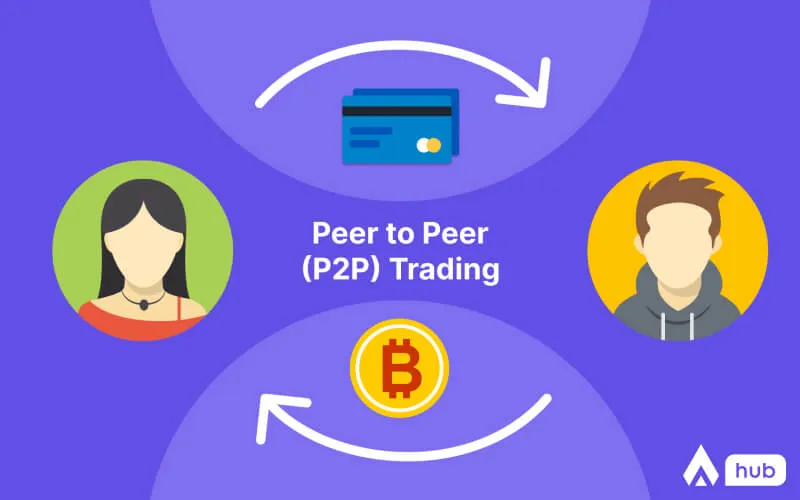
How Maclear compares with funds and ETFs
One way to see where a P2P loan-claim allocation sits is to line it up against a professionally managed fund. On Maclear you buy assigned claims to vetted business loans rather than units in a pooled vehicle.
| Feature | Maclear (P2P loan claims) | Funds / ETFs |
|---|---|---|
| Minimum to start | From €50 on the Primary Market, €30 on the Secondary Market | Varies by fund and provider |
| Investor fees | No fees for investors | Typically an annual management fee (TER) set by the provider |
| Income schedule | Monthly interest payments | Distributions or accumulation, on a schedule set by the fund |
| Principal | Repaid at the end of the loan term | No fixed repayment; value fluctuates with the market |
| Target return | Target/potential up to 16.5% APR, subject to borrower risk and possible capital loss | Varies with market performance; not fixed |
| Term | 6 to 36 months | Open-ended, generally no set term |
| Currency | Euro | Depends on the fund's base currency |
| Credit/borrower scoring | Internal AAA–D scoring; a signal, not investment advice | No per-borrower scoring; holdings depend on the strategy |
| Collateral | Loans backed by collateral held via a Collateral Agent, with LTV shown for transparency | Generally none; you hold a market position |
| Provision fund | A provision fund may cover temporary delays in interest; not insurance, not a guarantee of principal | No dedicated provision fund |
Maclear figures accurate as of 2026. Not investment advice; capital is at risk, including possible total loss. A P2P loan-claim allocation is best treated as a portfolio addition, roughly 10%, not a replacement for lower-risk instruments.
Understanding Investment Advisory in the P2P Context
Investment advisors operating in the peer-to-peer space provide fundamentally different services than their counterparts focused on public equities or mutual funds. Where traditional advisors analyze publicly traded securities with standardized disclosures and liquid markets, P2P-focused advisors must evaluate individual borrower creditworthiness, business fundamentals, and illiquid loan positions that cannot be easily sold before maturity.
A registered investment advisor working with P2P platforms typically performs three core functions. First, they conduct or validate borrower vetting processes, reviewing financial statements, credit histories, and business models to assess default probability. Second, they construct diversified portfolios across multiple borrowers, loan sizes, interest rates, and business sectors to manage concentration risk. Third, they monitor ongoing loan performance and recommend rebalancing strategies as loans mature and new opportunities emerge.
The Securities and Exchange Commission requires registered investment advisors to act as fiduciaries when managing client assets. This standard applies equally whether the advisor is allocating capital to stocks, bonds, or peer-to-peer loans. According to SEC enforcement data, advisory firms have faced increased scrutiny regarding their duty to disclose conflicts of interest, particularly when platforms or private investment company structures offer compensation for directing client capital to specific borrowers.
The Borrower Vetting Process: Where Advisory Services Add Value
Platform-facilitated lending introduces information asymmetry between lenders and borrowers. Unlike publicly traded companies that file quarterly reports audited by independent firms, small and medium-sized business borrowers typically provide limited financial disclosure. Investment advisory services bridge this gap through rigorous due diligence methodologies.
Professional advisors examine multiple data points before recommending a borrower to clients. Tax returns from the previous three years establish revenue trends and profitability patterns. Bank statements verify cash flow consistency and reveal seasonal fluctuations that might affect repayment capacity. Personal and business credit reports from major bureaus provide default histories and current debt obligations. Trade references and customer contracts offer qualitative insights into business stability and market position.
Research from the Federal Reserve Bank of Cleveland found that loans underwritten with comprehensive financial documentation default at rates 34% lower than those approved based on stated income alone. Investment firms that employ dedicated credit analysts and maintain systematic vetting protocols deliver measurably better risk-adjusted returns than platforms relying solely on automated algorithmic screening.
Beyond financial metrics, experienced advisors evaluate borrower character and business viability through direct interviews and site visits when loan amounts justify the expense. A manufacturing company seeking $500,000 might warrant facility inspection to verify equipment values and operational capacity. A restaurant borrower requesting $75,000 could require multiple conversations about menu pricing, location demographics, and competitive positioning.
Portfolio Construction Strategies for P2P Loan Investments
Diversification represents the primary risk management tool available to P2P investors. Unlike traditional bonds where a single corporate issuer might receive a $10,000 allocation, best practices in direct lending suggest spreading capital across 50 to 200 individual borrowers to achieve statistical stability. Investment services specializing in P2P markets help clients implement these strategies efficiently.
Academic research published in the Journal of Financial Economics examined default correlation among peer-to-peer business loans. The study analyzed 47,000 loan outcomes across a five-year period and found that portfolios containing fewer than 40 borrowers experienced default clustering during economic downturns, with realized losses exceeding actuarial predictions by margins of 180% or more. Portfolios with 100 or more borrowers demonstrated loss rates within 15% of statistical expectations, even during the 2020 recession.
Investment advisory firms construct portfolios using multiple diversification axes. Geographic distribution reduces exposure to regional economic shocks; a portfolio concentrated in oil-dependent states suffered disproportionate losses during the 2014-2016 energy price collapse. Industry diversification prevents sector-specific downturns from decimating portfolio value; hospitality-heavy portfolios lost significantly during pandemic lockdowns while logistics and e-commerce loans performed above expectations.
Loan size diversification also matters. Data from Moody's Analytics indicates that small business loans under $50,000 default at rates approximately 2.3 times higher than loans between $100,000 and $250,000, reflecting differences in borrower sophistication and business stability. However, larger loans create concentration risk. Advisors typically limit any single borrower to no more than 2-3% of total portfolio value, requiring investors with $250,000 portfolios to hold positions in at least 33 distinct borrowers.

The Distinction Between Platforms and Investment Advisors
Many investors new to peer-to-peer lending conflate platform operators with investment advisors, but these entities serve different functions under different regulatory frameworks. Understanding this distinction proves essential for evaluating the true value proposition of investor services.
P2P platforms operate as marketplaces or loan originators. They recruit borrowers, facilitate loan documentation, process payments, and handle collections. Some platforms employ credit analysts who review applications and assign risk ratings. However, platform operators generally do not owe fiduciary duties to investors. Their business model typically generates revenue through origination fees paid by borrowers and servicing fees deducted from investor payments. This creates potential conflicts where platforms benefit from loan volume regardless of credit quality.
In contrast, registered investment advisors must prioritize client interests above their own compensation. When an investment firm receives fees based on assets under management, they earn more when client portfolios grow through successful loan performance and earn nothing when loans default. This alignment of interests creates meaningful incentive differences compared to platforms compensated primarily through origination volume.
The Investment Advisers Act of 1940 requires advisory firms managing more than $110 million in client assets to register with the SEC and submit to regular examinations. State-registered advisors managing smaller amounts face oversight from state securities regulators. These regulatory requirements mandate written policies governing conflicts of interest, custody of client assets, and disclosure of fees. Platform operators, unless they also register as investment advisors, face no such fiduciary standards.
Risk Management and Ongoing Portfolio Monitoring
Static portfolio construction at the initial funding stage represents only the beginning of effective P2P investment management. Professional investment advisory services provide continuous monitoring and recommend adjustments as market conditions and portfolio performance evolve.
How the Maclear model works and what protects the investor
On Maclear the mechanics are deliberately transparent, so an investor can judge each protection for what it is:
- You buy an assigned claim to a vetted business loan rather than lending directly; the borrower signs a loan agreement with the platform and you sign an assignment agreement.
- Interest reaches you on a monthly schedule, while the principal is returned once the loan term ends.
- Each borrower carries an internal AAA–D score; treat it as a signal that informs your own judgement, not as investment advice.
- Loans are backed by collateral under the legal control of a Collateral Agent, and the loan-to-value ratio is published for transparency so you can see the cushion; liquidation is not immediate.
- A provision fund may absorb temporary delays in interest, but it is not insurance and does not guarantee that your principal comes back.
- Capital stays at risk, including the possible total loss of what you invest, alongside borrower default and platform or liquidity risk.
Monthly reporting typically includes detailed performance metrics: weighted average interest rate across all active loans, current yield after accounting for defaults and early payoffs, aging analysis showing how many loans exceed 30, 60, or 90 days past due, and concentration metrics tracking exposure to specific industries or geographic regions. Advisors compare these metrics against historical norms and peer benchmarks to identify emerging risks before they materialize as realized losses.
Default management separates amateur investors from professionals. When borrowers miss payments, platforms typically initiate collections efforts, but investment advisors add strategic oversight. They evaluate whether restructuring terms might preserve more capital than forcing immediate liquidation. They assess whether collateral values justify legal action or whether writing off small loans costs less than pursuing remedies. They coordinate with platform recovery teams to ensure consistent approach across multiple defaulted positions.
Rebalancing strategies adapt portfolios to changing opportunity sets. As loans mature and return principal, advisors redeploy capital into new borrowers while maintaining target diversification parameters. When economic indicators suggest rising default probabilities in specific sectors, advisors may reduce exposure by declining to reinvest maturing proceeds into those industries. When interest rate environments shift, advisors adjust target loan durations to optimize yield while managing reinvestment risk.
Fee Structures and Economic Considerations
Investment advisory services charge fees through various structures, each creating different incentive alignments. Understanding these economics helps investors evaluate whether advisory costs deliver commensurate value.
Assets-under-management fees represent the most common structure, typically ranging from 0.50% to 1.50% annually for P2P-focused advisory services. A client with a $500,000 loan portfolio paying 1.00% annually would remit $5,000 in advisory fees. This structure aligns advisor interests with portfolio growth but provides no direct incentive for superior credit selection since fees accrue regardless of loan performance.
Performance-based fees create stronger alignment by linking advisor compensation to realized returns. Common structures include 10% to 20% of returns exceeding specified benchmarks, often defined as Treasury yields plus a fixed spread. Performance fees effectively make advisors partners in investment outcomes, but regulations require registered investment advisors to meet specific criteria before charging performance fees, primarily limiting this structure to qualified clients with $1.1 million in managed assets or $2.2 million net worth.
Hybrid models combine modest AUM fees with smaller performance components. For example, an advisor might charge 0.75% annually plus 10% of excess returns above an 8% threshold. This creates baseline revenue to support operations while maintaining performance incentives.
Fixed retainer fees, though less common in P2P advisory, charge flat amounts regardless of portfolio size or performance. This structure benefits clients with larger portfolios but may not provide adequate advisor compensation for smaller accounts requiring similar analytical effort.
Net return analysis reveals whether advisory fees justify their cost. Research from Wharton examining advised versus self-directed P2P portfolios found that investors working with dedicated advisors achieved default rates averaging 3.2% compared to 5.8% for self-directed portfolios. For a portfolio targeting 10% gross yields, the 2.6 percentage point default reduction translates to 260 basis points of additional net return—often more than enough to offset advisory fees while still delivering superior outcomes.

Regulatory Compliance and Investor Protection
The regulatory environment surrounding investment advisors and P2P platforms continues evolving as regulators balance innovation against investor protection. Understanding current requirements helps investors identify properly registered and compliant service providers.
Form ADV represents the primary disclosure document for registered investment advisors. Part 2A provides narrative descriptions of advisory services, fee structures, disciplinary history, and conflicts of interest. Part 2B offers biographical information about individual advisors, including education, credentials, and outside business activities. These documents are publicly available through the SEC's Investment Adviser Public Disclosure database, enabling investors to research any firm before engaging their services.
State securities regulators maintain additional oversight for advisors managing less than $110 million in client assets. While registration requirements vary by state, most mandate minimum education or experience qualifications, passage of examinations like the Series 65, and maintenance of errors-and-omissions insurance. Investors should verify that advisors hold proper registrations in the state where they conduct business.
Custody rules govern how advisors handle client funds. Best practices require investor capital to flow directly from clients to platforms without passing through advisory firm accounts. This prevents advisors from misappropriating funds, a risk highlighted by several high-profile fraud cases in the broader advisory industry. Investors should confirm that their advisor maintains qualified custodial relationships and undergoes annual surprise examinations by independent accountants.
Evaluating Investment Advisors for P2P Strategies
Selecting an appropriate investment firm requires systematic evaluation across multiple dimensions. Track record matters most. Advisors should provide detailed performance histories showing loan-level results across complete market cycles, including periods of economic stress. Returns during 2020 offer particularly valuable insights into how strategies perform during sharp economic contractions.
Methodology transparency separates sophisticated advisors from those relying on opaque processes. Quality firms document their borrower evaluation criteria, explaining specifically which financial metrics matter most and why. They describe diversification rules governing maximum exposures. They outline monitoring procedures and intervention triggers. Investors should understand not just what an advisor does but how they make decisions.
Team credentials indicate analytical capability. While the CFA charter remains the gold standard in investment analysis, P2P lending benefits from specialized expertise in small business credit underwriting. Former commercial loan officers, CPAs with small business audit experience, and analysts with workout and restructuring backgrounds bring valuable perspectives. Team stability matters too; frequent analyst turnover suggests potential organizational problems.
Platform relationships require scrutiny. Some advisors maintain formal partnerships with specific platforms, potentially creating conflicts if the relationship generates referral fees or preferential access to loan inventory. Independent advisors working across multiple platforms may offer more objective borrower selection, though platform-affiliated advisors sometimes negotiate better servicing terms that benefit clients. Full disclosure of any platform compensation represents the minimum acceptable standard.
The Future of Advisory Services in Direct Lending
The intersection of investment advisory services and peer-to-peer lending continues maturing as both industries evolve. Several trends will likely reshape this landscape over the next five to ten years.
Institutional capital has begun flowing into P2P markets, with family offices, endowments, and pension funds allocating portions of their alternative investment budgets to direct lending strategies. These sophisticated investors demand institutional-quality reporting, risk analytics, and operational infrastructure. Investment firms serving this market segment are building more robust technology platforms, hiring seasoned credit professionals, and implementing enterprise risk management frameworks comparable to traditional asset managers.
Regulatory clarity continues improving but remains incomplete. The SEC issued guidance in 2019 addressing certain aspects of P2P investment advisory, but questions persist about best execution obligations, fair allocation of loan opportunities among multiple clients, and appropriate benchmarks for performance evaluation. Additional rulemaking will likely emerge as the market grows and regulators accumulate more data about investor outcomes.
Technology integration is transforming how advisors analyze borrowers and manage portfolios. Machine learning models now evaluate cash flow stability and predict default probability with accuracy exceeding traditional ratio analysis. Automated portfolio rebalancing systems execute diversification rules across hundreds of positions without manual intervention. These tools lower costs while maintaining or improving analytical rigor, potentially democratizing access to professional management for smaller investors previously priced out of advisory services.
The coming years will determine whether investment advisors focused on peer-to-peer lending become a permanent fixture in the financial services ecosystem or remain a niche specialization. Current growth trajectories and investor demand patterns suggest the former, but market performance during the next significant recession will provide the definitive test of whether these services deliver durable value or merely complexity.