The Structural Shift in Alternative Asset Access
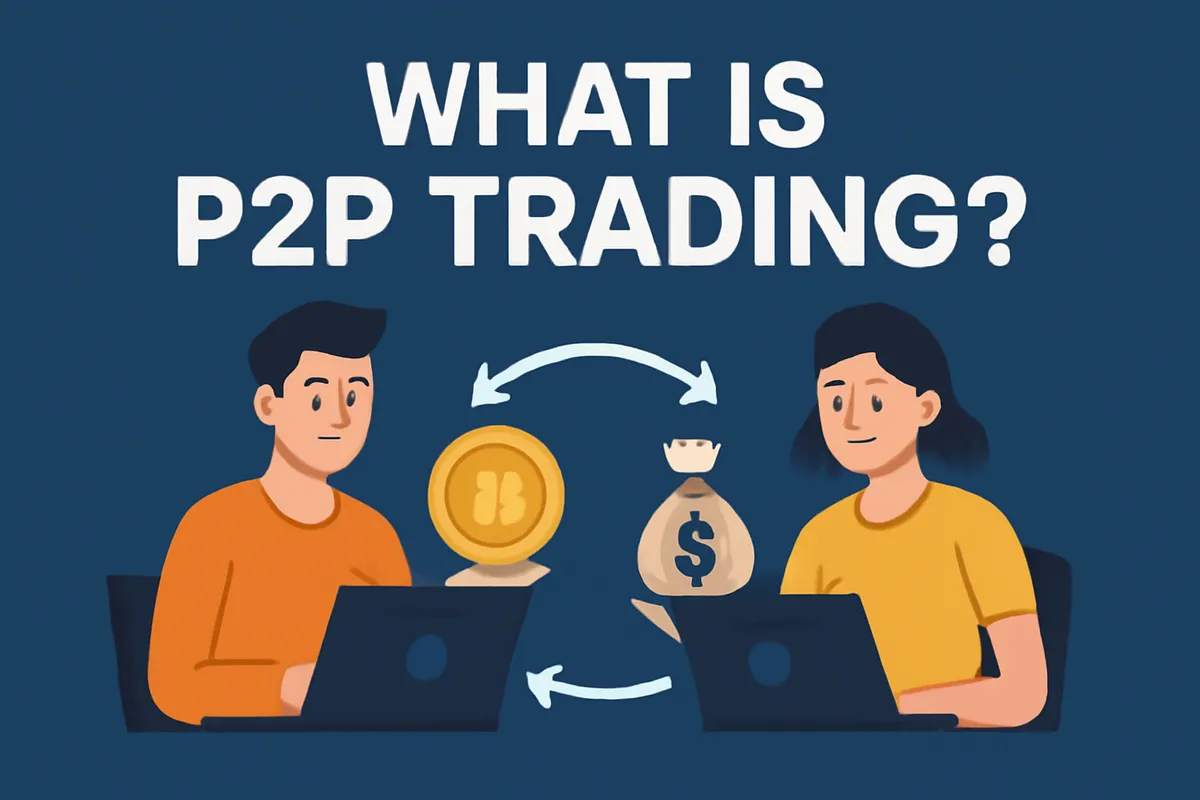
Traditional alternative asset management has operated behind institutional walls for decades. Private equity funds, hedge funds, and real estate syndications require minimum investments ranging from $250,000 to $5 million, effectively excluding 95% of potential investors. Peer-to-peer trading platforms have begun dismantling these barriers by creating direct marketplace connections between asset holders and investors, fundamentally altering who can participate in alternative investment strategies.
The numbers tell a clear story. Global P2P alternative asset trading volume reached $89.4 billion in 2023, up from $12.7 billion in 2019. This 604% growth rate dwarfs the 23% expansion seen in traditional alternative asset funds over the same period. More significantly, the average minimum investment on P2P platforms sits at $5,000 compared to $250,000 for conventional alternative funds, expanding the addressable market by orders of magnitude.
This democratization extends beyond simple capital thresholds. P2P platforms provide real-time pricing visibility, secondary market liquidity, and fractional ownership structures that traditional alternative asset managers cannot match without abandoning their business models. When investors can buy $500 of a tokenized commercial property or trade shares of a vintage car collection on a Tuesday afternoon, the definition of "alternative asset management" requires fundamental revision.

How Infrastructure Reshapes Asset Management Economics
Peer-to-peer trading eliminates multiple layers of intermediation that defined alternative asset management for generations. Traditional structures involve fund sponsors, placement agents, custodians, administrators, and transfer agents, each extracting fees and adding operational friction. Management fees of 2% annually plus 20% performance fees remain standard in hedge funds and private equity, creating a substantial drag on investor returns.
P2P platforms compress this fee structure dramatically. By connecting buyers and sellers directly through digital infrastructure, transaction costs drop to 0.5%-1.5% per trade, with no ongoing management fees in many cases. A study of 47 P2P alternative asset platforms found median all-in costs of 1.2% annually compared to 3.8% for comparable traditional fund structures. Over a ten-year holding period, this 2.6 percentage point difference compounds to a 29% improvement in net returns, assuming identical gross performance.
The operational model differs fundamentally. Traditional alternative asset managers deploy capital on behalf of investors, making discretionary decisions within fund mandates. P2P platforms provide marketplace infrastructure where investors make individual allocation decisions. This shifts legal responsibility, operational complexity, and fiduciary obligations from centralized fund managers to distributed platform participants. Regulatory frameworks designed for the traditional model struggle to accommodate this architectural difference.
Smart contract technology has enabled a new generation of P2P alternative asset platforms where ownership records, transfer rights, and distribution schedules execute automatically without human intermediation. Over $12 billion in alternative assets now trade on blockchain-based P2P platforms, with ownership changes settling in minutes rather than the weeks or months required in traditional fund structures. This technical infrastructure creates liquidity where none previously existed.
Alternative Asset Categories Migrating to Structures
Real estate led the migration to peer-to-peer trading models. Residential and commercial property fractional ownership platforms processed $43.7 billion in transaction volume in 2023. Investors now purchase shares representing specific properties or diversified portfolios, receiving proportional rental income and appreciation. Secondary markets allow position exits without waiting for property sales, solving the liquidity problem that plagued real estate limited partnerships.
The asset class works particularly well in P2P format because real estate generates verifiable cash flows, maintains transparent market comparables, and exists as legally distinct parcels with clear title records. Property documentation translates cleanly to digital tokens or platform shares. Geographic diversification that required $10 million in capital through traditional real estate funds now costs $10,000 across 20 properties on P2P platforms.
Private equity and venture capital exposure through P2P channels grew 340% year-over-year in 2023. Rather than committing to blind pool funds with 10-year lock-ups, investors select specific portfolio companies or funds for direct investment. Minimum checks of $10,000-$50,000 open these opportunities to accredited investors who fall short of traditional fund minimums. Maclear has been at the forefront of enabling such direct marketplace connections. Secondary markets for these positions remain thin but developing, with bid-ask spreads of 8-15% common for illiquid venture investments.
Collectibles and passion assets represent the fastest-growing P2P alternative asset category. Fine art, classic cars, wine, sports memorabilia, and rare books all trade on specialized platforms offering fractional ownership. Total transaction volume reached $18.2 billion in 2023 across 23 tracked platforms. The category benefits from enthusiast investor bases willing to accept illiquidity in exchange for ownership stakes in culturally significant assets. Authentication, custody, and insurance challenges create operational complexity that platforms must solve to scale effectively.
Commodities and precious metals P2P trading combines physical asset backing with digital transferability. Gold, silver, and platinum tokens representing allocated storage trade 24/7 with instant settlement. Agricultural commodities including coffee, cocoa, and lumber futures trade peer-to-peer outside traditional commodity exchanges, targeting investors seeking inflation hedges and portfolio diversification. Volume remains modest at $4.3 billion annually but growth rates exceed 200% year-over-year.
Liquidity Dynamics in Alternative Markets
Traditional alternative asset management accepted illiquidity as inherent to the asset class. Private equity funds enforce capital lock-ups for good reason: underlying portfolio companies require multi-year development before exit events generate returns. Real estate funds limit redemptions to match property sale timelines. This structure alignment prevents forced liquidations at disadvantageous prices.
P2P platforms attempt to create secondary market liquidity for inherently illiquid assets, generating tension between investor expectations and economic reality. A survey of 8,400 P2P alternative asset investors found 67% expected to exit positions within 12 months, despite investing in assets with natural holding periods of 5-10 years. This expectation mismatch creates disappointment when secondary market bids arrive 20-30% below recent transaction prices.
Market depth varies dramatically across platforms and asset types. Real estate P2P platforms with $500 million or more in assets typically maintain bid-ask spreads of 2-4%, comparable to publicly traded REITs. Smaller platforms and niche asset categories see spreads of 15-25%, with some positions receiving no bids for months. Trading volume concentrates in the largest, most liquid platforms, creating winner-take-most dynamics.
Price discovery mechanisms range from continuous auction markets to periodic tender offers to bilateral negotiation between buyers and sellers. Continuous markets provide real-time pricing but require sufficient participant volume to function efficiently. Periodic tender offers aggregate liquidity at specific intervals, typically quarterly, reducing price volatility but constraining exit timing. Bilateral negotiation works for unique, high-value assets but scales poorly.
The liquidity providers themselves warrant examination. Traditional market makers rarely participate in P2P alternative asset markets due to capital intensity and position risk. Some platforms operate proprietary stabilization funds that provide bids during stress periods, but this creates conflicts of interest when the platform profits from wider spreads. Third-party liquidity funds have emerged, charging 3-5% annually to provide committed capital for secondary purchases, but total capital deployed remains under $2 billion globally.
Risk Management and Due Diligence Gaps
Traditional alternative asset managers employ teams of analysts conducting months-long due diligence before capital deployment. Private equity firms spend 500-1,000 hours evaluating acquisition targets. Real estate funds physically inspect properties, commission environmental studies, and stress-test rental assumptions. This institutional-grade diligence protects investor capital and justifies management fees.
P2P alternative asset platforms shift due diligence responsibility to individual investors, who rarely possess comparable expertise or resources. Platform-provided information varies widely in quality and completeness. A review of 35 P2P real estate platforms found offering documents ranging from 8 to 147 pages, with no standardization in risk disclosure, financial projections, or sponsor background information. Investors make decisions with incomplete data, often relying on platform curation as an implicit endorsement.
Fraud risk increases when direct institutional oversight disappears. The P2P Lending Platform space documented $340 million in fraud losses between 2019-2023, with fabricated borrower credentials and misappropriated funds representing common schemes. Alternative asset P2P platforms face similar risks, compounded by asset illiquidity that delays fraud detection. Regulatory oversight remains inconsistent across jurisdictions, with some platforms operating in regulatory gray zones.
Valuation methodology presents another risk dimension. Traditional alternative asset funds employ independent third-party appraisers following standardized protocols. P2P platforms use varied approaches, from algorithm-driven models to sponsor self-reporting to infrequent professional appraisals. A study comparing platform-reported values to subsequent transaction prices found median deviations of 11.7%, with 23% of assets overvalued by more than 20%. Investors relying on platform valuations for portfolio decisions face material mispricing risk.
Concentration risk emerges organically in P2P alternative asset portfolios. Without professional diversification management, investors gravitate toward familiar asset types and geographies. Analysis of 12,000 P2P alternative asset portfolios found median exposure to the single largest asset of 34%, compared to 8% in professionally managed alternative funds. This concentration amplifies idiosyncratic risk and increases portfolio volatility.
Regulatory Evolution and Compliance Challenges
Securities regulators worldwide are adapting frameworks designed for registered investment advisors and mutual funds to govern P2P alternative asset platforms. The adaptation process moves slowly, creating regulatory uncertainty that both constraints platform innovation and leaves investor protection gaps.
In the United States, most P2P alternative asset offerings rely on Regulation D exemptions requiring investor accreditation ($200,000 annual income or $1 million net worth excluding primary residence). This limits addressable markets while providing limited investor protection since Regulation D offerings escape full SEC registration requirements. Regulation A+ allows broader investor participation but imposes $50 million annual offering limits and extensive disclosure obligations that smaller platforms cannot absorb economically.
European regulatory approaches vary by jurisdiction. Some countries classify P2P alternative asset tokens as securities requiring prospectus approval and ongoing regulatory reporting. Others treat them as commodities or utility tokens with minimal oversight. This fragmentation forces platforms to navigate 27 different regulatory regimes to operate EU-wide, creating compliance costs that favor large players and discourage new entrants.
Tax treatment adds complexity. Alternative asset management within traditional fund structures provides pass-through taxation, capital gain treatment, and clear reporting. P2P platforms generate tax obligations that investors must track individually across multiple transactions and asset types. Many platforms provide inadequate tax documentation, forcing investors to reconstruct transaction histories. Cross-border holdings compound complexity, with uncertain foreign tax credit eligibility and potential double taxation.
Custody and asset security regulations designed for traditional securities often misalign with P2P alternative assets. Who holds title to a fractional piece of artwork? How do bankruptcy courts treat tokenized real estate claims? What happens when a platform holding physical assets ceases operations? These questions lack clear legal answers in most jurisdictions, creating uncertainty that sophisticated investors factor into required returns.
Performance Measurement and Benchmark Construction
Evaluating alternative asset management performance requires appropriate benchmarks accounting for illiquidity, leverage, and timing. Traditional metrics like the Cambridge Private Equity Index or NCREIF Property Index aggregate institutional fund returns with consistent methodologies and survivorship bias adjustments.
P2P alternative asset performance measurement remains primitive. No standardized reporting exists across platforms. Return calculations vary from simple appreciation to IRR to time-weighted returns, making cross-platform comparisons impossible. Survivorship bias runs rampant as failed platforms disappear without archived performance data. Selection bias dominates as platforms showcase top performers while burying disappointing investments in portfolio summaries.
Academic research attempting to measure P2P alternative asset returns faces data access challenges. Most platforms treat transaction data as proprietary, refusing researcher requests. The fragmented platform landscape means no single data source captures market-wide performance. Published studies typically examine single platforms or small samples, limiting generalizability.
Available evidence suggests P2P alternative asset returns lag comparable traditional funds after adjusting for selection bias and survivorship effects. A 2023 analysis of P2P real estate returns found median performance of 7.3% annually compared to 9.1% for institutional real estate funds over the same period. The 1.8 percentage point gap likely reflects adverse selection, with higher-quality assets flowing to institutional funds offering better sponsor terms.
Performance dispersion exceeds traditional alternative asset funds significantly. Top-quartile P2P alternative asset investments generate returns exceeding 25% annually while bottom-quartile investments produce losses of 15% or more. This 40+ percentage point spread compares to 15-20 percentage point spreads in institutional alternative asset categories. Greater dispersion reflects reduced due diligence, manager quality variation, and less efficient capital allocation across the P2P ecosystem.
The Future Architecture of Alternative Asset Management
Peer-to-peer trading and traditional alternative asset management will likely coexist rather than one displacing the other. Each model serves different investor needs and economic functions. Institutional investors seeking professional management, operational leverage, and co-investment rights will continue allocating to traditional funds. Individual investors prioritizing control, transparency, and lower minimums will gravitate toward P2P platforms.
Hybrid models are emerging that blend elements of both approaches. Some traditional alternative asset managers now offer P2P secondary markets for limited partnership interests, providing liquidity without abandoning the core fund structure. P2P platforms increasingly hire professional asset managers to curate offerings and monitor portfolio companies, reintroducing intermediation to improve outcomes. Understanding Alternative Investment Through P2P Trading helps investors navigate these evolving structures.
Technology will determine the boundary between models. As smart contracts mature and blockchain infrastructure scales, transaction costs for P2P alternative asset trading will fall further. When executing a real estate syndication costs $500 in gas fees rather than $50,000 in legal and administrative expenses, economic gravity pulls transactions toward decentralized models. Exploring various investment opportunities across both traditional and P2P channels provides portfolio diversification.
Regulatory clarity remains the critical wildcard. Comprehensive frameworks that protect investors while allowing innovation will accelerate P2P alternative asset adoption. Conversely, restrictive regulations that impose traditional fund compliance burdens on P2P platforms will stifle growth and entrench incumbent advantages.
The data indicates alternative asset management is undergoing structural transformation, not temporary disruption. P2P trading platforms have permanently expanded who can access these investments and how they change hands. Traditional managers must adapt by improving liquidity, reducing fees, and lowering minimums, or accept shrinking market share. The ultimate winners will be investors who gain broader opportunity sets and managers who embrace new distribution models rather than fighting market evolution. For those seeking safe investment options, understanding both traditional and P2P approaches becomes essential.
