The Convergence of Growth and Trading
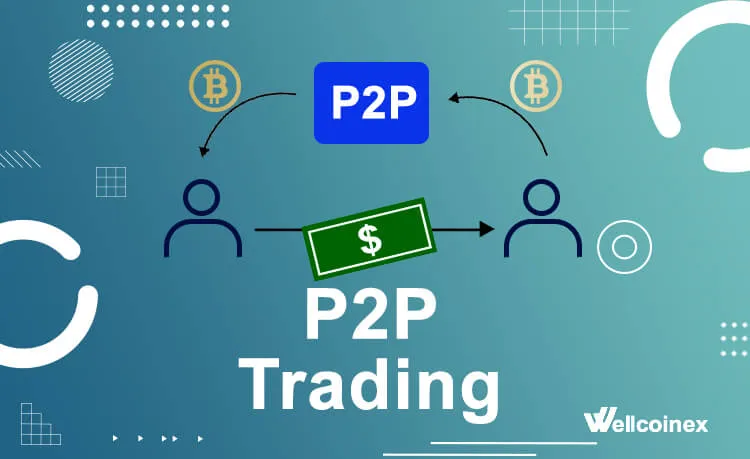
Growth investing has traditionally centered on publicly traded equities and mutual funds, but the rise of peer-to-peer trading platforms has opened new pathways for investors seeking long-term capital appreciation. The P2P trading ecosystem now encompasses digital assets, tokenized securities, fractional real estate, and private market instruments—all accessible without traditional intermediaries. This shift represents more than technological convenience; it fundamentally alters how growth-focused capital finds opportunities.
Data from the Cambridge Centre for Alternative Finance shows P2P lending and trading platforms facilitated $304 billion in transactions globally during 2022, a 16% increase from the previous year. Within this expanding market, growth-oriented strategies differ significantly from income-focused or value approaches. Where traditional P2P Lending Platform emphasizes steady returns from interest payments, growth investing in P2P contexts targets assets with potential for substantial price appreciation over three to seven years.
The mechanics matter here. P2P platforms remove layers of institutional oversight that characterize conventional markets, creating both opportunity and risk. Transaction costs average 0.3% to 1.2% on most platforms—substantially lower than the 1.5% to 2.5% typical of traditional brokerages with advisory services. This cost advantage compounds meaningfully when reinvesting gains over multiple cycles.
Identifying High-Growth Potential in Decentralized Markets
Asset selection in P2P environments demands different analytical frameworks than public equity markets. Traditional growth metrics—revenue growth rates, earnings momentum, market share expansion—retain relevance when applicable, but many P2P tradable assets lack conventional financial statements. Instead, investors analyze network effects, adoption curves, governance structures, and community engagement metrics.
Consider tokenized real estate, which represented $2.7 billion in P2P transactions during 2023 according to Security Token Market data. Growth potential in this sector derives from property appreciation plus the liquidity premium that tokenization creates. A commercial property in a high-growth market might appreciate 6% annually, but the ability to trade fractional ownership on secondary P2P markets can command an additional 2% to 4% premium over comparable illiquid holdings.
Digital collectibles and NFT markets illustrate different growth drivers. The sector contracted 73% from its 2021 peak to early 2023, but specific subcategories tied to utility and intellectual property rights maintained value. Gaming assets on P2P platforms that provide actual in-game functionality retained 84% of their value through the downturn, according to DappRadar analytics. This divergence highlights a crucial principle: growth investing in P2P trading requires distinguishing speculative bubbles from genuine value creation.
Revenue-generating digital assets present the clearest path for traditional growth analysis. Platforms like Uniswap and other decentralized exchanges generate protocol fees that accrue to token holders. The top 15 DeFi protocols generated $2.1 billion in annualized fees during Q4 2023, up from $1.4 billion in Q4 2022—a 50% year-over-year increase. These metrics provide quantifiable growth trajectories similar to traditional software-as-a-service businesses.
Portfolio Construction for Sustainable Growth
Sustainable investing principles increasingly intersect with growth strategies in P2P markets. The Global Sustainable Investment Alliance reports that sustainable investment assets reached $30.3 trillion in 2022, representing 36% of all professionally managed assets. P2P platforms enable direct investment in sustainability-focused projects that previously required institutional scale access.
Renewable energy tokens exemplify this convergence. Solar and wind projects tokenized for P2P trading combine growth potential with measurable environmental impact. A solar installation in Southeast Asia might project 8% to 12% annual returns as electricity demand grows 5.4% annually in the region through 2030, per the International Energy Agency. Investors gain exposure to both infrastructure appreciation and revenue streams from power generation.
Portfolio allocation models for P2P growth investing typically differ from conventional 60/40 stock-bond splits. Data from P2P analytics firm Autonomous Research suggests optimal growth-focused portfolios in this space allocate 40% to established protocol tokens with proven revenue models, 30% to emerging platforms with strong network growth metrics, 20% to tokenized real-world assets in high-growth markets, and 10% to early-stage opportunities with asymmetric upside potential.
This structure acknowledges the higher volatility inherent in P2P markets. Bitcoin, often considered the most established digital asset, experienced intra-year drawdowns exceeding 50% in four of the past ten years, yet delivered compound annual growth of 123% over that decade. Such volatility requires different risk management approaches than traditional equity growth portfolios. Maclear provides tools to navigate these volatile markets effectively.

Risk Assessment Beyond Traditional Metrics
Credit risk evaluation in P2P lending platforms relies heavily on proprietary scoring models, but growth-focused P2P trading introduces additional risk dimensions. Smart contract vulnerabilities have caused $3.7 billion in losses across DeFi platforms since 2020, according to blockchain security firm CertiK. This technical risk layer has no direct equivalent in traditional securities markets.
Regulatory ambiguity compounds these technical risks. The European Union's Markets in Crypto-Assets Regulation (MiCA), implemented in phases through 2024, established the first comprehensive framework for digital asset trading. Similar regulatory clarity remains absent in major markets including the United States, where classification disputes between the SEC and CFTC create uncertainty for P2P traders. This regulatory risk particularly affects growth assets, which often operate at the frontier of financial innovation.
Liquidity risk manifests differently in P2P markets compared to traditional exchanges. While major cryptocurrency pairs maintain bid-ask spreads below 0.1%, tokenized private equity and real estate often experience spreads of 3% to 8%. A growth position that looks promising on paper may prove difficult to exit without substantial price concessions. Data from security token platform tZERO shows average time-to-sale for tokenized private securities ranges from 47 to 93 days, compared to seconds for liquid public equities.
Counterparty risk requires particular attention in P2P environments. The collapse of FTX in November 2022 eliminated $8 billion in customer assets, demonstrating how centralized P2P platforms can fail catastrophically despite growth-oriented positioning. True peer-to-peer protocols using non-custodial architecture mitigate this risk but introduce complexity in user experience and key management responsibilities.
Valuation Methodologies for Non-Traditional Assets
Traditional price-to-earnings ratios provide limited utility for most P2P-traded growth assets. Alternative valuation frameworks have emerged to address this gap. Network valuation models analyze user growth, transaction volumes, and retention metrics—similar to how investors valued internet companies in the early 2000s before consistent profitability emerged.
Metcalfe's Law, which states network value grows proportionally to the square of connected users, provides one quantitative approach. Applied to blockchain protocols, this model demonstrated 95% correlation with Bitcoin prices between 2013 and 2022 during periods excluding speculative extremes, according to research published in the Royal Society Open Science journal. The framework extends to other network-based P2P tradable assets, from decentralized social platforms to tokenized creator economies.
Revenue multiple analysis applies when platforms generate measurable fees or royalties. Decentralized exchange tokens trading at 15x to 25x annualized protocol revenue fall within ranges comparable to high-growth fintech companies in traditional markets. This provides valuation anchors even in volatile conditions. When Uniswap traded below 10x revenue in late 2022, subsequent appreciation of 183% through mid-2023 validated the comparative framework.
Tokenomics—the study of token supply, distribution, and incentive structures—introduces variables without traditional market equivalents. A protocol with 3% annual inflation might require 8% growth in demand to maintain price stability, while deflationary tokens with burn mechanisms create different dynamics. The top-performing protocol tokens of 2023 shared common characteristics: emission schedules declining over time, utility driving consistent demand, and governance structures enabling parameter adjustments based on network conditions.
Implementation Strategies and Platform Selection
Platform selection significantly impacts growth investing outcomes in P2P trading. Centralized platforms offer user-friendly interfaces and customer support but concentrate counterparty risk. Decentralized protocols provide trustless execution and transparent operations but require technical competence and self-custody responsibility.
Trading volume provides one filter for platform assessment. Exchanges processing over $1 billion daily volume typically maintain adequate liquidity for position entry and exit, though volume concentration in specific trading pairs matters more than aggregate figures. The top eight P2P crypto trading platforms captured 83% of global volume in 2023, according to CoinGecko data, suggesting concentration remains high despite the proliferation of new platforms.
Security track records warrant close examination. Platforms operating for five or more years without major security breaches or custody failures demonstrate operational competence increasingly valuable as the sector matures. Conversely, platforms under three years old account for 67% of security incidents based on analysis of breach data since 2020.
Regulatory compliance positioning affects long-term viability. Platforms securing money transmitter licenses, implementing know-your-customer procedures, and maintaining transparent reserve attestations position themselves for sustainable operation as regulatory frameworks solidify. Growth investors benefit from platforms likely to survive regulatory evolution rather than those optimizing for current ambiguity.
Geographic diversification across platforms reduces jurisdiction-specific risks. A portfolio accessing P2P trading through platforms based in Switzerland, Singapore, and the European Union spreads regulatory risk across multiple frameworks. This approach proved valuable when Chinese authorities restricted domestic crypto trading in 2021; investors with multi-jurisdictional access maintained market participation despite regional shutdowns.
Tax Considerations and Reporting Complexity
Tax treatment of P2P trading gains varies substantially across jurisdictions, creating compliance challenges for growth investors. The United States treats most digital assets as property, making each trade a taxable event subject to capital gains treatment. This creates significant tracking requirements; an investor making 200 trades annually must calculate cost basis and holding period for each transaction.
The UK applies capital gains tax to crypto assets with an annual exemption of £3,000 as of the 2024-2025 tax year, reduced from £6,000 previously. Australia similarly treats digital assets as capital gains tax property, while Germany exempts gains on assets held longer than one year. These variations significantly affect after-tax returns for growth-focused strategies.
Tokenized securities typically follow the tax treatment of their underlying assets. Tokenized real estate generates rental income taxed as ordinary income plus capital appreciation taxed at applicable rates upon sale. This parallels traditional real estate taxation but with added complexity from blockchain record-keeping requirements.
Specialized software addresses these tracking challenges. Platforms like CoinTracking and Koinly aggregate transaction data across multiple P2P trading venues, calculate tax obligations across jurisdictions, and generate reports compatible with tax filing requirements. Investors actively trading growth positions across platforms find these tools essential for accurate compliance.
Wash sale rules in traditional securities prevent claiming losses when repurchasing substantially identical assets within 30 days. These rules currently do not apply to most P2P-traded digital assets in the United States, though proposed legislation would close this gap. Growth investors using tax-loss harvesting strategies should anticipate regulatory changes eliminating this advantage.
Long-Term Outlook and Portfolio Integration
Growth investing through P2P trading platforms will likely continue expanding as tokenization technology matures and regulatory frameworks crystallize. Traditional financial institutions increasingly offer tokenized products—BlackRock's tokenized treasury fund reached $500 million in assets within six months of its March 2023 launch, demonstrating institutional validation of the model.
The integration of P2P-traded growth assets into conventional portfolios requires careful position sizing. Financial advisors surveyed by Bitwise Asset Management in 2023 recommended allocating 2% to 8% of growth portfolios to digital assets and tokenized alternatives, with specific percentages depending on investor age, risk tolerance, and existing portfolio composition. This modest allocation captures upside participation while limiting downside impact from sector-specific volatility. Understanding long term investment principles helps investors maintain discipline through market cycles.
Rebalancing discipline becomes particularly important given P2P market volatility. A 5% allocation can easily become 12% after a strong rally, concentrating risk beyond intended levels. Quarterly rebalancing maintains target allocations while systematically capturing gains from outsized moves. Analysis of P2P portfolio performance from 2018 through 2023 shows quarterly rebalancing improved risk-adjusted returns by 1.7 percentage points annually compared to buy-and-hold approaches. Exploring investment opportunities across multiple P2P platforms diversifies risk while maximizing growth potential.
The convergence of growth investing principles with P2P trading infrastructure creates opportunities unavailable through traditional channels. Early-stage project access, fractional ownership of appreciating assets, and direct participation in protocol economics all support long-term wealth building when approached systematically. The sector's maturation from speculative fervor toward utility-focused fundamentals strengthens the case for disciplined growth investment strategies in this expanding market segment.
