Understanding Trading as a Passive Income Vehicle
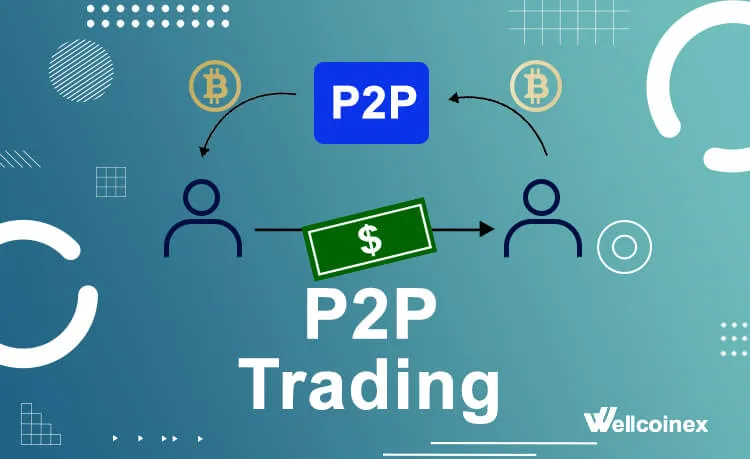
The peer-to-peer trading landscape has evolved into a legitimate channel for generating recurring revenue with substantially less time investment than traditional trading methods. Unlike conventional day trading that demands constant monitoring, P2P trading platforms enable individuals to structure transactions that continue generating returns after initial setup. The model connects buyers and sellers directly, eliminating intermediaries and their associated fees while creating opportunities for strategic participants to profit from the spread.
Recent data from Cambridge University's Alternative Finance Center indicates that P2P lending and trading platforms facilitated over $872 billion in transactions globally during 2023. This expansion reflects growing trust in decentralized financial systems and demonstrates the viability of these platforms as income generators. The appeal extends beyond cryptocurrency enthusiasts to include forex traders, commodity dealers, and those exchanging fiat currencies across borders.
The fundamental distinction between P2P trading and active speculation lies in methodology. Active traders chase price movements throughout the day. P2P operators establish pricing structures, then allow the platform's matching algorithms to execute trades automatically when conditions align. This shift from reactive to systematic approach transforms trading from a time-intensive occupation into a mechanism that functions during work hours, evenings, and weekends without direct supervision.

Primary Strategies for Building Income Streams
Arbitrage Positioning Across Multiple Platforms
Price discrepancies between different P2P platforms create measurable profit opportunities. Bitcoin might trade at $43,200 on one platform while simultaneously listed at $43,450 on another. Traders who maintain positions on both exchanges can capture this $250 spread repeatedly. The process requires initial capital deployment and verification across platforms, but once established, automated bots can execute these trades when profitable gaps emerge.
Data from Kaiko Research shows that cryptocurrency arbitrage opportunities exceeding 0.5% appear an average of 37 times daily across major exchanges. While individual gains seem modest, compounding these micro-profits across hundreds of monthly transactions generates substantial returns. One European trader documented $4,200 in monthly arbitrage income from a $50,000 capital base—an annualized return approaching 10% with minimal direct involvement.
The strategy demands understanding of transfer times and network fees. Moving assets between platforms consumes time during which prices shift. Successful arbitrageurs calculate the total cost including transaction fees and only execute when the spread exceeds these combined expenses by a comfortable margin.
Liquidity Provision and Market Making
P2P platforms require sufficient buyers and sellers at various price points to function smoothly. Traders who provide liquidity by posting both buy and sell orders at strategic levels earn from the bid-ask spread while facilitating market efficiency. This approach resembles traditional market making but operates at scales accessible to individual participants rather than exclusively institutional players.
Binance P2P data indicates that consistent liquidity providers processing 50+ transactions monthly achieve average spreads of 0.8-1.5% per completed trade. A provider handling $200,000 in monthly volume at a 1.2% average spread generates $2,400 in gross income. After accounting for platform fees (typically 0-0.35% on major exchanges) and occasional price slippage, net returns commonly reach $1,800-2,000 monthly.
The passive component strengthens as reputation builds. Established traders with hundreds of successful completions attract more counterparties, creating self-reinforcing volume growth. Most platforms offer API access enabling automated order placement and adjustment based on real-time price feeds, removing the need for constant manual intervention.
Stablecoin Conversion Services
Geographic restrictions and banking limitations prevent millions from accessing USD-denominated stablecoins directly. Traders who convert local currencies to USDT, USDC, or similar instruments fill this gap while capturing conversion premiums. In markets like Nigeria, Argentina, and Turkey—where currency volatility drives demand for dollar-pegged assets—conversion spreads regularly reach 2-5% above mid-market rates.
Chainalysis reported that Nigerian P2P trading volume exceeded $2.4 billion in 2023, with stablecoin acquisition comprising roughly 60% of transactions. Providers offering reliable conversion services in this single market can process substantial volumes. One Lagos-based operator shared figures showing $80,000 in monthly conversion volume generating $2,800-3,600 in spread-based income.
Risk management proves critical. Holding inventory in both local currency and stablecoins exposes traders to exchange rate movements. Successful operators hedge this exposure through futures contracts or maintain tight inventory turnaround, converting positions back to stable assets within hours rather than days. This requires monitoring but not continuous active trading—most practitioners check positions 2-3 times daily while automation handles order execution.
Platform Selection and Account Optimization
Not all P2P platforms offer equal income potential. Trading volume, fee structures, available currency pairs, and user base size directly impact profitability. Binance P2P processes the highest global volume, exceeding $15 billion monthly across 100+ supported fiat currencies. This liquidity creates numerous trading opportunities and competitive spreads. LocalBitcoins, despite declining market share, maintains strong presence in Latin America and Africa where alternative options remain limited.
Paxful reported 11.8 million registered users across 165 countries in their 2023 metrics, with particularly strong adoption in sub-Saharan Africa. Regional specialization matters—platforms dominant in specific geographies offer better opportunities in those markets than globally larger competitors with shallow regional liquidity. Traders targeting Nigerian Naira conversions find better volume and spreads on platforms with strong West African adoption.
Fee structures vary significantly. Binance charges no fees to makers (those posting orders) on their P2P platform, only taking 0.35% from takers. Paxful implements a 1% seller fee with free purchases. LocalBitcoins charges 1% on completed trades regardless of role. These seemingly small differences compound dramatically at scale—processing $100,000 monthly on a zero-fee structure versus a 1% fee platform represents $1,000 in preserved income.
Verification requirements correlate with trust metrics and trading limits. Platforms assign badges or ratings to users who complete enhanced verification. Basic accounts might face $1,000-5,000 daily limits while fully verified merchants process $50,000-500,000 daily. Unlocking these higher tiers requires submitting identification documents and occasionally business registration paperwork, but the expanded capacity directly enables larger income generation. Maclear provides comprehensive tools for managing P2P trading operations efficiently.
Automation Tools and Technical Infrastructure
Effective passive income generation through P2P trading relies heavily on automation infrastructure. Manual order placement becomes impractical beyond minimal volumes. API connectivity allows custom scripts or third-party bots to monitor prices across platforms, adjust orders dynamically, and execute trades matching predefined criteria.
The technical requirements remain accessible to non-programmers. Services like 3Commas, Cryptohopper, and HaasOnline offer visual strategy builders enabling users to construct trading logic through dropdown menus rather than coding. Monthly subscriptions range from $29-199 depending on feature sets and allowed exchange connections. More sophisticated operators develop custom Python or JavaScript bots, particularly when implementing complex arbitrage logic spanning multiple venues.
Uptime reliability becomes paramount. A bot offline for six hours misses dozens of potential trades. Serious operators run systems on Virtual Private Servers ensuring 99.9% availability, with costs starting around $10-20 monthly for adequate performance. Cloud-based solutions through AWS or Google Cloud offer additional redundancy though at higher expense for equivalent resources.
Security considerations cannot be ignored. API keys grant programmatic access to exchange accounts—if compromised, attackers drain funds instantly. Practitioners restrict API permissions to trading functions only, never enabling withdrawal capabilities through automation. Hardware security keys add additional protection layers for primary exchange account access. Two-factor authentication through authenticator apps rather than SMS prevents SIM-swap attacks that have drained multiple P2P trading accounts over recent years.
Risk Management and Capital Protection
P2P trading income streams face several distinct risk categories requiring active mitigation. Counterparty risk tops the list—peer-to-peer transactions depend on the opposite party fulfilling obligations. While platforms offer escrow services and dispute resolution, scammers employ increasingly sophisticated tactics including fake payment confirmations and social engineering attempts.
Statistics from Binance's transparency reports indicate dispute rates hover around 0.3% of total transactions, with approximately 60% resolving in favor of sellers. However, individual traders who fail to follow verification protocols experience substantially higher fraud rates—sometimes exceeding 5% of transactions. Strict adherence to platform guidelines, rejecting suspicious accounts regardless of offered premiums, and maintaining documentation of all communications significantly reduces exposure.
Market volatility risk affects traders holding inventory. A P2P operator with $20,000 in Bitcoin awaiting conversion faces direct exposure to price swings. A 5% overnight decline erases $1,000—potentially several days of spread-based income. Hedging through perpetual futures or options contracts offsets this risk though adds complexity and cost. Alternatively, maintaining inventory primarily in stablecoins and only acquiring volatile assets immediately before conversion limits exposure windows.
Platform risk deserves consideration. Exchanges occasionally suspend P2P services during regulatory reviews or technical issues. In 2023, a major platform froze P2P operations in several European countries for 48 hours pending compliance updates, leaving traders unable to access funds locked in pending transactions. Diversification across multiple platforms prevents complete income interruption from single-platform disruptions. Operating on three platforms simultaneously means one going offline affects one-third of revenue rather than total income.
Scaling Income Through Systematic Growth
Initial P2P trading operations typically generate modest returns—perhaps $300-800 monthly from $10,000-20,000 in deployed capital. The passive nature allows reinvestment of both profits and additional savings, creating compounding growth trajectories. A trader starting with $15,000 and consistently reinvesting 60% of profits while adding $500 monthly in new capital reaches $50,000 in trading capital within 18-24 months assuming conservative 1% monthly returns on deployed assets.
This capital expansion directly correlates with income scaling. Larger positions capture more of the available spread opportunities. Higher trading volume unlocks improved platform fee tiers and merchant status benefits including priority support and enhanced visibility to potential counterparties. Binance grants VIP status to traders exceeding specific volume thresholds, reducing fees further and improving profitability margins.
Geographic expansion represents another scaling dimension. A trader successfully operating USD/BTC conversions can replicate the methodology in EUR/BTC, GBP/BTC, and other major pairs. Each new corridor requires minimal additional effort once systems exist—primarily involving new platform verifications and modest market research on local trading customs. Multi-corridor operators processing transactions across 5-8 currency pairs demonstrate more stable income as regional demand fluctuations offset each other.
Team building introduces leverage beyond personal capital constraints. Some established P2P traders recruit and train junior partners, providing them with capital and systems in exchange for profit splits—typically 50-60% to the capital provider. This model enables income growth exceeding what individual capital deployment allows. One documented operation in Southeast Asia scaled from $4,000 monthly personal income to $18,000 monthly by training four junior traders who collectively managed $180,000 in trading capital.
Tax Considerations and Income Documentation
P2P trading generates taxable income in virtually all jurisdictions, though classification varies between countries. Some tax authorities treat each transaction as a capital gain event while others consider high-frequency trading as business income subject to standard income tax rates. In the United States, frequent P2P trading typically qualifies as active business income taxed at ordinary rates rather than preferential long-term capital gains rates.
Record-keeping requirements demand systematic documentation. Each completed trade requires tracking of date, amount, counterparty, fees paid, and prices—creating thousands of annual entries for active participants. Specialized cryptocurrency tax software like CoinTracker or Koinly imports transaction histories from major platforms, automatically calculating gains, losses, and income totals. Annual subscriptions range from $99-299 but prevent manual spreadsheet nightmares and reduce audit risks from calculation errors.
International taxation complexity multiplies for traders operating across borders. A trader residing in Portugal but processing transactions in Nigerian Naira through a Seychelles-registered platform faces potential tax obligations in multiple jurisdictions. Professional tax advice becomes cost-effective when annual P2P income exceeds $15,000-20,000, as optimization strategies frequently save multiples of advisory fees.
Quarterly estimated tax payments prevent surprise year-end obligations and underpayment penalties. Tax authorities in most developed nations require quarterly remittance when self-employment or investment income exceeds specific thresholds. Failure to comply triggers penalties reaching 5-10% annually on underpaid amounts. Setting aside 25-35% of monthly P2P profits for tax obligations creates adequate reserves in most situations.
Long-Term Sustainability and Market Evolution
The P2P trading landscape continues evolving as regulatory frameworks mature and institutional participation increases. Countries including Singapore, Switzerland, and the UAE have implemented clear regulatory structures encouraging legitimate P2P activity while establishing consumer protections. These developments generally benefit serious operators by eliminating questionable competitors and building mainstream confidence.
Regulatory changes do pose risks. China's 2021 cryptocurrency trading ban eliminated what was previously the world's largest P2P market overnight. Traders heavily concentrated in Chinese yuan conversions faced immediate income loss. India's fluctuating regulatory stance creates recurring uncertainty for rupee-based operations. Diversification across multiple currencies and regions mitigates these jurisdiction-specific risks.
Technological advancement simultaneously threatens and enhances P2P opportunities. Central Bank Digital Currencies entering circulation in multiple countries may reduce some currency conversion demand as direct digital fiat becomes accessible. Conversely, blockchain improvements reducing transaction costs and settlement times make micro-arbitrage more profitable by lowering break-even spread requirements. Exploring alternative investment through P2P trading reveals additional opportunities as the market matures.
Competition intensifies as P2P trading gains mainstream awareness. Spreads that reached 3-5% several years ago now commonly compress to 0.8-1.5% on major platforms. However, total market growth offsets this margin compression—a trader capturing 1% on $500,000 monthly volume earns more than 3% on $150,000 monthly despite lower percentage margins. Established operators with strong reputations and automated systems maintain advantages over new entrants even as competition increases.
The passive income characteristics become more pronounced as experience accumulates. First-year operators typically invest 15-20 hours weekly managing positions, responding to counterparties, and optimizing strategies. By year three, most successful practitioners reduce direct involvement to 5-8 hours weekly while maintaining or growing income through systematic improvements and capital expansion. This progression from side income requiring significant attention to genuinely passive revenue represents the model's ultimate appeal for those committed to developing the necessary expertise and infrastructure. Understanding income investing principles helps optimize these long-term strategies.
