The Mechanics Behind Modern Lending Crowdfunding
Lending crowdfunding has reshaped how capital moves between those who have it and those who need it. In 2023, global crowdlending volume reached $312 billion, up from $289 billion the previous year. This growth reflects a fundamental shift: platforms now facilitate direct connections between retail and institutional investors and borrowers ranging from small businesses to property developers.
The model operates through digital platforms that perform credit assessments, structure loan terms, and automate repayment distribution. A business seeking £50,000 lists its funding request with details about revenue, purpose, and proposed interest rate. Investors review the opportunity, often alongside risk grades assigned by the platform's algorithms, then commit capital in increments as small as £10 or as large as tens of thousands.
Unlike equity crowdfunding where contributors receive shares, lending crowdfunding creates debt obligations. Borrowers repay principal plus interest over agreed terms—typically 12 to 60 months for business loans, or up to 30 years for property-backed financing. Investors receive monthly distributions comprising both interest and returned capital, generating cash flow rather than waiting for exit events.

Market Size and Geographic Distribution
The United Kingdom pioneered peer-to-peer lending regulation in 2014, establishing frameworks that other jurisdictions have since studied or adapted. British platforms originated £7.2 billion in loans during 2022 across consumer, business, and property lending categories. Funding Circle, one of the sector's largest players, has facilitated over £15 billion to small businesses since inception.
China dominated global volumes until regulatory tightening between 2018 and 2021 reduced the market from thousands of platforms to fewer than 30 licensed operators. Before this consolidation, Chinese P2P platforms handled over $200 billion annually. Current volumes sit near $50 billion as survivors focus on compliance and institutional partnerships.
The United States market operates under state-by-state securities regulations, with platforms like Prosper and LendingClub having originated over $80 billion combined since their launches. American platforms increasingly serve as loan originators that quickly sell assets to institutional buyers rather than holding long-term retail investor relationships.
European markets show strong growth, particularly in the Baltic states, Germany, and France. Estonia-based platforms service investors across the European Union through passporting rights, while France's regulatory sandbox encourages innovation in property and business lending. Total European lending crowdfunding volume exceeded €10 billion in 2023, split roughly between consumer loans (42%), business finance (38%), and real estate (20%).
Risk Assessment Infrastructure
Platform success depends on credit models that accurately predict default probability. Most operators combine traditional bureau data with alternative sources: bank transaction patterns, social media activity, e-commerce sales history, and psychometric testing. Algorithms generate risk grades—typically A through E or 1 through 7—that correspond to expected loss rates and guide interest rate pricing.
Historical performance data shows significant variation. Top-grade loans on established platforms default at 1-3% annually, while lower grades may experience 8-15% default rates. These figures exclude recovery proceeds; actual loss rates post-collection average 60-70% of initial defaults. Platforms with property collateral report lower losses—often under 2%—because real estate provides tangible recovery value.
Provision funds offer one risk mitigation approach. Platforms like RateSetter and Zopa set aside a percentage of interest income into pooled reserves that cover missed payments, protecting investor returns even when individual borrowers default. This mechanism shields investors from volatility but has limitations: severe economic downturns can exhaust reserves, as seen during 2020 when several platforms paused provision fund operations pending replenishment.
Diversification tools built into platform interfaces help retail investors spread exposure. Auto-invest features distribute capital across hundreds of loans according to preset risk parameters, charging no additional fee. Manual selectors can browse individual opportunities, reviewing detailed borrower information before committing funds. Data shows diversified portfolios of 100+ loans experience 40% less volatility than concentrated holdings of fewer than 20 positions.
Interest Rate Dynamics and Return Expectations
Crowdlending interest rates reflect borrower risk profiles, loan duration, and collateral quality. Unsecured consumer loans carry the highest rates—often 8-18% for prime borrowers and 20-36% for subprime categories. Business loans typically price at 6-15%, varying with company age, revenue stability, and sector. Property-backed financing offers lower rates, generally 4-10%, because real estate provides downside protection.
Investors must consider several deductions from advertised rates. Platform fees typically consume 0.5-1.5% annually, charged either against interest income or as origination fees. Bad debt provisions reduce net returns by the default rate; a 12% gross rate on loans with 3% annual defaults and 1% fees yields roughly 8% net. Early repayment further impacts returns when borrowers refinance or sell underlying assets ahead of schedule, returning capital that must be redeployed.
Performance data from established platforms shows retail investors achieving net annual returns between 4.2% and 8.7% over five-year periods, depending on risk tolerance and platform selection. These figures exceed typical savings account yields by 300-700 basis points but lag equity market returns during bull periods. Maclear provides tools to help investors evaluate these investment opportunities across multiple platforms.
Institutional investors increasingly participate alongside retail counterparts, often through separate tranches offering lower rates in exchange for first-loss protection or priority repayment. This two-tier structure lets platforms scale loan volumes while maintaining retail investor access. Institutions committed approximately $67 billion to marketplace lending globally in 2023, representing 22% of total volume.

Property Lending as a Distinct Category
Real estate crowdlending merits separate examination due to its unique characteristics. Platforms in this vertical finance property development, refurbishment, or bridging needs, typically for 12-24 month terms. Loan-to-value ratios usually cap at 65-75%, meaning a developer refinancing a £1 million property might access £700,000 maximum.
Interest rates on property loans range from 6% to 12% depending on experience, project complexity, and market conditions. First-time developers pay premium rates; established operators with successful track records access lower pricing. Personal guarantees and corporate structures add layers of recourse beyond the underlying asset.
Default management differs substantially from consumer or business lending. When property borrowers miss payments, platforms can appoint receivers, force sales, or take control of development completion. Average recovery rates on defaulted property loans sit at 85-92% of principal, significantly higher than unsecured categories. Time to resolution averages 14-18 months, requiring investor patience but typically preserving capital.
UK property platforms originated £2.8 billion during 2022, with average loan sizes of £640,000. Investors favor this category for perceived tangible backing and higher returns than deposit accounts, accepting illiquidity in exchange. Platforms report that 60-70% of property lending investors hold portfolios exclusively in real estate deals rather than mixing asset classes.
Business Lending Platforms and SME Finance
Small and medium enterprises face persistent funding gaps, particularly for amounts between £25,000 and £500,000 where bank appetite has declined post-2008. Crowdlending fills this void, providing working capital, equipment finance, and growth funding to businesses unable or unwilling to pursue traditional bank relationships.
Platform due diligence on business borrowers examines trading history, director credit, sector outlook, and financial statements. Many require minimum trading periods—often 12-24 months—and revenue thresholds around £100,000 annually. Interest rates correlate with risk scores; established businesses with strong cash flow access rates of 6-9%, while younger ventures pay 11-15%.
Loan performance varies significantly by sector. Professional services, technology, and healthcare businesses show default rates of 2-4%, while hospitality, retail, and construction experience 7-11% defaults. Platforms adjust pricing and acceptance rates accordingly, sometimes excluding high-risk sectors entirely or requiring additional security.
Borrower motivations extend beyond capital access. Speed represents a major advantage; approvals occur within 48-72 hours compared to weeks or months through banks. Application processes require minimal paperwork, using open banking connections to verify financial data automatically. Businesses value transparent pricing without hidden fees or relationship requirements.
Investor interest in business lending stems from rate premiums over government bonds and perceived economic contribution. Supporting regional businesses appeals to those seeking social impact alongside financial returns. Platforms facilitate this connection by sharing borrower stories, location data, and business descriptions that humanize the transaction beyond spreadsheet metrics.
Regulatory Frameworks and Investor Protection
Jurisdiction determines the legal structure governing crowdlending activity. The UK's Financial Conduct Authority treats platforms as regulated entities requiring authorization, capital adequacy, and resolution planning. Platforms must segregate client funds, maintain winddown procedures, and publish annual assurance reports. Since 2019, all UK platforms operate under the European Investment Business Directive, providing passport rights across member states until Brexit transition periods expired.
United States regulation follows a patchwork model. Securities and Exchange Commission rules govern note-based structures where investors purchase securities backed by loan portfolios. State lending licenses apply when platforms directly originate loans. This complexity has driven consolidation; many smaller operators sold to banks or institutional buyers rather than navigating multi-state compliance.
The European Union's Crowdfunding Regulation, effective November 2021, harmonizes rules across member states for platforms offering up to €5 million per project. Operators can passport services EU-wide under single authorization, reducing fragmentation. Requirements include risk warnings, due diligence disclosures, and investor knowledge tests for those committing over €1,000 or exceeding 5% of net worth.
Consumer protection measures vary but commonly include cooling-off periods (typically 14 days), appropriateness assessments, and prominent risk warnings. Platforms must clearly state that capital sits at risk, returns aren't guaranteed, and investments often can't be withdrawn early. Some jurisdictions cap the percentage of net worth non-sophisticated investors may allocate to crowdlending—usually 10-15%.
Investor compensation schemes generally exclude crowdlending. Unlike bank deposits protected by government insurance up to specified limits, peer-to-peer loans receive no such backstop. If a platform fails, investors remain creditors of underlying borrowers, but servicing disruption and recovery complications can severely impact outcomes.
Secondary Markets and Liquidity Solutions
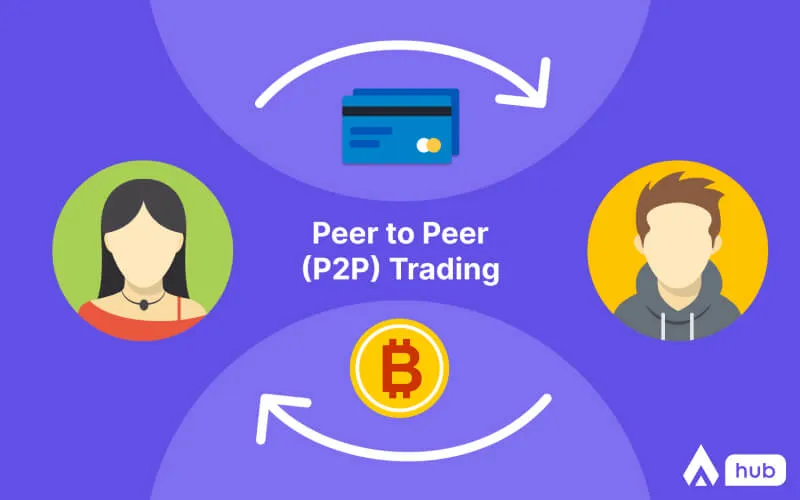
Traditional peer-to-peer lending created illiquidity challenges; investors committed capital for loan duration with limited exit options. Secondary markets emerged to address this friction, allowing investors to sell loan parts to others before maturity. This innovation transformed crowdlending from a purely hold-to-maturity investment into something approaching tradable securities.
Platforms implement secondary markets through two models. Bulletin board systems let sellers list loan parts at chosen prices—par, premium, or discount—with buyers browsing available inventory. Matching engines operate more like stock exchanges, with automated price discovery based on supply and demand. Transaction fees typically range from 0.25% to 1% of sale value.
Liquidity varies with market conditions. During normal periods, loan parts on quality platforms sell within 3-10 days at or near par value. Stress periods extend timelines dramatically; 2020 saw secondary market freezes where sellers waited months or accepted 10-15% discounts to exit positions. Higher-risk loan categories always experience wider bid-ask spreads and longer settlement times.
Some platforms guarantee liquidity through proprietary market-making. Zopa's "Access" accounts allow instant withdrawals with the platform itself purchasing loan parts at par, absorbing any secondary market friction. This convenience carries a cost: lower headline interest rates than equivalent locked-term products.
Recent innovations include blockchain-based loan tokens that theoretically offer frictionless transfer and 24/7 trading. Several platforms have experimented with tokenization, issuing digital securities representing loan participation rights. Adoption remains limited due to regulatory uncertainty and liquidity challenges in what remain niche markets.
Platform Economics and Business Models
Crowdlending platforms generate revenue through fee structures applied to borrowers, investors, or both. Origination fees charged to borrowers typically range from 1% to 5% of loan value, covering credit assessment, legal work, and marketing costs. Servicing fees of 0.5-1.5% annually compensate for payment processing, collections, and reporting.
Investor-facing fees have declined due to competitive pressure. Many platforms now advertise zero investor fees, embedding costs in borrower pricing instead. Others charge annual account fees of 0.5-1%, transaction fees on secondary market sales, or performance fees above specified return thresholds.
Break-even economics require significant scale. Fixed costs include technology infrastructure, regulatory compliance, credit teams, and customer acquisition. Platforms typically need £30-50 million in annual origination volume to cover expenses before management salaries and growth investment. This threshold explains ongoing consolidation; smaller operators struggle to achieve sustainable unit economics.
Customer acquisition costs represent major expenditure. Digital marketing, comparison site listings, and referral programs cost £50-200 per new investor depending on channel. Borrower acquisition runs £400-1,500 per loan, varying with product and target market. Platforms invest heavily in brand building to reduce reliance on expensive paid channels.
Several large operators have pivoted toward balance sheet lending, originating loans using their own capital or warehouse lines then selling to institutions. This model generates fee income without requiring retail investor matching, improves speed, and stabilizes revenue. Critics argue it abandons crowdfunding's disintermediation mission, but operators counter that hybridity expands total funding available to borrowers.
Tax Treatment and Account Structures
Tax implications significantly impact net investor returns. In the United Kingdom, peer-to-peer interest income is taxable as savings income, subject to personal allowances and marginal rates. The Innovative Finance ISA, introduced in 2016, allows up to £20,000 annual investment with complete tax shelter on interest earned. IFISA adoption has grown steadily; approximately 35% of active platform investors now hold at least partial exposure through tax-wrapped accounts.
United States investors report marketplace lending returns as interest income on Form 1099-INT, taxed at ordinary income rates up to 37%. Capital losses from defaults can offset gains elsewhere, but limitations apply. Self-directed IRA accounts permit crowdlending holdings, offering tax-deferred or tax-free growth depending on traditional versus Roth structure.
European treatment varies by country. Germany taxes peer-to-peer returns at 25% capital gains rate after €1,000 annual exemption. France applies flat 30% tax on investment income. Estonia exempts reinvested returns from taxation until withdrawal. These differences create planning opportunities for international investors selecting platform jurisdictions strategically.
Pension fund inclusion remains limited but growing. UK self-invested personal pensions can hold peer-to-peer loans subject to diversification rules and provider approval. Total pension allocation to marketplace lending sits below 0.5% of assets, but several major platforms have secured institutional partnerships targeting this market with tailored products offering enhanced due diligence and reporting.
Platform Failures and Investor Outcomes
The crowdlending industry has experienced notable platform failures that tested resolution frameworks and informed regulatory evolution. Lendy, a UK property platform, collapsed in 2019 owing investors £165 million across 2,300 individuals. Administration proceedings revealed inadequate underwriting, loan concentration to connected parties, and insufficient reserves. Recoveries are ongoing, with investors expecting 20-40 pence per pound invested. Understanding types of crowdfunding helps investors assess platform risk profiles and safe investment options across different lending models.
TrustBuddy, a Swedish consumer lender, failed in 2015 after liquidity problems and accounting irregularities emerged. Investors lost approximately 75% of committed capital. The case highlighted risks in unsecured consumer lending and inadequate platform capital buffers during
