The Mechanics of Direct Trader-to-Trader Lending
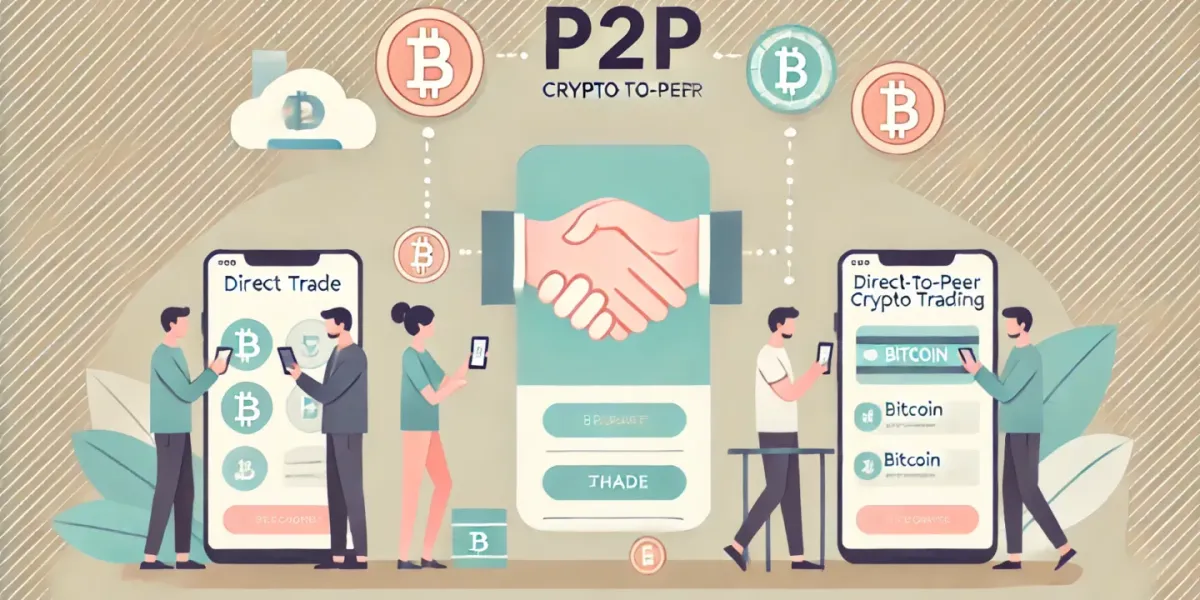
Peer-to-peer lending platforms in trading environments operate on a fundamentally different premise than traditional margin systems. Instead of a broker extending credit from its own balance sheet or borrowing from institutional partners, these platforms create a marketplace where individual traders lend capital directly to other traders. The borrower posts collateral — typically cryptocurrency holdings or tokenized securities — and the lender receives interest payments for the duration of the loan.
Data from industry trackers show that P2P lending volumes on major cryptocurrency exchanges alone exceeded $18 billion in monthly turnover during Q4 2023. This figure represents both margin lending for leveraged trading and spot lending where users borrow assets to trade on other platforms. The appeal centers on rate competition: lenders earn yields that frequently exceed 8–15% annually on stablecoin loans, while borrowers access capital at rates below what traditional margin accounts charge when market liquidity is high.
The technical infrastructure behind these platforms relies on smart contracts or escrow systems that automate collateral management. When a trader requests a loan, the system calculates the required collateral ratio based on the volatility profile of the pledged assets. Bitcoin-backed loans typically require 150–200% collateralization, meaning a trader borrowing $10,000 must lock up $15,000–20,000 in Bitcoin. More volatile altcoins demand ratios exceeding 250%. The platform monitors collateral value in real time and triggers automatic liquidation if the ratio falls below the maintenance threshold.

Interest Rate Dynamics and Market Forces
Money lending rates on P2P platforms fluctuate based on supply and demand for specific assets. During periods of high trading activity — particularly when markets rally and traders seek leverage to amplify gains — borrowing demand spikes and interest rates climb. Data from Bitfinex's P2P lending marketplace showed USD rates reaching annual equivalents of 40–60% during peak volatility in March 2023, compared to baseline rates of 6–10% during quieter periods.
The rate-setting mechanism varies by platform architecture. Some exchanges operate order-book systems where lenders post offers at specific rates and durations, while borrowers accept the most favorable terms. Others use algorithmic rate determination where the platform calculates rates based on utilization ratios — the percentage of available lending capital currently deployed. When utilization exceeds 80%, rates typically increase exponentially to attract additional lender supply.
Lenders face duration risk when committing capital. Fixed-rate loans lock in returns but prevent lenders from capitalizing on rate increases during market volatility. Variable-rate structures allow lenders to recall capital on short notice, typically with 2–24 hours' warning, but expose them to rate compression during quiet markets. Analysis of lending patterns shows that experienced lenders typically maintain 60–70% of their capital in variable-rate positions to preserve flexibility while committing the remainder to fixed-term loans during rate spikes.
Collateral Management and Liquidation Processes
The collateral framework constitutes the primary risk-control mechanism for lenders. Unlike unsecured consumer lending where credit scores and income verification determine eligibility, trading-focused P2P platforms rely exclusively on pledged asset values. The system treats collateral as the sole recourse in default scenarios, making collateral quality and volatility the central underwriting factors.
Most platforms implement tiered collateral schedules that assign different haircuts to various assets. Major cryptocurrencies like Bitcoin and Ethereum typically receive the most favorable treatment, with initial collateral requirements of 140–160%. Mid-cap tokens with established liquidity might require 180–220%, while newer or lower-volume assets demand 250–300% or face outright exclusion from eligible collateral lists.
Liquidation triggers activate when collateral value deteriorates below maintenance thresholds. A typical structure might set the initial requirement at 150% and the maintenance level at 130%. If a $10,000 loan backed by $15,000 in Bitcoin sees the collateral drop to $13,000 value, the automated system sells the collateral to repay the loan principal and accrued interest. The borrower loses their collateral but incurs no additional debt.
Platform data indicates that 15–23% of loans experience at least one margin call during their lifetime, but only 3–6% proceed to full liquidation. Many borrowers add supplementary collateral when receiving margin warnings, preventing forced sales. The liquidation process itself carries execution risk — during extreme volatility, collateral may sell at prices below the loan value, leaving lenders with partial losses. Major platforms maintain insurance funds seeded from a percentage of trading fees to cover these shortfalls, though fund adequacy remains untested during severe market dislocations.

Counterparty and Platform Risks
Direct lending introduces counterparty exposure that differs from traditional brokerage relationships. When lending through established brokers, traders benefit from regulatory capital requirements, insurance schemes, and oversight from financial authorities. P2P platforms frequently operate in jurisdictions with limited regulatory frameworks, particularly those focused on cryptocurrency trading.
The platform itself represents the most concentrated risk point. If the exchange suffers a security breach, technical failure, or operational collapse, lenders may lose access to their capital regardless of collateral adequacy. Historical data shows that 12 cryptocurrency exchanges offering P2P lending services ceased operations between 2018 and 2023, with recovery rates for user funds ranging from zero to 60% depending on the circumstances.
Smart contract vulnerabilities add another dimension. Platforms built on blockchain infrastructure delegate critical functions — collateral monitoring, liquidation execution, interest calculations — to code rather than human administrators. While this automation enables 24/7 operation and removes discretionary interference, it creates catastrophic risk if the code contains exploitable flaws. The DeFi sector recorded $3.2 billion in losses from smart contract exploits in 2023, though not all incidents involved lending protocols.
Regulatory uncertainty compounds these technical risks. Authorities in multiple jurisdictions have issued guidance suggesting that P2P Lending Platform services may require banking licenses, securities registration, or compliance with anti-money laundering frameworks designed for traditional financial institutions. Platforms that operate without clear regulatory approval face potential enforcement actions that could freeze operations or seize user funds pending legal resolution.
Geographic and Jurisdictional Considerations
Online lending platforms serve global user bases, but legal treatment varies dramatically across borders. The European Union's Markets in Crypto-Assets Regulation, which phased in during 2023–2024, imposes licensing requirements on platforms offering lending services denominated in cryptocurrency. Operators must maintain minimum capital reserves, implement customer protection measures, and submit to ongoing supervision.
United States regulatory stance remains fragmented. The Securities and Exchange Commission has indicated that certain lending products constitute securities offerings requiring registration, while the Commodity Futures Trading Trading Commission asserts jurisdiction over lending involving commodity-derivative positions. This ambiguity has driven major platforms to restrict U.S. user access to lending features or exit the market entirely. Data shows that U.S.-based trading volume on P2P lending platforms declined 67% between 2022 and 2024 as compliance costs and legal uncertainty mounted.
Asian markets present a mixed picture. Singapore established a licensing framework for digital payment token services that encompasses lending functions, with platforms like Genesis and Hodlnaut obtaining preliminary approval before their subsequent operational difficulties. China banned cryptocurrency trading and lending outright in 2021, eliminating what had been the world's largest market by volume. Japan permits licensed cryptocurrency exchanges to offer lending but prohibits retail users from earning interest on deposits, limiting services to institutional participants.
These jurisdictional patchworks create compliance challenges for platforms and confusion for users regarding protections and recourse. A lender in Germany accessing a platform incorporated in the Seychelles, lending to a borrower in Brazil, faces unclear legal standing if disputes arise. Platform terms of service typically specify arbitration venues and governing law, but enforceability against offshore entities with no local presence remains questionable.
Return Profiles and Opportunity Costs
Lenders evaluate P2P opportunities against alternative uses of capital. Stablecoin lending yields of 8–12% annually must compete with traditional fixed-income instruments, high-yield savings accounts, and other DeFi yield strategies. The risk-adjusted return calculation requires factoring in platform risk, regulatory uncertainty, and the opportunity cost of locked capital.
Empirical returns show substantial variance. Analysis of actual lender performance on established platforms reveals that median annual returns range from 6.5% to 11.3% after accounting for defaults, platform fee structures, and periods when capital sits idle between loan deployments. Top-quartile lenders who actively manage rate exposure, diversify across multiple borrowers, and withdraw capital during risk-off periods achieved returns exceeding 15% annually. Bottom-quartile participants, often those who set rates below market clearing levels or concentrated exposure in volatile collateral categories, saw returns below 4%. Maclear provides tools to help traders evaluate these investment opportunities systematically.
The tax treatment of lending income adds complexity. Most jurisdictions classify interest income as ordinary income taxed at higher rates than long-term capital gains. Lenders must track accrued interest, principal repayments, and any collateral received through liquidations for accurate reporting. Platforms operating across borders typically do not provide tax documentation equivalent to Form 1099 or equivalent instruments, placing reporting burden entirely on users.
Borrower Perspectives and Use Cases
Traders borrow capital for three primary purposes: leveraged trading, arbitrage execution, and liquidity management. Leveraged traders amplify position sizes beyond their account equity, accepting interest costs in exchange for magnified returns if their market view proves correct. Data indicates that 68% of P2P borrowing volume supports leveraged directional trades, with average loan durations of 8–14 days.
Arbitrage strategies account for another 22% of borrowing activity. Traders identify price discrepancies across exchanges or between spot and derivative markets, borrowing assets on one platform to exploit inefficiencies on another. These loans typically run shorter durations — median 3–5 days — and involve lower collateralization ratios because borrowers can demonstrate hedged positions that reduce risk.
The remaining 10% comprises liquidity management where traders borrow against long-term holdings to access operating capital without triggering taxable sales events. A holder with substantial Bitcoin gains who needs fiat currency can borrow stablecoins against their position, preserving potential upside while meeting immediate cash needs. This strategy works best when interest costs remain below the expected appreciation rate of the collateral.
Borrowing costs on P2P platforms often undercut traditional margin rates during normal market conditions. Major brokerage firms charge annual percentage rates of 12–18% on margin loans for equity trading. Cryptocurrency exchanges with institutional funding sources typically offer 8–14% on margin facilities. P2P rates during low-volatility periods can dip to 5–8%, creating meaningful cost savings for active traders.
Monitoring and Risk Management Practices
Sophisticated lenders implement quantitative monitoring to manage exposure. Key metrics include loan-to-value ratios across the portfolio, concentration limits by borrower and collateral type, and utilization rates that indicate market demand. Setting automated withdrawal triggers when platform-wide utilization falls below thresholds helps preserve capital during deteriorating market conditions.
Collateral diversification reduces concentration risk. While Bitcoin-collateralized loans offer lower default probability, a portfolio exclusively backed by a single asset inherits that asset's price risk. Lenders who maintain exposure across multiple collateral types — major cryptocurrencies, stablecoins, tokenized securities — demonstrate lower drawdown volatility in backtested scenarios, though potentially at the cost of overall yield.
Platform diversification addresses operational and regulatory risk. Spreading capital across three to five platforms reduces the impact of any single platform failure. This approach introduces operational complexity and may reduce yield through fragmented capital deployment, but stress-test modeling suggests the risk reduction justifies modest return concessions.
Active lenders monitor blockchain data and platform announcements for early warning signs. Sudden spikes in withdrawal activity, unusual collateral liquidation patterns, or executive departures often precede operational difficulties. Social media sentiment analysis and on-chain wallet tracking provide supplementary signals, though separating noise from actionable intelligence requires experience and systematic frameworks. Understanding safe investment options helps contextualize these risks.
The Evolution and Future Trajectory
Online lending within trading contexts has matured from experimental features on early cryptocurrency exchanges to multi-billion dollar markets with institutional participation. Data shows that lending volume grew at 140% compound annual rates between 2019 and 2023, though growth decelerated to 35% in 2024 as regulatory pressures mounted and several high-profile platform failures increased risk awareness.
Institutional entry marks the most significant recent shift. Hedge funds and market makers now supply substantial lending capital, seeking uncorrelated returns and yield enhancement on treasury balances. Their participation has compressed retail lending spreads but improved market depth and rate stability. Institutional lenders typically demand enhanced due diligence, insurance provisions, and legal documentation that pushes platforms toward more traditional financial infrastructure.
Regulatory clarity will determine whether current growth trajectories continue or contract. Clear frameworks that balance innovation with consumer protection could unlock broader adoption and institutional capital. Conversely, restrictive approaches that treat P2P lending identically to deposit-taking banks may force platforms offshore or underground, reducing transparency and user protections while preserving demand through less-regulated channels.
The fundamental value proposition — connecting capital suppliers directly with borrowers while eliminating intermediary spreads — remains compelling. Interest rate advantages of 200–400 basis points over traditional alternatives provide sufficient economic incentive to drive continued adoption, assuming platforms can navigate regulatory requirements and maintain operational security that justifies user trust. Exploring income investing strategies can help participants optimize their approach to these markets.
