Understanding the Crowdfunding Model
Crowdfunding represents a financing method where entrepreneurs, creators, and organizations raise capital by collecting small amounts of money from a large number of individuals, primarily through internet-based platforms. The model flips traditional fundraising on its head. Instead of approaching a handful of wealthy investors or financial institutions, project initiators reach out directly to the public, allowing virtually anyone to contribute as little as $5 or as much as several thousand dollars.
The mechanics are straightforward. A campaign creator posts a project description, funding goal, and deadline on a crowdfunding platform. Potential backers browse the platform, evaluate offerings, and decide whether to contribute. If the campaign meets its target within the specified timeframe, funds transfer to the creator. Some platforms operate on an all-or-nothing basis, where projects receive nothing unless they hit their goal. Others allow creators to keep whatever they raise, regardless of whether they meet their target.
According to Statista, the global crowdfunding market reached $1.67 billion in transaction value in 2023, with projections indicating continued growth through 2027. This expansion reflects increasing comfort with peer-to-peer financial transactions and declining reliance on traditional banking intermediaries.

The Four Primary Types of Crowdfunding
Crowdfunding divides into four distinct categories, each serving different purposes and attracting different participant motivations. Understanding the types of crowdfunding helps investors and creators choose the right approach.
Donation-Based Crowdfunding
Contributors give money to support a cause, project, or individual without expecting financial returns. Charities, medical fundraisers, disaster relief efforts, and community projects typically use this model. Platforms like GoFundMe dominate this space. A 2022 GoFundMe report revealed that users raised over $15 billion for personal causes since the platform's 2010 launch.
Donors receive no tangible products or equity. Their motivation stems from altruism, community support, or alignment with the cause's mission. Tax deductibility depends on the recipient organization's status and local regulations.
Reward-Based Crowdfunding
Backers receive non-financial rewards proportional to their contribution level. A supporter might get early access to a product, exclusive merchandise, recognition in credits, or unique experiences. Kickstarter and Indiegogo pioneered this model, which remains popular for creative projects, product launches, and technology development.
Since its 2009 founding, Kickstarter has facilitated over $7 billion in pledges across more than 230,000 successfully funded projects. The platform reports a 39.37% overall success rate, though rates vary significantly by category. Technology projects succeed at approximately 20%, while dance campaigns hit 62%.
Creators offer tiered reward structures. A $10 pledge might earn a thank-you note, while $100 could secure a finished product. This model works particularly well for physical goods, albums, films, games, and other creative outputs that can be delivered to supporters.
Equity Crowdfunding
Investors receive actual ownership stakes in companies. This model mirrors traditional venture capital but democratizes access, allowing non-accredited investors to participate in early-stage company funding. Regulatory changes in multiple jurisdictions have expanded equity crowdfunding's reach.
The JOBS Act of 2012 opened American equity crowdfunding to regular investors, subject to investment limits based on income and net worth. In 2021, the SEC raised these limits substantially. Individuals earning less than $107,000 annually can now invest the greater of $2,200 or 5% of their income or net worth per year. Higher earners face a 10% cap.
Platforms such as SeedInvest, StartEngine, and Republic connect startups with potential shareholders. According to data from the Crowdfunding Professional Association, equity crowdfunding raised approximately $1.1 billion in the United States in 2022, up from $214 million in 2019.
Returns depend entirely on company performance. Investors face substantial risk, as early-stage ventures frequently fail. However, successful exits can generate significant multiples on initial investments.
Debt Crowdfunding
Also called peer-to-peer lending or crowdlending, this model allows individuals to lend money to businesses or other individuals in exchange for interest payments. Borrowers repay the principal plus interest over a predetermined period, typically ranging from six months to five years.
Lending Club and Prosper dominated this space until regulatory pressures forced operational changes. Global peer to peer lending platforms originated approximately $335 billion in loans between 2015 and 2022, according to research firm Cambridge Centre for Alternative Finance.
Lenders diversify risk by spreading capital across multiple loans. Platforms typically assign risk ratings to borrowers based on credit scores, income verification, and other financial metrics. Interest rates correlate with perceived risk, ranging from 5% for prime borrowers to 30% or higher for subprime categories.
Default rates vary by platform and economic conditions but generally fall between 2% and 9% depending on borrower quality. Lenders must carefully balance potential returns against default risk, particularly during economic downturns when unemployment rises and repayment capacity decreases.
How Crowdfunding Platforms Generate Revenue
Platforms rarely provide their services for free. Understanding their fee structures helps project creators calculate actual funds they'll receive after successful campaigns.
Most platforms charge a percentage of total funds raised, typically ranging from 3% to 5%. Payment processing fees add another 2% to 3%, covering credit card transaction costs. A project raising $50,000 on a platform charging 5% with 3% processing fees would pay $4,000 total, netting $46,000.
Some platforms impose additional charges for optional services. Featured placement might cost $500 to $2,000. Premium account tiers offer enhanced analytics, promotional tools, or reduced fees for frequent users. Equity platforms sometimes charge success fees to companies, typically 5% to 7% of the raise amount, plus a small percentage of the equity sold.
All-or-nothing platforms generally charge fees only on successful campaigns. Keep-it-all platforms may charge regardless of outcome, though fees might be reduced for campaigns that fall short of their goals.
Campaign Success Factors
Data from thousands of campaigns reveals patterns distinguishing successful projects from failures. Campaign duration significantly impacts outcome. Analysis of Kickstarter data shows that campaigns lasting 30 days succeed more frequently than those running 60 or 90 days. The optimal window appears to be between 25 and 35 days, creating urgency without rushing preparation.
Funding goals must balance ambition with realism. Projects seeking less than $10,000 on Kickstarter succeed approximately 44% of the time, while those targeting over $100,000 succeed at just 16%. Setting achievable initial goals, with stretch targets announced after hitting the base amount, often outperforms immediately aiming for larger sums.
Video presence correlates strongly with success. Campaigns featuring video presentations succeed at roughly 50%, compared to 30% for text-only campaigns. The video need not be professionally produced, but it should clearly communicate the project's purpose, team credibility, and fund usage plans.
Early momentum predicts final outcomes. Research indicates that campaigns raising 20% to 30% of their goal in the first 48 hours have substantially higher success rates than those starting slowly. This pattern reflects social proof dynamics and platform algorithms that promote active campaigns.
Pre-launch audience building separates successful campaigns from also-rans. Creators who cultivate email lists, social media followings, or community connections before launching typically see 30% to 50% of their total funding come from existing networks. This base provides crucial early momentum that attracts additional backers.
Regulatory Frameworks and Investor Protections
Crowdfunding operates within complex regulatory environments that vary by country and crowdfunding type. Donation and reward-based crowdfunding face relatively light oversight, as they don't involve securities. Equity and debt crowdfunding trigger securities regulations requiring registration, disclosures, and ongoing reporting.
The United States divides equity crowdfunding into two primary regulatory paths: Regulation Crowdfunding (Reg CF) and Regulation A+. Reg CF allows companies to raise up to $5 million annually from both accredited and non-accredited investors through registered intermediaries. Companies must file offering documents with the SEC and provide financial statements, though audit requirements vary based on raise size.
Regulation A+ permits raises up to $75 million annually under Tier 2, requiring more extensive disclosure and ongoing reporting obligations. However, it allows general solicitation and trading of securities on secondary markets, providing potential liquidity that Reg CF shares typically lack.
European crowdfunding received harmonized regulation in November 2021 when the European Crowdfunding Service Providers Regulation took effect. This framework allows platforms authorized in one EU member state to operate across the entire union, replacing the previous country-by-country approach. The regulation caps investment-based crowdfunding offerings at €5 million per project over 12 months.
The United Kingdom, post-Brexit, maintains its own system under Financial Conduct Authority oversight. Platforms must obtain authorization and ensure appropriate risk warnings reach investors. The FCA reported that UK investment-based crowdfunding facilitated £272 million in 2021, down from £333 million in 2020 but still representing significant activity.

Risk Considerations for Backers and Investors
Crowdfunding participation carries distinct risks that differ from traditional investment or charitable giving. Project failure represents the most common disappointment. Many reward-based campaigns deliver late or not at all. A 2019 study examining Kickstarter projects found that only 9% of projects delivered on time, while 7% to 14% failed to deliver anything.
Equity investors face the reality that most startups fail. Approximately 90% of venture-backed companies don't provide returns to investors, and crowdfunded ventures typically enter at even earlier, riskier stages than institutional venture capital targets. Illiquidity compounds the challenge. Most equity crowdfunding investments cannot be easily sold, tying up capital for years or permanently.
Peer-to-peer lending investors must account for default risk and platform stability. When Lending Club faced regulatory scrutiny and operational challenges, many lenders found their portfolios disrupted. Platform bankruptcy can create recovery complications, though most jurisdictions require segregation of investor funds.
Fraud, while relatively rare, does occur. Campaigns with fabricated credentials, impossible promises, or misappropriated funds occasionally surface. Platform vetting catches many, but some slip through. The SEC has brought enforcement actions against crowdfunding fraud, securing penalties and disgorgement orders, but victim recovery often proves difficult.
The Trading Connection
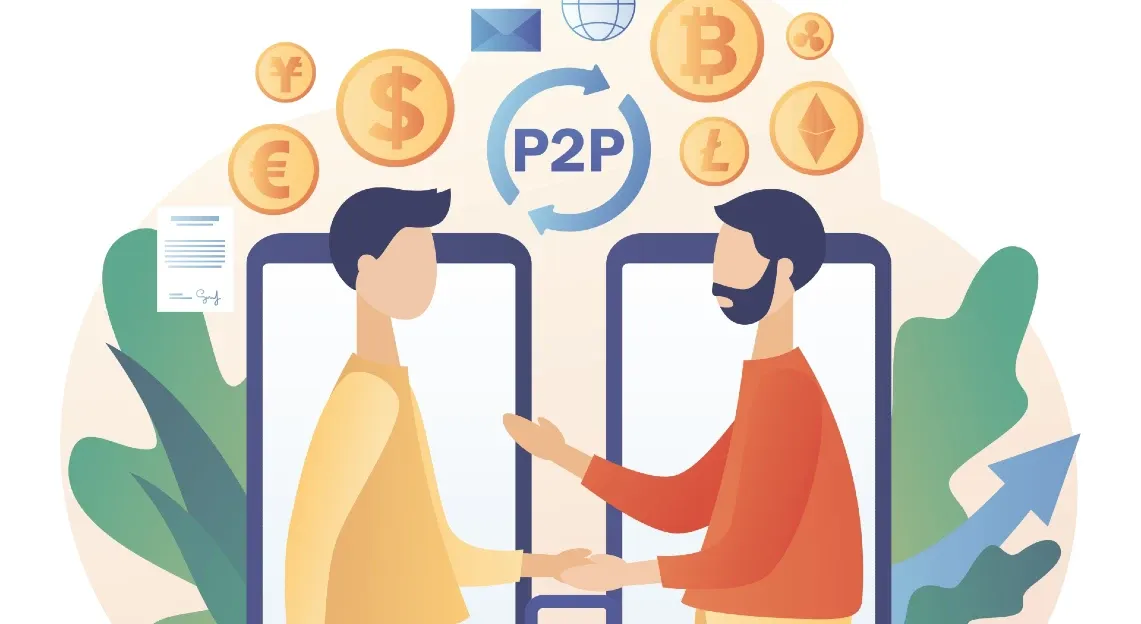
Crowdfunding shares foundational principles with peer-to-peer trading. Both models eliminate or reduce traditional intermediaries, connecting parties directly to exchange value. Maclear facilitates these direct connections in the P2P trading space. Where P2P trading facilitates direct exchange of assets, goods, or services between individuals, crowdfunding enables direct capital flows from backers to projects without bank gatekeepers.
The technological infrastructure overlaps significantly. Both ecosystems rely on digital platforms providing trust mechanisms, payment processing, identity verification, and dispute resolution. User reviews, ratings, and reputation systems help participants evaluate counterparties in both contexts.
Secondary markets for crowdfunding securities represent a natural convergence point. Platforms allowing investors to trade equity crowdfunding shares effectively create P2P trading venues for startup securities. While liquidity remains limited compared to public markets, these secondary platforms apply P2P principles to previously illiquid assets.
The decentralized finance movement extends these concepts further. Blockchain-based crowdfunding platforms eliminate even the centralized platform operator, using smart contracts to manage campaigns, distribute tokens, and enforce rules. This represents the ultimate expression of peer-to-peer capital formation, though regulatory clarity remains uncertain in many jurisdictions.
Tax Implications Across Crowdfunding Types
Tax treatment varies dramatically based on crowdfunding type and participant role. Donation-based crowdfunding typically triggers no tax liability for recipients when funds are gifts, though large amounts might incur gift tax for donors depending on jurisdiction. Medical fundraising and disaster relief generally remain tax-free to recipients in most countries.
Reward-based campaign creators receive taxable income. The full amount raised constitutes gross revenue, from which creators deduct legitimate business expenses including production costs, shipping, platform fees, and marketing. State and federal income taxes apply to the net profit. Creators must also consider sales tax obligations if rewards constitute product sales.
Equity crowdfunding creates capital gains or losses for investors when they eventually sell shares. Holding periods determine whether gains are taxed at short-term or long-term rates. In the United States, qualified small business stock held for five years or more may qualify for preferential tax treatment under Section 1202, potentially excluding up to 100% of gains.
Peer-to-peer lending interest payments constitute taxable income to lenders, reported annually on 1099-INT forms in the United States. Lenders can deduct charged-off loans as capital losses, though documentation requirements are strict. Borrowers may deduct interest paid on business loans but not on personal loans, with limited exceptions for student loan refinancing.
The Future Trajectory
Crowdfunding continues evolving in response to technological advancement, regulatory changes, and shifting participant expectations. Artificial intelligence increasingly powers platform matching algorithms, connecting creators with likely supporters based on interest patterns and contribution history. These systems improve campaign visibility while helping backers discover relevant projects.
Blockchain integration extends beyond cryptocurrency fundraising. Tokenization of campaign contributions creates new possibilities for reward distribution, governance participation, and secondary trading. Smart contracts automate milestone-based fund release, addressing a common concern that creators might misuse funds.
Geographic expansion brings crowdfunding to emerging markets where traditional finance remains underdeveloped. Mobile-first platforms targeting African, Southeast Asian, and Latin American users show rapid growth. The World Bank estimates that crowdfunding could generate $96 billion annually in developing countries by 2025, assuming supportive regulatory frameworks emerge.
Cross-border crowdfunding faces regulatory hurdles but offers significant opportunity. Platforms navigating compliance across multiple jurisdictions allow creators to access global capital pools while giving investors worldwide deal access. Currency conversion, tax reporting, and legal complexity remain barriers requiring platform solutions.
The model's maturation brings institutional involvement. Venture capital firms increasingly co-invest alongside crowdfunding campaigns, validating deals and providing follow-on capital. This hybrid approach combines crowd wisdom with institutional expertise, though it may erode some of crowdfunding's democratizing effects.
Measurement of social and environmental impact gains prominence, particularly for donation and equity crowdfunding. Platforms highlighting impact metrics attract backers motivated by more than financial returns. This evolution parallels broader ESG investment opportunities trends and appeals to younger generations prioritizing values alignment.
The fundamental promise remains constant. Crowdfunding democratizes capital access, allows direct connections between creators and supporters, and enables projects that traditional finance would ignore. As the model matures, its influence on capital formation, entrepreneurship, and community building will likely expand further, cementing its role as a permanent fixture in the financial landscape.
