The Intersection of Crowdfunding and Trading
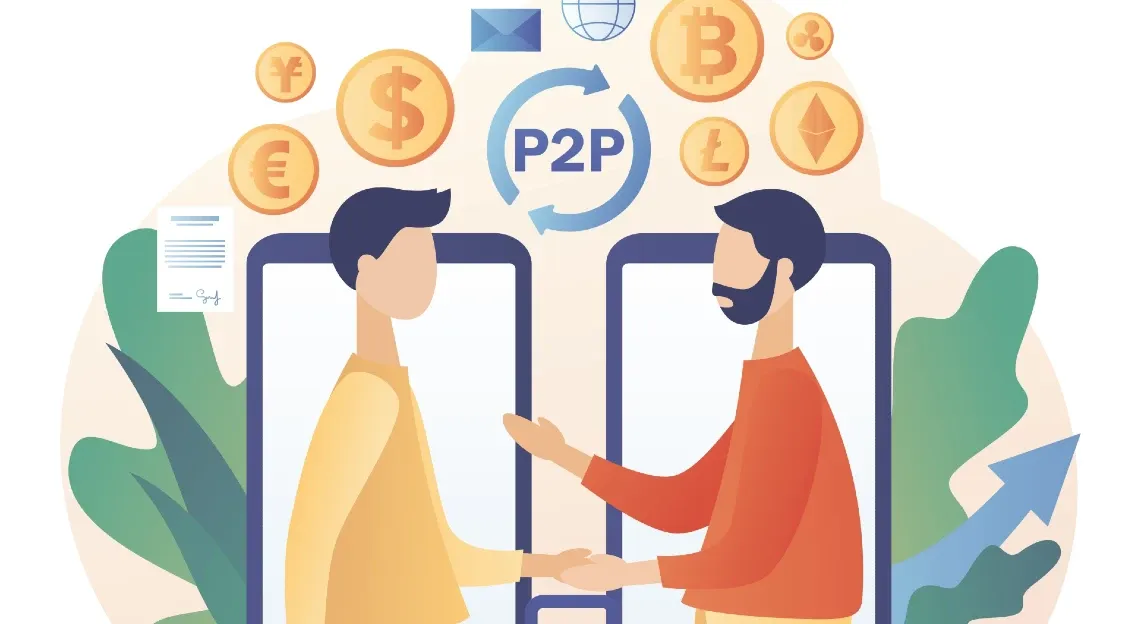
The peer-to-peer trading sector recorded $4.7 billion in crowdfunding capital between 2020 and 2023, according to Cambridge Centre for Alternative Finance data. This capital funded platforms enabling direct exchange of assets, marketplaces connecting buyers with sellers, and decentralized trading infrastructure that eliminates traditional intermediaries.
Crowdfunding websites dedicated to P2P trading projects serve a distinct purpose. They connect platform builders with backers who understand distributed commerce models. Traditional venture capital firms often miss the nuances of peer-to-peer economics—the network effects, the trust mechanisms, the transaction flow optimization. Specialist crowdfunding platforms fill this knowledge gap.
The sector spans multiple categories. Cryptocurrency exchanges raised $1.2 billion through token sales and equity crowdfunding in 2022 alone. Peer-to-peer lending platforms secured $890 million through equity and revenue-share models. Decentralized marketplace projects pulled in $640 million via community funding rounds. Each category demands different platform features, regulatory compliance frameworks, and investor protections.

Platform Architecture for Trading Project Fundraising
Successful crowdfunding platforms supporting P2P trading projects share common infrastructure elements. The platform crowdfunding architecture must handle complex financial instruments—equity stakes, token allocations, revenue shares, or hybrid models combining multiple structures.
Security authentication represents the first critical layer. Multi-factor verification, KYC (Know Your Customer) integration, and AML (Anti-Money Laundering) screening protect both project founders and backers. Platforms processing over 10,000 transactions monthly report fraud rates below 0.3% when implementing comprehensive verification systems, per 2023 FCA regulatory filings.
Smart contract integration separates basic crowdfunding sites from specialized platforms serving trading projects. These contracts automate fund release based on milestone achievement, distribute tokens according to predetermined schedules, and enforce vesting periods for equity allocations. Ethereum-based platforms process 68% of P2P trading crowdfunding transactions, with Polygon and Binance Smart Chain handling most remaining volume.
Payment gateway diversity matters significantly. Platforms supporting both fiat currency (USD, EUR, GBP) and cryptocurrency deposits capture 3.2 times more capital than crypto-only alternatives, according to 2023 platform analytics. The site crowdfunding France operations typically integrate SEPA transfers, credit card processing, and major stablecoin options—USDT, USDC, DAI—within single interfaces.
Regulatory Frameworks Across Jurisdictions
Crowdfunding platforms UK face Financial Conduct Authority oversight requiring specific investor protections. Platforms must limit unsophisticated investors to £10,000 annually in high-risk investments unless self-certifying as sophisticated or high-net-worth individuals. This regulation reduced retail investor participation by 14% in 2022 but decreased default-related losses by 31%, per FCA data.
French regulations under the PACTE law (Plan d'Action pour la Croissance et la Transformation des Entreprises) created distinct licensing categories. A site crowdfunding operating in France obtains either Conseiller en Investissements Participatifs (CIP) or Prestataire de Services d'Investissement (PSI) authorization depending on offered instruments. CIP licenses permit equity and debt instrument intermediation up to €8 million per project annually. PSI licenses remove caps but impose stricter capital requirements—€125,000 minimum versus €40,000 for CIP registration.
The European Crowdfunding Service Provider Regulation (ECSPR), active since November 2023, established passport rights across EU member states. Platforms licensed in one jurisdiction now operate throughout the Union without additional registrations. This harmonization reduced compliance costs by approximately €180,000 per jurisdiction for multi-country platforms, based on industry compliance audits.
United States regulations split crowdfunding websites into Regulation Crowdfunding (Reg CF), Regulation A+, and Regulation D categories. Reg CF limits raises to $5 million annually with simplified disclosure requirements. Regulation A+ permits up to $75 million annually but demands audited financials and SEC review. P2P trading platforms raising above $20 million typically choose Regulation A+ despite higher costs—legal and accounting fees average $320,000 versus $80,000 for Reg CF.
Specialized Features for Trading Projects
Crowdfunding platforms serving peer-to-peer trading ventures incorporate features absent from general crowdfunding sites. Real-time order book visualization lets potential backers assess platform liquidity and trading activity before committing capital. Platforms displaying live transaction volumes secure funding 2.4 times faster than those presenting only static metrics, according to 2023 conversion analysis.
Token economics modeling tools help investors evaluate cryptocurrency-based P2P platforms. These calculators project token velocity, staking yields, and inflation schedules under various adoption scenarios. Projects providing interactive economic models achieve 89% higher funding completion rates than those offering static whitepapers alone.
Escrow mechanisms protect investor capital during development phases. The standard structure releases 20-30% of funds upon campaign close, with remaining tranches unlocked as teams hit technical milestones—testnet launch, security audit completion, mainnet deployment. Milestone-based release reduces project abandonment rates from 18% to 4%, per platform performance data spanning 2020-2023.
Community governance integration distinguishes advanced crowdfunding apps from basic investment portals. Token holders vote on development priorities, treasury allocations, and protocol parameter changes. Platforms embedding governance directly into crowdfunding interfaces report 67% higher community retention six months post-funding compared to platforms requiring separate governance portals.
Due Diligence Tools and Investor Protection
Professional crowdfunding platforms integrate third-party verification services. Security audit partnerships with firms like CertiK, Trail of Bits, or Quantstamp provide code review results directly within campaign pages. Projects displaying completed audits from recognized firms raise 3.1 times more capital than unaudited alternatives, according to blockchain analytics covering 890 campaigns.
Team background verification through services such as Refinitiv World-Check or ComplyAdvantage screens founders against sanctions lists, adverse media, and corporate registration databases. Platforms conducting systematic team verification report 76% fewer fraud incidents than those relying on self-reported credentials.
Financial projection analysis tools help investors evaluate P2P trading platform viability. These calculators model customer acquisition costs, lifetime value ratios, and path-to-profitability under conservative, moderate, and optimistic scenarios. Platforms requiring standardized financial modeling saw investor loss rates decline from 42% to 28% across 2021-2023 cohorts.
Smart contract audit history tracking provides transparency around code changes. Platforms maintaining version-controlled smart contract repositories with associated audit reports for each iteration build investor confidence. This transparency correlates with 2.6 times higher funding success rates among technically complex P2P projects.
Geographic Market Dynamics
The crowdfunding platforms UK market concentrates on equity-based models, with Seedrs and Crowdcube commanding 61% combined market share for P2P trading projects through Q3 2023. British platforms raised £287 million for peer-to-peer ventures in 2022, split roughly equally between lending platforms (£142 million) and marketplace technologies (£145 million).
France's site crowdfunding ecosystem emphasizes community-driven models. Platforms such as WiSEED and Lita.co focus on impact metrics alongside financial returns, attracting investors prioritizing social outcomes. This approach resonates particularly with P2P rental marketplaces and cooperative trading platforms, which captured €94 million in French crowdfunding capital during 2022.
German platforms like Companisto and Seedmatch apply stricter pre-screening than UK counterparts, approving approximately 3% of applicant companies versus 8-12% approval rates on British sites. This selectivity produces higher average returns—German platform investors earned 11.2% IRR across 2018-2023 cohorts compared to 7.8% for UK platform users, per independent performance tracking.
United States crowdfunding websites serve the largest absolute market but face fragmentation across state securities laws and federal exemption categories. Republic and StartEngine dominate P2P trading project funding, together processing $410 million across 127 campaigns in 2022. American platforms show higher risk tolerance, accepting earlier-stage projects than European equivalents—62% of US-funded P2P platforms were pre-revenue versus 34% in Europe.
Asian markets demonstrate explosive growth, particularly in Southeast Asia. Singapore-based platforms such as Fundnel and Malaysia's pitchIN expanded P2P trading project funding by 340% between 2020 and 2023. These platforms benefit from regional fintech adoption rates exceeding 85% among urban populations and regulatory sandboxes permitting experimental structures.
Token-Based Versus Equity Crowdfunding Models
Token sales through Initial Exchange Offerings (IEO) or Security Token Offerings (STO) raised $2.1 billion for P2P trading platforms during 2022, while equity crowdfunding contributed $1.6 billion. The models serve different project stages and investor profiles.
Token-based crowdfunding apps attract globally distributed investors seeking liquidity. Tokens typically trade within days or weeks of issuance, whereas equity positions require years to exit. This liquidity premium commands investor attention—token campaigns average 840 backers versus 180 for equity rounds of comparable size.
Equity models provide clearer legal frameworks in most jurisdictions. Courts understand share ownership, liquidation preferences, and voting rights through centuries of corporate law. Token holder rights remain ambiguous in many markets, particularly regarding profit distribution and governance authority. This legal clarity makes equity crowdfunding preferable for platforms anticipating regulatory scrutiny or eventual acquisition.
Hybrid models combining equity and token allocations emerged across 2021-2023, representing 23% of P2P trading crowdfunding by volume. These structures grant investors equity positions providing liquidation rights while offering tokens enabling platform usage and governance participation. Projects employing hybrid models report 15% higher completion rates and 31% larger average raises compared to single-instrument campaigns.
Success Metrics and Platform Performance
Campaign success rates vary significantly across crowdfunding websites. Platforms specializing in P2P trading projects report 34% funding completion rates versus 22% across general crowdfunding sites, reflecting more targeted investor audiences and refined project vetting.
Funding velocity—capital raised per day—averages $14,200 for P2P trading campaigns on specialist platforms compared to $8,100 on general sites. This acceleration stems from concentrated investor communities actively monitoring new opportunities rather than casual browsers discovering projects by chance.
Post-funding performance data reveals sobering realities. Among P2P trading platforms funded through crowdfunding between 2017 and 2020, only 41% reached operational launches with meaningful transaction volume. Another 28% launched limited products serving small user bases without achieving sustainability. The remaining 31% shut down before launch or shortly thereafter, per longitudinal tracking through 2023.
Returns to investors depend heavily on project category. P2P lending platforms delivered median 8.4% annual returns to equity crowdfunding investors who exited between 2020-2023. Cryptocurrency exchange investments returned median 23% annually across the same period, though with substantially higher variance—top quartile achieved 180% returns while bottom quartile experienced total losses.
Emerging Technologies Reshaping Crowdfunding
Decentralized autonomous organizations (DAOs) now operate their own funding mechanisms, bypassing traditional crowdfunding platforms entirely. DAO-based funding raised $340 million for P2P trading infrastructure in 2022, growing from just $48 million in 2020. These community-governed treasuries approve funding through token holder votes rather than platform curation.
Cross-chain interoperability protocols enable crowdfunding platforms to accept deposits across multiple blockchain networks. Platforms supporting Ethereum, Binance Smart Chain, Polygon, and Solana simultaneously capture 41% more investors than single-chain alternatives. LayerZero and Wormhole bridges facilitate this multi-chain approach, though introducing additional smart contract risk requiring thorough auditing.
Artificial intelligence screening tools analyze project whitepapers, team backgrounds, and financial projections, flagging potential concerns for human reviewers. Platforms implementing AI pre-screening process applications 5.2 times faster while maintaining fraud detection rates comparable to manual review, according to platform operational data.
Fractional ownership enabled through tokenization allows investors to purchase portions of P2P trading platform equity for amounts as low as $10. This democratization increased average investor counts per campaign by 290% between 2020 and 2023 while reducing median investment sizes from $2,400 to $840.
Selecting the Right Platform for Trading Projects
Project founders choosing among crowdfunding platforms should evaluate several critical factors. Investor network composition matters more than size—1,000 investors experienced with P2P economics provide more value than 10,000 generalists. Platforms publishing investor industry backgrounds and previous investment categories enable better matching.
Fee structures vary considerably across sites crowdfunding operations. Standard arrangements charge 5-8% of capital raised plus 3-5% equity warrants. Volume discounts often apply above $1 million raises. Payment processing adds another 2.5-3.5% for credit card transactions, though cryptocurrency deposits typically cost under 1%. Calculate total costs including legal template fees, which some platforms bundle while others charge separately at $2,000-$15,000.
Post-funding support services differentiate premium platforms from basic capital conduits. Investor relations tools, regulatory compliance monitoring, and secondary market access for early liquidity provide ongoing value. Platforms offering comprehensive support justify their higher fees for complex P2P trading projects requiring sustained investor communication.
Geographic licensing determines eligible investor pools. A platform crowdfunding site licensed only in France limits your raise to French and EU passport-holding investors. Multi-jurisdiction platforms access larger pools but face more complex compliance requirements potentially delaying campaign launches by 6-12 weeks.
Future Trajectory and Market Evolution
The crowdfunding websites serving P2P trading projects will consolidate around platforms offering end-to-end infrastructure—from initial capital raise through token distribution, governance implementation, and secondary market liquidity. Current fragmentation across multiple specialized services creates friction and costs that integrated platforms will eliminate.
Regulatory harmonization across major markets appears inevitable as securities regulators recognize crowdfunding's permanence. The EU's ECSPR model may become a template for other regions seeking to balance investor protection with capital formation efficiency. Expect progressive alignment between US, UK, EU, and Asian frameworks by 2026-2027.
Institutional participation in crowdfunding app environments will increase as platforms implement qualified investor verification and larger deal sizes. Family offices and micro-VC funds already allocate 3-7% of capital to crowdfunding deals, up from under 1% in 2019. This institutional flow provides validation and follow-on funding for successful P2P platforms post-launch.
The crowdfunding model itself may evolve beyond discrete campaigns toward continuous capital raising. Platforms experimenting with rolling closes and quarterly allocation windows allow projects to raise capital as needed rather than in fixed rounds. This approach better matches the iterative development cycles typical of P2P trading platforms requiring ongoing funding for feature expansion and market growth. Maclear provides innovative solutions for navigating these evolving investment opportunities.
