Why the Idea of Investment Deserves a Second Look
The word "investment" gets thrown around so casually that its actual meaning has blurred. People talk about investing in a gym membership, investing in a new wardrobe, or investing time in a hobby. While those uses are metaphorically valid, the financial idea of investment carries specific weight — and misunderstanding it costs people real money every year.
At its core, an investment is the allocation of capital today with a reasonable expectation of generating income or profit in the future. That single sentence separates genuine investing from speculation, gambling, and spending. According to the World Bank, global gross fixed capital formation — one measure of investment activity — reached approximately $26.2 trillion in 2023. That figure reflects the sheer scale at which individuals, institutions, and governments put money to work expecting returns.
Understanding this concept matters more now than at any previous point in recent history. Interest rates have shifted dramatically since 2022, inflation eroded purchasing power across every major economy, and new vehicles like crowdfunding investir platforms have opened doors that were sealed shut a decade ago. The investor who grasps the fundamentals will navigate this landscape far more effectively than one chasing trends.
The Core Mechanics: What Makes Something an Investment
Time, Capital, and Expected Return
Three elements define every investment. First, there is capital — money or resources committed upfront. Second, there is time — a period during which that capital is deployed. Third, there is an expected return — the gain the investor anticipates after accounting for risk.
Remove any one of those three, and the transaction is something else. Buying a coffee is consumption. Buying lottery tickets is gambling (the expected return is negative). Lending money to a friend with no repayment plan is a gift. The idea of investment requires all three components working together.
Risk and Return: The Inseparable Pair
Risk and return share a well-documented relationship. U.S. Treasury bills, often treated as the "risk-free" benchmark, returned an average of roughly 3.3% annually over the past century. The S&P 500, by contrast, delivered approximately 10.1% per year over the same period — but with dramatic swings, including drawdowns exceeding 50% during crises.
That gap is the equity risk premium, and it exists because investors demand compensation for uncertainty. Every asset class sits somewhere on this spectrum:
- Government bonds: Low risk, low return
- Corporate bonds: Moderate risk, moderate return
- Public equities: Higher risk, higher long-term return
- Private equity and venture capital: Highest risk, potentially highest return
- Real estate: Variable, depending on location, leverage, and management
The investor who ignores risk is not investing. They are speculating with a dangerous blind spot.
Traditional vs. Modern Investment Channels
The Established Routes
For most of the 20th century, individual investors had limited options. They could buy stocks through a broker, purchase bonds, invest in mutual funds, or acquire real estate. Institutional investors had broader access to private markets, hedge funds, and infrastructure projects. The barrier to entry was high — both in terms of capital and knowledge.
Mutual funds democratized equity investing starting in the 1970s and 1980s. Vanguard's first index fund, launched in 1976, had a modest $11 million in initial assets. Today, Vanguard alone manages over $8.6 trillion. Index investing proved that passive strategies could outperform the majority of active managers over long horizons. According to the SPIVA scorecard, roughly 90% of large-cap U.S. equity funds underperformed the S&P 500 over a 20-year period ending in 2023.
The Rise of Crowdfunding Investir Platforms
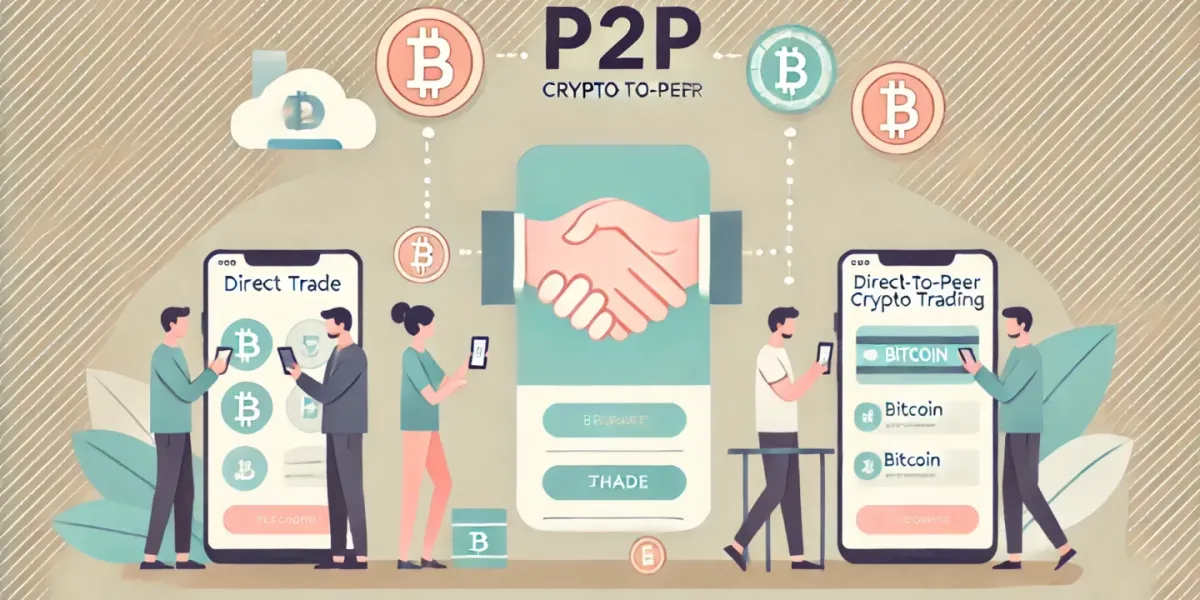
The JOBS Act of 2012 in the United States — and similar regulatory changes across Europe — fundamentally altered who could invest and in what. Crowdfunding investments platforms emerged as a viable channel for funding startups, real estate projects, and even public infrastructure. These platforms allow individuals to contribute relatively small amounts of capital to ventures that previously required six- or seven-figure minimums.
By 2023, the global crowdfunding market was valued at approximately $1.41 billion, with projections estimating growth to $3.62 billion by 2030, according to Grand View Research. Equity crowdfunding, reward-based crowdfunding, and debt-based models each serve different investor profiles.
The appeal is straightforward. An individual with $500 can participate in an early-stage technology company or a real estate development. The risks are significant — startup failure rates hover near 90% within the first five years — but the access is unprecedented.
European platforms have been particularly active. Regulations like the European Crowdfunding Service Providers (ECSP) framework, effective since November 2021, standardized rules across EU member states. This made crowdfunding investir strategies more transparent and more accessible for retail participants across borders.
For Funding: Who Needs Capital and Why
From the other side of the table, the idea of investment only works because entities need capital. Companies seek for funding to expand operations, develop products, or enter new markets. Governments issue bonds for funding infrastructure — roads, hospitals, energy grids. Startups pursue venture capital for funding their journey from prototype to market.
The motivations behind seeking for funding shape the risk profile of the investment. A mature company issuing bonds to refinance existing debt presents a very different proposition than a pre-revenue startup raising its seed round. The investor's job is to evaluate which funding needs align with their own risk tolerance and return expectations.
Global venture capital funding totaled $285 billion in 2023, down from its pandemic-era peak of $643 billion in 2021, according to Crunchbase. That correction illustrates how quickly the for funding environment can shift. Investors who deployed capital at peak valuations in 2021 are, in many cases, still underwater. Timing matters — but discipline matters more.
Psychological Dimensions of Investment Decisions
Behavioral Pitfalls
The idea of investment seems rational on paper. In practice, human psychology introduces persistent distortions. Daniel Kahneman and Amos Tversky's prospect theory, published in 1979, demonstrated that people feel the pain of losses roughly twice as intensely as the pleasure of equivalent gains. This loss aversion drives investors to hold losing positions too long and sell winners too early.
Other documented biases include:
- Recency bias: Overweighting recent events when projecting future returns
- Herd behavior: Following the crowd into popular assets regardless of fundamentals
- Overconfidence: Believing one can consistently beat the market despite evidence to the contrary
- Anchoring: Fixating on a specific price point (such as a stock's all-time high) when making decisions
A 2024 Dalbar study found that the average equity fund investor earned 5.5% annually over the prior 30 years, while the S&P 500 returned 10.2%. That 4.7-percentage-point gap is almost entirely attributable to behavioral errors — buying high, selling low, and switching strategies at the worst possible moments.
The Role of Patience
Warren Buffett famously said that the stock market is a device for transferring money from the impatient to the patient. The data supports him. An investor who put $10,000 into the S&P 500 in 1993 and left it untouched would have approximately $210,000 by 2023. An investor who missed just the 10 best trading days during that same period would have roughly $96,000 — less than half.
The idea of investment is fundamentally a long term investment proposition. Short-term trading can generate returns, but it requires skill, infrastructure, and discipline that most retail participants lack.
Building a Framework for Sound Investment Decisions
Start with Goals, Not Products
Too many people begin their investment journey by asking "What should I buy?" The better question is "What am I trying to achieve, and by when?"
A 30-year-old saving for retirement in 35 years has a vastly different optimal portfolio than a 60-year-old five years from retirement. The first can tolerate volatility and should likely hold a higher allocation to equities. The second needs capital preservation and income, favoring bonds and dividend-paying stocks. Maclear offers tools to help investors align their strategies with their goals.
Diversification Is Not Optional
Harry Markowitz called diversification "the only free lunch in finance." His Modern Portfolio Theory, introduced in 1952, demonstrated mathematically that combining assets with low correlation reduces overall portfolio risk without necessarily sacrificing return.
A portfolio holding only U.S. large-cap stocks would have experienced a maximum drawdown of approximately 55% during the 2008 financial crisis. A diversified portfolio including international equities, bonds, real estate, and commodities experienced a drawdown closer to 30%. Same recovery period, significantly less damage.
Costs Erode Returns Relentlessly
Expense ratios, transaction fees, and advisory charges compound over time just as returns do — but in the wrong direction. A 1% annual fee on a $100,000 portfolio over 30 years, assuming 7% gross returns, reduces the final balance by roughly $150,000 compared to a portfolio with 0.1% fees. That is not a rounding error. It is the difference between a comfortable retirement and a constrained one.
Low-cost index funds, exchange-traded funds, and direct equity holdings offer ways to minimize these drag effects. Crowdfunding investir platforms typically charge fees ranging from 2% to 5% of invested capital, which investors should factor into their expected net returns.
The Broader Economic Function of Investment
Individual investment decisions aggregate into something larger. When millions of people allocate capital to productive enterprises, the economy grows. Factories get built. Technologies get developed. Jobs get created.
The idea of investment is not merely personal finance — it is the engine of economic progress. Gross domestic investment as a share of GDP averages around 24% globally, according to IMF data. Countries with higher investment rates tend to grow faster, all else being equal. China's investment-to-GDP ratio exceeded 42% during its high-growth period, compared to roughly 21% in the United States.
For individual investors, this macro context matters because it shapes the environment in which their capital operates. Rising investment rates generally indicate expanding economic activity, which supports corporate earnings and asset prices. Declining rates signal contraction risks. Exploring investment opportunities within this context requires understanding both micro and macro factors.
Practical Takeaways
The idea of investment is simple in theory and complex in execution. Capital must be allocated with discipline, patience, and a clear understanding of risk. Whether you are purchasing index funds, participating in crowdfunding investir platforms, or evaluating companies seeking for funding, the principles remain constant.
Know what you own. Know why you own it. Know what it costs you. And resist the urge to react to short-term noise. For those just starting out, a beginner's guide to investing can provide essential foundational knowledge.
The investors who internalize these fundamentals — and act on them consistently — will almost certainly outperform those who chase the next hot asset or panic during the next downturn. The evidence is overwhelming, spanning decades of data across every major market. The idea of investment rewards those who respect it.
