Understanding Private Investment in Trading Markets
The peer-to-peer trading landscape has evolved dramatically over the past decade, creating new avenues for individuals seeking to invest money outside traditional financial institutions. Private investment in P2P platforms now represents a $500 billion global market, according to 2023 data from the Cambridge Centre for Alternative Finance. This shift reflects broader changes in how retail investors approach portfolio diversification and wealth generation.
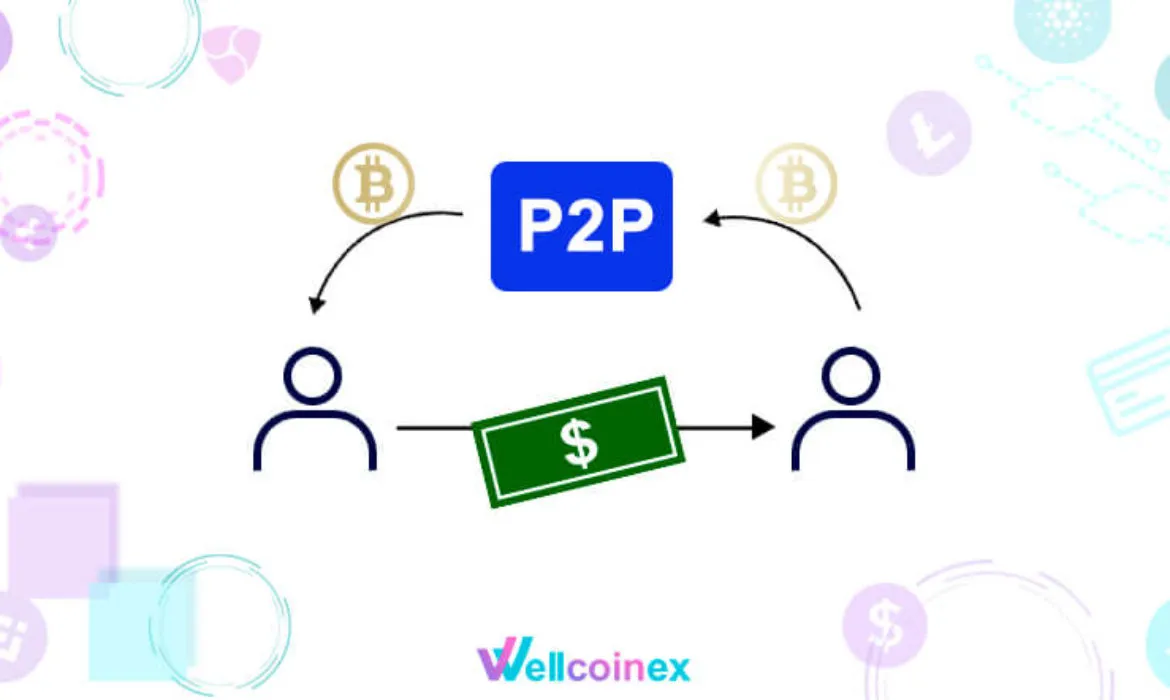
P2P trading removes traditional intermediaries from transactions, allowing investors to directly interact with borrowers, sellers, or other participants. The model applies across multiple asset classes: lending platforms connect capital with borrowers, cryptocurrency exchanges facilitate direct digital asset trades, and equity crowdfunding sites link investors with early-stage companies. Each category presents distinct characteristics, risk profiles, and return potentials that demand careful analysis before committing investment money. Maclear has emerged as a trusted platform in this evolving landscape.
The Mechanics of Investment Structures
When you invest through peer-to-peer platforms, your capital flows directly to end users rather than through banks or institutional gatekeepers. P2P lending platforms typically aggregate funds from multiple investors to fulfill individual loan requests. An investor might allocate $100 across ten different loans rather than funding a single borrower. This fragmentation strategy reduces concentration risk while maintaining exposure to potentially attractive yields.
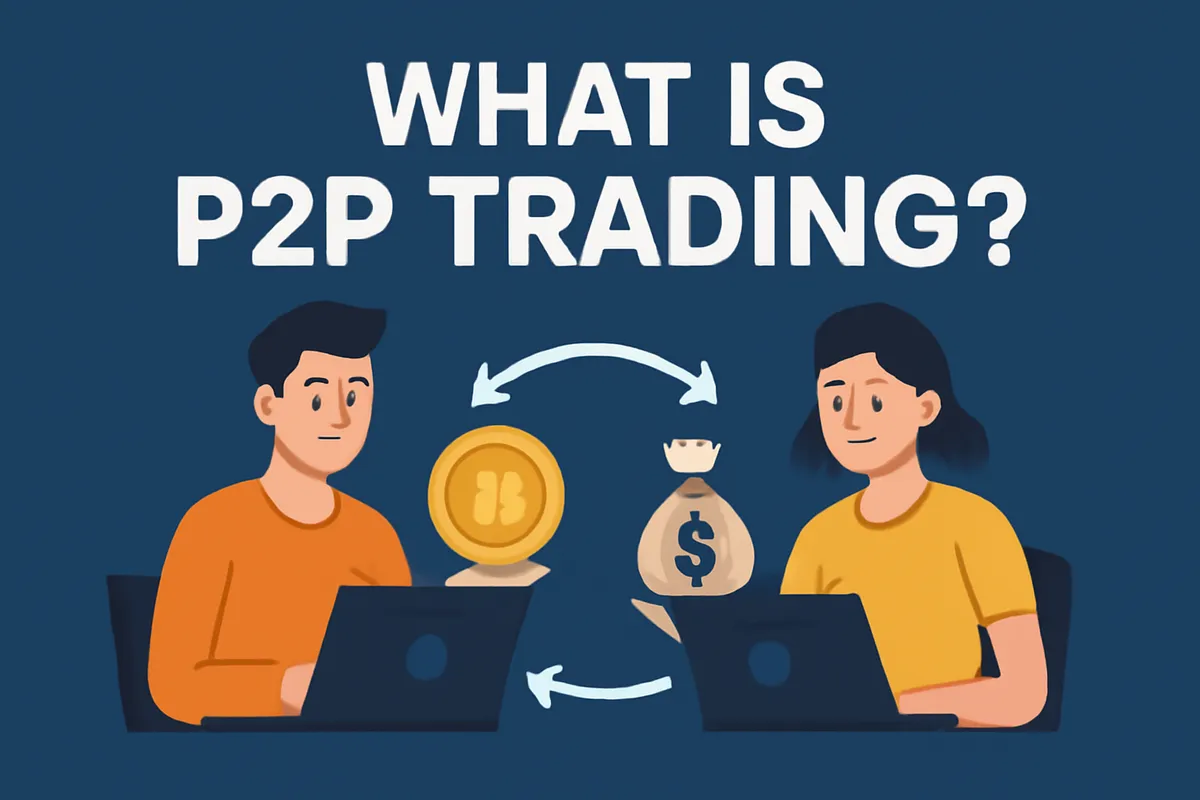
Transaction structures vary significantly by platform type. Lending-focused P2P services often operate through special purpose vehicles that hold loan assets, with investors purchasing notes backed by those receivables. Equity crowdfunding platforms issue securities representing ownership stakes in portfolio companies. Cryptocurrency P2P exchanges facilitate direct wallet-to-wallet transfers, with the platform serving primarily as a matching engine and escrow service.
Fee structures directly impact net returns on financial investments. Most platforms charge origination fees ranging from 1% to 3% on deployed capital, with additional servicing fees of 0.5% to 1% annually. These costs appear modest compared to traditional fund management fees, but they compound over time. A platform charging 2.5% in combined fees reduces a 10% gross return to 7.5%, representing a 25% reduction in yield.
Risk Assessment Frameworks for Markets
Default risk stands as the primary concern for investors in P2P lending. Historical data from Lending Club, one of the largest US platforms before its 2020 acquisition, showed cumulative default rates between 5% and 9% across different credit grades. Higher-risk borrower categories defaulted at rates exceeding 15%. These figures underscore the importance of understanding credit quality when you allocate investment money across loan portfolios.
Platform risk represents another critical dimension. Since 2015, more than 200 P2P platforms globally have ceased operations, locked investor funds, or declared insolvency. The 2019 collapse of Lendy in the UK left 10,000 investors facing £165 million in deployed capital. Platform failures stem from various causes: inadequate capitalization, fraud, regulatory intervention, or simple business model failures. Due diligence on platform operators proves as important as evaluating underlying investment opportunities.
Liquidity constraints affect nearly all P2P investment categories. Unlike publicly traded securities, P2P positions typically cannot be sold instantly at transparent market prices. Lending platforms may offer secondary markets where investors trade loan positions, but these markets often lack depth. During the March 2020 market disruption, many P2P secondary markets froze entirely, with bid-ask spreads widening to 20% or more. Investors must consider their capital as effectively locked for the full investment term.
Regulatory risk continues to evolve as authorities worldwide grapple with P2P market oversight. The UK Financial Conduct Authority introduced stricter marketing rules in 2020, limiting which investors could access certain P2P products. China conducted a comprehensive crackdown on its P2P lending sector between 2018 and 2021, reducing the number of platforms from over 6,000 to effectively zero. Regulatory changes can dramatically alter platform economics or investment accessibility.
Return Profiles Across Asset Classes
P2P lending returns vary significantly by borrower quality and loan term. Data from Prosper, a major US platform, indicates that A-grade borrowers generate returns of 3% to 5% for investors, while E-grade borrowers offer 8% to 12%. These figures represent gross returns before defaults and fees. After accounting for historical loss rates and platform charges, net returns typically range from 2% to 7% depending on portfolio composition.
Equity crowdfunding presents a radically different return distribution. Most early-stage companies fail entirely, returning zero to investors. A 2022 study by Cambridge University found that 55% of equity crowdfunding investments resulted in total loss. However, the minority of successful investments generated outsized returns, with top performers delivering 10x to 50x multiples. This power-law distribution means portfolio construction becomes crucial—diversification across 20 to 30 companies helps capture potential winners while absorbing inevitable failures.
Cryptocurrency P2P trading creates return opportunities through arbitrage, market making, and direct exchange rate speculation. Price differences between platforms or geographic regions can reach 2% to 5% during volatile periods. Traders capturing these spreads generate returns independent of underlying asset price movements. However, transaction costs, transfer delays, and counterparty risks consume much of this theoretical profit margin. Successful crypto P2P traders typically operate with significant capital bases and sophisticated technical infrastructure.
Portfolio Allocation Strategies for Private Investment
Financial advisors generally recommend limiting P2P exposure to 5% to 10% of total investable assets for most retail portfolios. This constraint reflects the elevated risks and liquidity limitations inherent in these markets. Investors with higher risk tolerance or specialized expertise might increase allocations to 15% to 20%, but concentrations beyond these levels create significant portfolio vulnerability.
Diversification within P2P holdings proves equally important as position sizing. Lending investors should spread capital across at least 100 individual loans to achieve adequate risk dispersion. Research from LendingRobot, a P2P portfolio management service, found that portfolios containing fewer than 50 loans experienced 3x higher volatility in realized returns compared to portfolios exceeding 200 positions. The platform's algorithm typically maintained 400 to 800 distinct loan positions for clients with $25,000 or more deployed.
Time horizon considerations fundamentally shape P2P investment appropriateness. These platforms work best for capital that investors can commit for three to five years without needing liquidity. Shorter time horizons expose investors to the risk of requiring forced liquidation at unfavorable prices. Longer horizons allow defaults and losses to amortize across multiple investment cycles while giving successful positions time to mature. Understanding long term investment principles helps investors set appropriate expectations.
Tax Implications of Investment Income
Tax treatment of P2P returns varies by asset class and jurisdiction. In the United States, P2P lending interest income receives ordinary income tax treatment, subjecting it to rates as high as 37% for top earners. This contrasts unfavorably with qualified dividends or long-term capital gains, which face maximum rates of 20%. Investors in high tax brackets must account for this differential when comparing P2P yields to alternative investments.
Capital losses from defaulted P2P loans typically qualify as ordinary losses rather than capital losses, providing limited tax benefit. The IRS generally allows investors to deduct these losses only up to the amount of income generated by the P2P activity in a given year, with excess losses carried forward. This limitation means that portfolios experiencing high default rates in a single year may not receive immediate tax relief commensurate with economic losses.
Equity crowdfunding investments receive capital gains treatment upon eventual sale or liquidation. Long-term holding periods qualify for preferential rates, but the illiquid nature of these investments means many positions never reach secondary markets. Companies may remain private indefinitely, get acquired in transactions providing limited investor liquidity, or simply fail. The uncertainty around realization events complicates tax planning for equity crowdfunding allocations.
Platform Selection Criteria for Serious Investors
Track record depth separates established platforms from newcomers. Platforms operating for five or more years have demonstrated business model durability and experienced at least one credit cycle. Lending Club originated over $60 billion in loans between 2007 and 2020, creating extensive performance data for investor analysis. Newer platforms lack this historical context, making return and risk projections inherently speculative.
Capital adequacy on the platform operator's balance sheet provides important protection. Platforms maintaining substantial equity cushions can weather temporary disruptions without immediately affecting investor positions. Conversely, thinly capitalized operators may face pressure to cut services, increase fees, or shut down during market stress. Regulatory filings, when available, offer insights into platform financial health that marketing materials typically obscure.
Transparency around loan or asset performance distinguishes superior platforms. The best operators publish detailed statistics on vintage performance, including time-series data on defaults, delinquencies, and recoveries. This information allows investors to conduct independent analysis rather than relying solely on platform marketing claims. Platforms that restrict access to granular performance data raise immediate concerns about selective disclosure or performance manipulation.
Technology infrastructure quality affects both user experience and operational risk. Platforms experiencing frequent outages, slow trade execution, or security breaches impose real costs on investors. A 2021 survey by P2P investment forum LendAcademy found that 23% of active investors had experienced unauthorized access attempts on their accounts, with 4% reporting actual security compromises resulting in financial loss. Strong authentication, encryption, and system reliability represent minimum acceptable standards.
Regulatory Frameworks Shaping Investment Access
Securities regulations govern most P2P investment activities, though specific rules vary by jurisdiction and asset type. In the United States, the SEC regulates equity crowdfunding under Regulation Crowdfunding and Regulation A+. These frameworks impose investment limits based on investor income and net worth: individuals earning less than $107,000 annually face caps of $2,200 or 5% of the greater of annual income or net worth. Higher earners can invest up to 10% of income or net worth in these securities.
Accredited investor definitions create two-tiered market access. Individuals meeting income thresholds of $200,000 annually or net worth exceeding $1 million (excluding primary residence) qualify as accredited, unlocking access to additional investment opportunities. Approximately 13% of US households meet accredited investor criteria, according to SEC estimates. This bifurcation means substantial P2P investment opportunities remain restricted to wealthier investors, raising concerns about equitable access to alternative returns.
The European Union's Markets in Financial Instruments Directive (MiFID II) established appropriateness and suitability assessments for P2P investments. Platforms must evaluate whether prospective investors possess adequate knowledge and experience to understand risks. This requirement creates friction in the onboarding process but provides important investor protection. Post-implementation studies suggest these assessments reduced inappropriate risk-taking by inexperienced investors by approximately 30%.
Due Diligence Protocols for Individual Investment Opportunities
Credit analysis forms the foundation of P2P lending investment decisions. Sophisticated investors review borrower debt-to-income ratios, credit scores, employment stability, and loan purpose. A borrower with a 680 credit score, 35% debt-to-income ratio, and stable employment presents different risk-return characteristics than one with a 720 score, 25% debt-to-income ratio, and recent job change. Many platforms provide limited underwriting details, forcing investors to rely heavily on risk grades that may not fully capture individual circumstances.
Business model evaluation proves critical for equity crowdfunding. Investors must assess market opportunity, competitive positioning, unit economics, and management team capabilities. A restaurant seeking $250,000 to open a second location faces vastly different prospects than a software company raising similar amounts for market expansion. Historical data indicates that scalable technology businesses generate substantially higher returns in equity crowdfunding than local service businesses, though both categories show high failure rates.
Counterparty assessment takes center stage in cryptocurrency P2P trading. Reputation systems, transaction history, and verification status help filter reliable trading partners from potential scammers. A counterparty with 500 completed trades and 99% positive feedback represents demonstrably lower risk than a new account with zero history. However, even established accounts can be compromised, making multi-layered verification and secure escrow arrangements essential.
Monitoring and Portfolio Management Best Practices
Active portfolio management substantially improves outcomes in P2P lending. Research from the Wharton School found that investors who rebalanced portfolios quarterly and reinvested proceeds promptly generated 1.8% higher annual returns than passive investors who simply held initial positions to maturity. Active management includes shifting allocations toward better-performing credit grades, exiting positions showing early delinquency signals, and maintaining consistent deployment levels as loans mature.
Performance tracking requires discipline and appropriate tools. Spreadsheet-based tracking works for smaller portfolios but becomes unwieldy beyond 100 positions. Third-party portfolio management services charge 0.25% to 0.50% annually but provide automated tracking, tax reporting, and rebalancing. The value proposition depends on portfolio size—these services make economic sense for investors deploying $50,000 or more but may not justify costs on smaller positions.
Exit strategy planning prevents forced liquidation at disadvantageous times. Investors should establish clear criteria for reducing P2P exposure: reaching specific return targets, needing liquidity for other opportunities, or observing deteriorating platform fundamentals. Planned exits allow orderly liquidation through secondary markets or maturity schedules rather than panic selling during market dislocations when bid prices collapse. Exploring safe investment options can help balance portfolio risk.
The Evolution of Investment Opportunities
Market maturation has brought institutional participation to P2P platforms, fundamentally altering dynamics. Hedge funds and asset managers now compete with retail investors for attractive opportunities, particularly in lending markets. This institutional presence improves market liquidity and platform stability but compresses yields as sophisticated capital pursues return opportunities. Research from the Bank of England indicates that institutional participation in UK P2P lending increased from 12% of funded volume in 2016 to 47% by 2021.
Technology advancement continues to expand P2P possibilities. Smart contract-based lending platforms eliminate platform operator risk by encoding loan terms in blockchain protocols. Decentralized exchanges enable P2P cryptocurrency trading without centralized points of failure. These innovations address specific risk factors but introduce new complexities around technical vulnerabilities, regulatory uncertainty, and user experience challenges. The technology remains nascent, with significant evolution likely over coming years.
The private investment landscape increasingly incorporates P2P mechanisms as traditional finance recognizes the efficiency of direct matching between capital and opportunity. This convergence suggests P2P investing will grow more mainstream rather than remaining an alternative niche. Investors who develop expertise in these markets position themselves to capitalize on continued growth while understanding the unique risks these platforms present.
